Photo credit: Milos Jevtic/Pexels.com
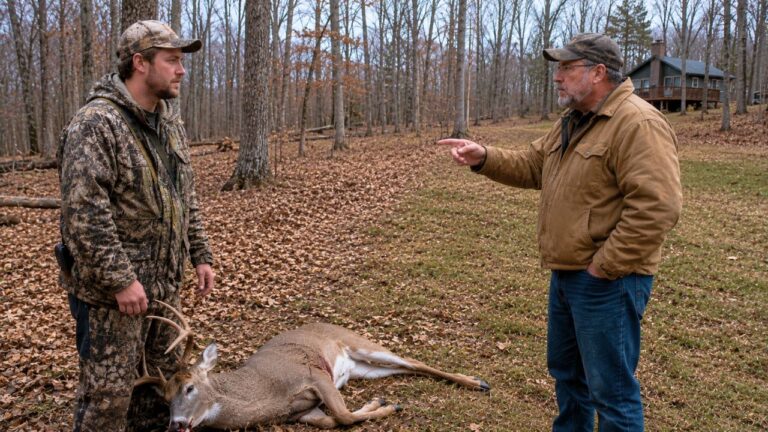
A landowner dealing with unwanted hunters said the problem had moved past a minor misunderstanding and into something that made him worry about safety on his own property.
The situation was shared in a post on r/Hunting titled “Hunter Trespassing – Advice needed”. The poster said hunters had been coming onto or shooting toward private property without permission, and he was trying to figure out the right way to handle it before the situation got worse.
The concern was not only that someone had crossed a boundary. It was that hunters were allegedly shooting into private property from the road. That changes the whole nature of the problem. Trespassing is frustrating on its own, but when gunfire is involved, the landowner is no longer dealing with footprints, tire marks, or someone cutting through the woods. He is dealing with people making unsafe decisions close enough to his land that he felt the need to ask other hunters what he should do.
That is the kind of situation that can make even a calm landowner feel boxed in. If he confronts them himself, he may be walking up on armed people who already showed poor judgment. If he ignores it, he risks the behavior continuing. If he calls authorities, he may worry about whether they will take it seriously without clear proof.
The post drew the kind of advice hunters usually give when property lines, firearms, and strangers all collide: document everything, do not confront armed trespassers alone, and get the game warden or sheriff involved before someone gets hurt.
A lot of hunting access conflicts start with a blurry line. Someone thinks they are on one parcel and they are actually on another. Someone follows a deer too far. Someone hangs a stand on the wrong tree because a map app was off. Those situations can still be serious, but they leave at least some room for explanation.
Shooting from the road into private property is different.
If the landowner’s description was accurate, this was not a hunter unknowingly drifting across a boundary in thick timber. It was someone using the road as access and firing toward land that did not belong to them. That raises immediate questions about safety, target awareness, legality, and basic hunting ethics.
Hunters are responsible for knowing where their shot is going. That includes what is behind the target, what property the bullet may enter, and whether they have permission to hunt where the animal is standing. Roadside shots also carry their own risks because vehicles, houses, livestock, workers, and other hunters may be nearby.
That is why road hunting tends to get such a strong reaction from careful hunters. Even in places where certain road access rules vary, firing toward private land without permission is the kind of behavior that gives everyone else a bad name.
The poster’s concern made sense because the line between “annoying trespasser” and “serious safety problem” had already been crossed in his mind. Once gunfire is part of the complaint, the smartest response is rarely a casual neighbor chat at the fence.
Several commenters pushed the landowner toward documentation instead of a direct confrontation.
That advice was practical. If he could safely get photos of vehicles, license plates, times, locations, or shell casings, he would have something concrete to give law enforcement. Without that, the situation could turn into his word against theirs, especially if the hunters denied shooting toward the property.
Trail cameras came up for the same reason. A camera at an access point, driveway, gate, field edge, or road-facing area can catch who is coming and going. It can also create a timeline. If a shot is heard at 7:10 a.m. and a truck is recorded leaving the road at 7:12, that may help authorities put the pieces together.
Commenters often recommend cellular cameras for this kind of thing because a regular camera can be stolen before the landowner ever gets the card. A hidden camera pointed at a more obvious camera is another common strategy when trespassers are already bold.
The point is not to play detective in a dangerous way. It is to gather enough information that the game warden or sheriff can act.
That distinction matters. Walking up on armed people and demanding answers can turn bad fast. Standing back, collecting details, and making a report is slower, but it is also safer.
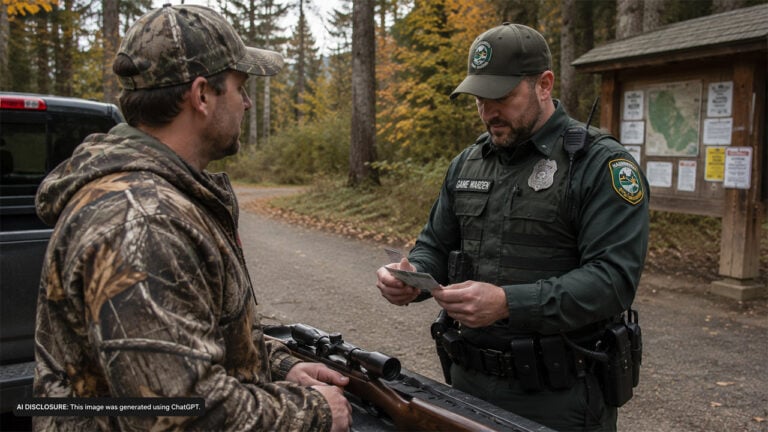
In hunting-related disputes, commenters often separate ordinary trespassing from hunting violations. A sheriff may handle trespassing. A game warden or conservation officer may handle illegal hunting behavior. In a situation involving both, contacting both can make sense.
That is why the advice leaned heavily toward calling the game warden. If hunters were shooting from the road or shooting onto land without permission, that could fall squarely into the kind of thing wildlife officers deal with during hunting season.
Game wardens also understand how these situations usually unfold. They know the local hunting pressure, common access points, road-hunting complaints, and the areas where people try to cut corners. They may already know the vehicles or names involved if other landowners have called before.
That is another reason making a report matters even if nothing happens right away. One complaint may not prove much. Multiple complaints from different landowners can show a pattern.
A warden may also tell the landowner exactly what kind of documentation is useful. That can save time and keep the landowner from doing something that feels satisfying but does not help the case.
The best advice was not dramatic. It was the same steady answer rural landowners hear again and again: report it, document it, and let the people with authority handle the armed trespassers.
Even when hunters should know better, clear signage helps.
If private land is not posted well, people may try to claim they did not know they were crossing a line or shooting toward private ground. Signs will not stop every bad actor, but they remove one of the easiest excuses.
Commenters generally encourage landowners to make boundaries obvious with no-trespassing signs, no-hunting signs, purple paint where legal, gates, and clearly marked access points. That is especially important near roads, field entrances, creek crossings, and anywhere someone might pull over and think they can slip in.
For a landowner dealing with people shooting from the road, signs can also be placed where they are visible from the road. That way, anyone stopping there has a harder time pretending they did not know the land was private.
Still, signs are only one layer. A person willing to fire into private property may also be willing to ignore a sign. That is where cameras and reports come in.
The combination matters: posted land, documented incidents, vehicle descriptions, photos when safe, and a record with local authorities. None of those alone fixes the problem overnight, but together they make it much easier to push back if the behavior continues.
Commenters treated the situation as a safety issue first and a trespassing issue second.
Many said the landowner should avoid confronting the hunters directly, especially if they were armed or actively shooting. The smarter move, according to several users, was to document what he could from a safe distance and contact the game warden, sheriff, or both.
Others recommended cameras along likely access points and near the road. A few suggested hidden cameras or cellular cameras so the evidence would not disappear if trespassers found the equipment. License plates, vehicle descriptions, dates, and times were all mentioned as the kind of details that could help authorities.
Several commenters also said the property should be clearly posted if it was not already. No-trespassing and no-hunting signs would not guarantee good behavior, but they would make the boundary clearer and give the landowner a stronger position if the same people came back.
The thread had the same undercurrent many landowner stories do: most hunters do not want people like this representing them. Safe hunters understand permission, property lines, and what lies beyond a target. The ones who shoot from roads or toward land they do not have permission to hunt create problems for everyone else.
For the landowner, the advice came down to this: do not handle reckless armed strangers by yourself. Make the property lines obvious, gather proof, and let the game warden or sheriff deal with the people turning a hunting season into a safety concern.