
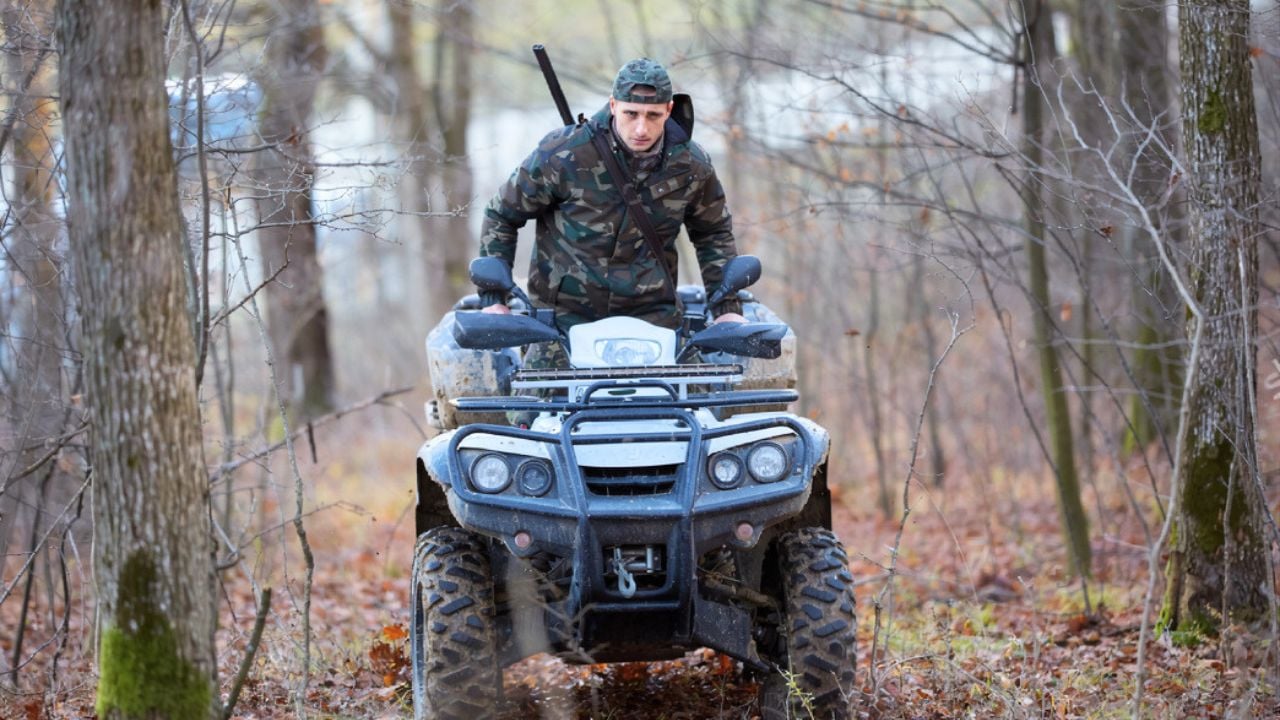
Photo credit: Slatan/Shutterstock.com
Every hunting season, some version of the same excuse shows up again: “I thought this was public.” Sometimes it comes from a truck parked where it should not be. Sometimes it comes from a hunter walking out with that half-surprised, half-defensive look after being caught on the wrong side of a fence. Sometimes it comes after a trail camera photo, a gate left open, a stand in the wrong tree, or a long blood trail that ended where permission did. However it comes up, the phrase gets used like it ought to smooth things over, but most of the time it does the opposite. It irritates landowners, frustrates lease holders, and makes public-land hunters look sloppy even when the person saying it honestly did get turned around. The reason it keeps causing problems is simple: by the time those words come out, somebody has already crossed a line that mattered. Maybe it was a property line. Maybe it was an access line. Maybe it was just the line between an honest mistake and a preventable one. Either way, once boots are on the wrong ground, that excuse does not sound harmless. It sounds like a man went somewhere he had no business being and wants credit for not meaning to.
Public land confusion usually starts before the truck ever stops
A lot of these situations do not begin in the woods. They begin at home, when somebody does a lazy map check, skims over a pin on an app, or trusts an old assumption instead of making sure the access route, boundary, and ownership all still say what he thinks they say. Hunters lean hard on digital maps now, and most of the time those tools are useful, but useful is not the same as foolproof. Boundaries can look cleaner on a screen than they do in the field. Access points that appear simple on a map can be closed, restricted, or routed around private ground in ways that are easy to miss if you are only looking quickly. Add darkness, early-morning hurry, bad service, old screenshots, unfamiliar country, or one buddy telling another buddy “I’m pretty sure this is the way,” and now you have the setup for the same mess people somehow act surprised by every fall. The phrase “I thought this was public” is often just the final sentence in a chain of bad assumptions. By the time a hunter says it, the real problem is not confusion. The real problem is that he trusted confusion more than he trusted preparation.
The woods rarely look as clear as the app made them seem
Once a hunter gets boots on the ground, the situation can get murkier fast. Fences may be down or missing. Signage may be old, sparse, or not visible from the direction he came in. Terrain can bend the way people think about direction, especially in thick timber, rough draws, or open country where everything starts looking the same after a while. Public parcels can have odd corners, narrow fingers, split tracts, and private inholdings that catch people off guard if they have not studied them carefully. That part is real. Not every wrong turn in hunting season comes from bad character. Some come from the simple fact that land on a phone screen is a whole lot easier to understand than land under your boots in dim light when you are trying to move quietly and make time. But that does not change the burden. If the ground is complicated, that is exactly why the hunter needs to be more careful, not less. A confusing boundary is not a free pass. If anything, it is a warning sign telling you to slow down, check your bearings again, and avoid pushing into an area unless you are sure. Too many people do the opposite. They walk until something tells them to stop, and then they act like the uncertainty itself should excuse the overstep.
Landowners hear that excuse differently than hunters expect
One reason the phrase keeps causing friction is that the man hearing it usually has a very different view of what happened than the man saying it. A hunter may hear himself explaining a mistake. A landowner may hear a stranger minimizing the fact that he came onto private ground armed, parked where he should not, crossed a locked gate, or hunted a section that somebody else pays to control. That gap matters. Rural property owners and lease holders hear a lot of excuses, and after enough seasons most of them start sounding the same. “I thought this was public.” “The map looked different.” “My buddy told me this corner was open.” “I only came in a little ways.” “I was just tracking.” Even when one of those explanations is true, it lands in a pile of old frustrations that were also dressed up as mistakes. That is why the phrase often makes things worse instead of better. It can sound casual about something that is not casual to the person managing the ground. Access is money, work, control, and liability. It affects livestock, gates, wildlife pressure, safety, and peace. The guy who says he “thought” it was public may be talking about confusion. The man hearing him may be thinking about all the times confusion has cost him something.
Some people really are confused, and some people are just using the safest-sounding excuse they have
Anybody who has spent enough time around land disputes knows both kinds exist. There are hunters who truly get turned around, especially in unfamiliar country or around odd-shaped parcels. Then there are hunters who know good and well the situation was shaky, rolled the dice anyway, and save “I thought this was public” for the moment they get caught. That is part of why the phrase has worn thin. It is believable enough to use and hard enough to disprove on the spot that it has become a favorite fallback. A man who intentionally slipped across a line is not going to admit that first. He is going to reach for the version that makes him sound confused instead of entitled. The problem is that habitual excuse-making hurts the people who really did make an honest mistake. It also makes it harder for landowners to tell the difference in real time. That is why a hunter should never count on the phrase itself to smooth anything over. If the mistake was real, what helps most is not the wording. It is the way he handles the moment after that. Calm tone, immediate exit, real apology, no argument, no attitude, no weird legal lectures, and no attempt to turn the whole thing back on the landowner for not posting every tree between here and the county line.
Most of these problems can be avoided with more work before daylight
The fix is not glamorous, but it works. Study the parcel harder than you think you need to. Check access routes, not just boundaries. Look for public easements, parking rules, walk-in corridors, and private corners that could trap you if you come at them wrong. Download offline maps instead of assuming your phone will work. Mark safe approach lines and backup routes. Read local regulations carefully, especially in areas where public access is mixed with private ground or where state, federal, and walk-in programs create overlapping rules. If a parcel looks weird on the map, treat it like it is weird in real life too. And if you are hunting with somebody who says, “I think this is right,” without actually knowing, treat that as a warning, not reassurance. Too many hunters act like good access planning is something extra-careful people do when it is really just part of hunting responsibly. Nobody likes being the guy who spends extra time studying boundaries. They like a whole lot less being the guy who gets sent back to the truck after a bad encounter, or worse, the guy whose name is now known around the neighborhood for the wrong reason.
The phrase keeps causing problems because people treat access like a detail instead of part of the hunt
That is what it really comes down to. Hunters spend money on optics, ammo, boots, packs, calls, stands, cameras, and every other piece of gear they think might help them succeed, but a lot of them still treat access like an afterthought. Then when the line gets crossed, they reach for “I thought this was public” like it ought to cover what preparation did not. It will not. Good hunters understand that knowing where you are allowed to be is not separate from the hunt. It is part of the hunt. It matters as much as wind, concealment, and shot distance because if you get the access wrong, none of the rest of it matters the way you wanted it to. The reason this excuse keeps causing problems every season is not just that boundaries can be confusing. It is that too many people keep acting like confusion is unavoidable when a lot of it is preventable. Honest mistakes happen. But honest mistakes should look rare, humble, and quickly corrected, not routine, defensive, and wrapped in the same worn-out phrase every frustrated landowner has already heard ten times. If a hunter wants fewer ugly property encounters, the answer is not a better excuse. It is better homework before he ever steps off the road.
Like The Avid Outdoorsman’s content? Subscribe to our newsletter so you never miss an article.
Here’s more from us:


