
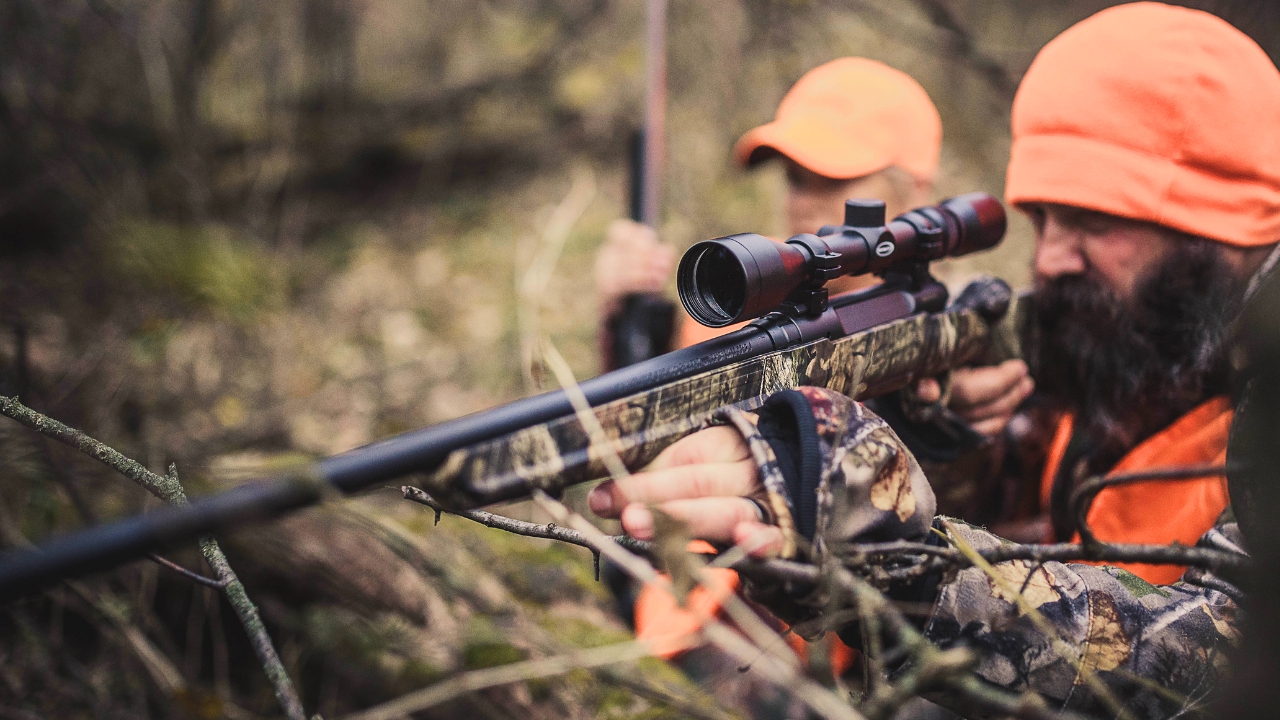
Photo credit: Savage Arms
A lot of hunters are better shots on paper than they are in the woods, and most of them do not fully realize it until a real animal shows up and things start moving faster than they expected. At the range, the setup is controlled. The rifle is clean, the target is still, the bench is steady, and the shooter usually knows exactly when the shot is coming. There is time to breathe, settle in, and work through the shot without much pressure beyond wanting a good group. That kind of shooting matters. It builds confidence, confirms zero, and helps a hunter understand what the rifle can do. But it does not always prepare him for what actually happens when season opens. In the field, the body feels different, the timing feels different, and the shot rarely unfolds the way it did in your head. A deer does not stand broadside forever while you get comfortable. Wind shifts, brush gets in the way, the rest is awkward, the angle is not ideal, and your heart may be beating like you just sprinted uphill. That is why some hunters who can shoot tiny groups at the range still struggle when it counts. They are not bad shots. They are just practicing one version of shooting and hunting in another.
Bench confidence can hide real weaknesses
The bench is useful, but it can also flatter a shooter in ways that do not carry over into hunting season. A solid front rest, a rear bag, and a calm environment cover up a lot of little issues that become obvious the second you are forced to shoot from kneeling, sitting, standing, off a pack, off a tree, or from some half-crooked position on a hillside. A hunter may come away from the range feeling completely dialed because the rifle grouped well at one hundred yards, but that success is often built on stability the woods do not provide. He did not have to control as much wobble, build his position quickly, or decide whether he truly had a good shot before the target changed. On paper, all of that stays nice and predictable. In season, those missing pieces are exactly what start breaking people down. The bullet still goes where the rifle is pointed, but getting the rifle pointed properly under pressure is a whole different skill than shooting a relaxed group from a bench.
That is where a lot of otherwise capable hunters get surprised. They are not lying when they say they shoot well. They really do, at least in that one setting. But if most of their practice lives on a bench, then the bench starts becoming a comfort zone instead of a tool. They never spend enough time learning how the rifle behaves when the support is imperfect, the body is twisted, and the sight picture keeps moving more than they want it to. That gap stays hidden right up until the moment a live animal gives them one real chance and all that smooth range confidence suddenly feels less steady than it did a month earlier. The problem is not that the hunter forgot how to shoot. The problem is that he trained for control and then got dropped into chaos.
Adrenaline changes the shot more than people want to admit
A deer does not have to be enormous to make a hunter feel different. The second real opportunity appears, a lot of calm range shooters find out their body has its own opinion about the moment. Breathing changes. Hands feel less steady. Vision narrows. The trigger finger feels too fast or too slow. Even experienced hunters can feel a wave of urgency when an animal steps out, especially if the window is short or the buck is better than expected. That does not mean they panic, but it does mean the body is no longer operating in the same quiet, controlled state it had at the range. This is where people start rushing the shot, slapping the trigger, lifting their head, or abandoning the simple fundamentals they thought were automatic. Adrenaline is not always dramatic, but it is powerful enough to expose whether a hunter really owns his process or just performs well when nothing exciting is happening.
This is one reason some hunters seem almost confused after a miss or a poor hit. They know they can shoot better than what just happened. They have proof on paper. What they did not account for is how much harder it is to access that same clean trigger press and follow-through once the shot has real consequence attached to it. The range never made them manage emotion with the same urgency. A live animal does. That is why good hunters spend so much time talking about slowing themselves down, picking a spot, breathing, and not letting the moment run them over. Those things sound basic until a buck walks out and the body starts doing what bodies do. If a hunter has not practiced for that feeling in some way, the first real test often comes at exactly the wrong time.
Field positions expose how little some people actually practice
Most hunting shots do not happen with the rifle resting perfectly and the body lined up like it is on a square range. The support might be a backpack, a tree trunk, a knee, a set of sticks, a blind rail, or nothing but your own elbows and whatever you can make work in five seconds. That matters because field shooting is less about ideal mechanics and more about building a usable position fast enough to take advantage of the chance you have. A hunter who only practices from the bench can wind up feeling strangely unprepared when the shot needs to happen from sitting in grass, kneeling behind brush, or leaning around cover without enough time to get truly comfortable. The wobble feels bigger, the sight picture looks less trustworthy, and the whole shot takes on a rushed feeling even when there may still be time to do it right.
This is where a lot of misses and ugly hits come from. It is not always bad judgment. Sometimes it is simply unfamiliarity with unstable shooting. A man may know his rifle well enough to shoot a nice group at one hundred yards, but if he never trains from the same kinds of positions he actually uses while hunting, then he is basically learning those lessons live on game. He finds out in real time how much harder it is to hold low on a deer from kneeling, how quickly crosshairs bounce when he is breathing hard, or how awkward it feels to shoot downhill off a pack that never sits quite the same way twice. The woods do not care how tidy your groups were from a concrete bench. They care whether you can build a workable shot with imperfect support and still finish it cleanly.
Judging the shot is part of shooting, not a separate skill
Another reason range shooters struggle in season is that the range often removes one of the biggest parts of hunting accuracy: deciding whether the shot should happen at all. On a square range, targets are placed to be shot. Distances are known or easy to confirm. Backdrops are clean. Angles are simple. There is usually no brush drifting into the lane, no quartering animal changing the shot picture, and no concern about whether the deer is about to step into a worse position before the bullet gets there. Hunting forces the shooter to think through all of that in real time. He has to read the angle, judge the opening, pick an aiming point that fits the position of the animal, and decide whether his own rest is good enough for the shot he is considering. That is a lot more than marksmanship. It is shot management, and some otherwise capable shooters have very little practice doing it before the season begins.
That is how hunters wind up making odd mistakes that do not seem to match their ability. They aim at too much deer instead of a precise spot. They underestimate how much a branch near the muzzle matters. They take a shot just a little too far back because the angle looked better in their head than it really was. Or they let urgency talk them into shooting through a gap that was never truly wide enough. None of that shows up clearly during normal range sessions unless the practice is designed to include decision-making. A person can become a very competent paper puncher without ever getting especially good at reading a live shot under hunting conditions. When season opens, that missing skill becomes just as important as trigger control, and maybe more so.
Range success still matters — it just cannot be the whole plan
None of this means range time is overrated. It is not. Hunters need that work. They need to verify zero, understand their load, learn their trigger, and build the kind of repetition that makes the rifle feel familiar instead of foreign. But range success only tells part of the story. If that is the only kind of shooting a hunter does, then he is preparing for a version of the shot that may never show up once season starts. The best shooters in the field are usually the ones who keep the range in its proper place. They use it to confirm the rifle, then they step away from the bench and make themselves practice in ways that look more like hunting. They shoot from sticks, from backpacks, from kneeling, from sitting, from odd angles, from slightly elevated heart rates, and from positions that feel inconvenient on purpose. They do that because they know the woods are not going to offer them a perfect rest just because their rifle grouped well in August.
That is really the difference. Hunters who shoot well at the range but struggle in season are often dealing with a training gap, not a talent gap. They built confidence in controlled shooting and then expected that confidence to hold up unchanged once real variables entered the picture. Sometimes it does. A lot of times it does not. The hunters who stay steady when season opens are usually the ones who trained for more than a clean target and a quiet bench. They practiced building a shot, reading a shot, and calming themselves enough to finish a shot when the stakes got real. That kind of preparation is less glamorous than showing off a tight three-shot group, but it translates better when an animal steps out and the moment starts moving. And in the end, that is the test that matters.
Like The Avid Outdoorsman’s content? Subscribe to our newsletter so you never miss an article.
Here’s more from us:


