Photo credit: Polydactyl Productions/YouTube
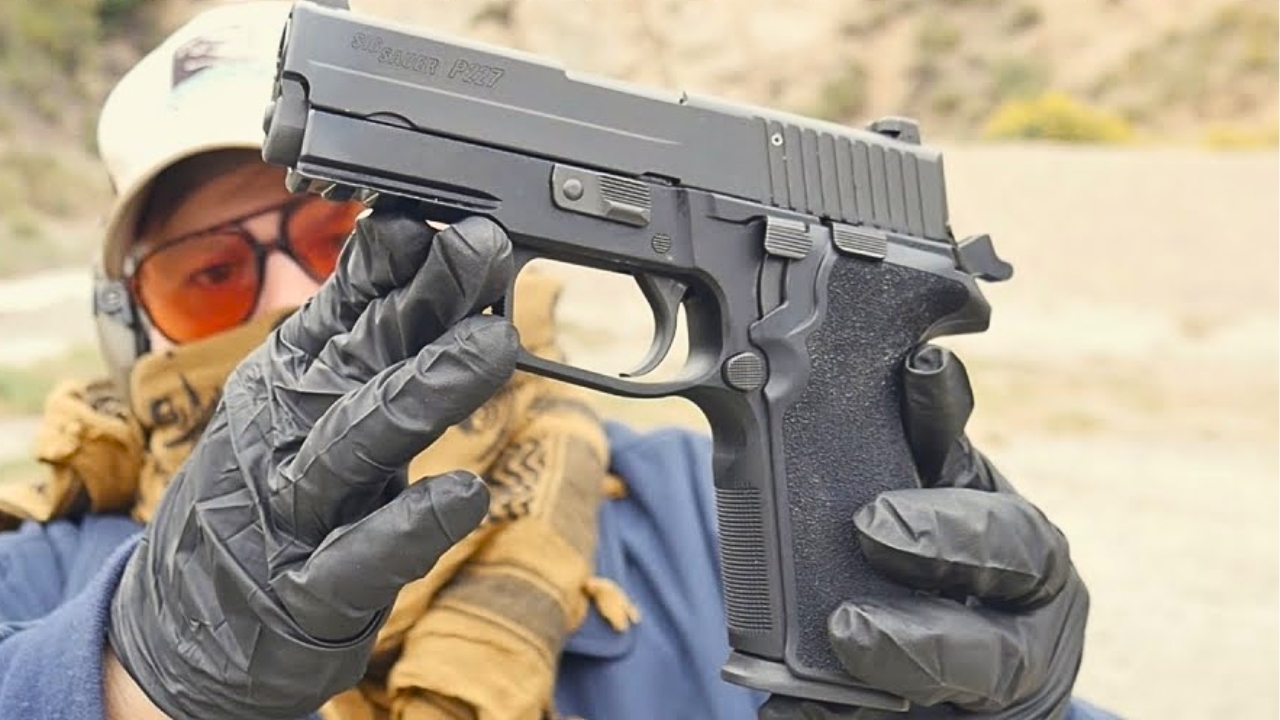
Few .45 ACP pistols hit the market with the kind of potential the Sig P227 had. You had a proven Sig Classic build, a DA/SA system trusted around the world, and a double-stack .45 frame that finally gave serious capacity without ditching durability. The pistol came out at a time when polymer guns were taking over, and that overshadowed what could’ve been one of the best duty-sized .45s of the modern era.
If you ever ran a P226 or P229, the P227 felt familiar right away—just with bigger holes in the magazine. It never failed because of design. It failed because the market shifted under it.
A proven DA/SA fire control system
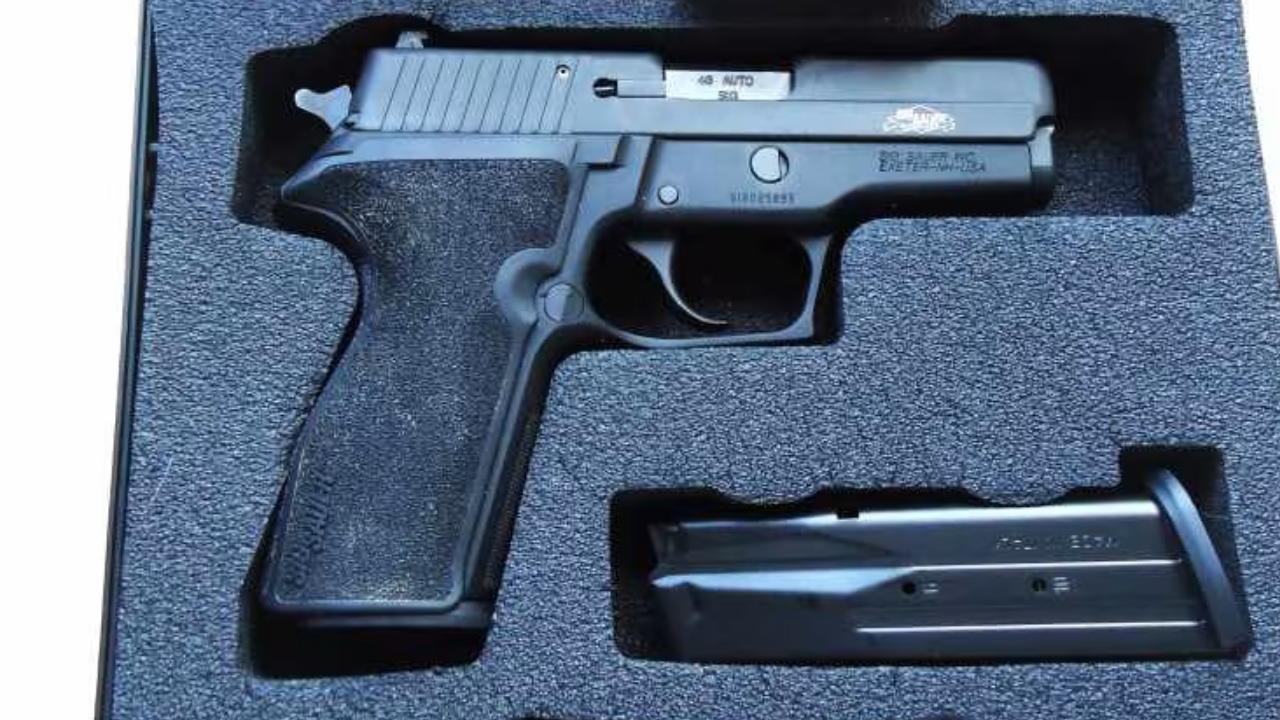
The P227 shared the same DA/SA trigger setup as the rest of the Sig Classic line, which gave shooters a predictable first shot and a smooth, consistent follow-up pull. If you trained with Sigs, the gun felt natural from the start. The transition from double-action to single-action wasn’t intimidating—it rewarded practice and built real confidence. Plenty of shooters today still prefer this system for cold-start accuracy and control. Losing a .45 built around such a trusted operating system left a gap nothing else filled.
Capacity that finally made a duty .45 practical
The biggest accomplishment of the P227 was simple: it carried more rounds than nearly any other traditional .45 ACP duty pistol without feeling oversized. With a 10-round flush mag and optional extended versions, you finally had respectable capacity in a format that didn’t handle like a brick. The balance stayed intact, and the gun pointed like a full-size Sig should. When departments started jumping toward high-capacity service guns, the P227 could’ve been a strong contender if timing had been different.
Classic Sig ergonomics scaled for .45 ACP
One of the P227’s strengths was how well Sig scaled up the classic frame without ruining the feel. The grip didn’t become overly bulky, and the reach to the controls stayed manageable. Shooters with time on a P220, 226, or 229 immediately felt at home. The gun’s shape encouraged a solid purchase, which helped manage recoil even with heavier loads. Many .45s go wide and blocky when they add capacity, but the P227 kept the familiar Sig lines and handling characteristics.
Real-world reliability backed by metal construction
The P227 used the same aluminum frame and stainless slide formula that made the Classic line nearly bombproof. That meant the pistol handled high round counts, steady use, and rough conditions without drifting out of tune. You didn’t worry about flex, cracked frames, or premature wear. It was a sidearm built on decades of military and law-enforcement experience. When shooters talk about metal duty pistols that ran forever, the P227 deserved to be in that conversation—and now it can’t be.
Recoil control that suited a working gun
For a .45 ACP with real capacity, the P227 stayed surprisingly controlled. The gun’s weight and overall geometry helped keep muzzle rise predictable, especially during rapid strings. You didn’t have to muscle it back onto target. The slide tracked cleanly, and the frame absorbed enough recoil to maintain steady sight alignment. It was the kind of .45 you could shoot well under pressure, which made it ideal for defensive roles that required accuracy and consistency.
A sight system built for serious use
Sig didn’t cut corners on the P227’s sighting setup. Factory night sights were common, and the sight radius on the full-size frame helped tighten groups at distance. Even with stock irons, shooters found the gun straightforward to align and quick to pick up from the holster. For a duty-oriented .45, that sight picture mattered, especially when training involved both speed and precision. Losing the model meant losing a platform that worked right out of the box.
A magazine design that deserved refinement, not retirement
The double-stack .45 magazine wasn’t perfect, but it worked well enough that further development could’ve made it exceptional. Instead of improving on the design, Sig discontinued the pistol before the platform reached maturity. A few tweaks and a broader aftermarket could’ve turned the P227 into a standout choice for shooters who wanted capacity without switching to polymer. It had room to grow, and that growth never came.
A balance of weight and durability that modern guns overlook
The P227 sat in that sweet spot where a pistol carried comfortably yet had enough mass to stay stable under recoil. Plenty of modern guns dropped weight but lost shootability in the process. The P227 didn’t make that trade. It felt planted in your hands, and that stability paid off in accuracy and comfort during long training sessions. A lot of shooters would gladly accept a few extra ounces for that kind of performance today.
A natural upgrade path for P220 users
The P220 established Sig’s .45 reputation, but the P227 was supposed to be the next step—more rounds, similar feel, same level of trust. For shooters used to the P220’s smooth operation and accuracy, the P227 offered everything they liked with far better capacity. It had the potential to become the new standard within Sig’s lineup, but discontinuation cut that progression short. Many P220 fans still wish the transition had been allowed to happen.
A duty-ready build that the market wasn’t ready to appreciate
By the time the P227 launched, agencies were moving toward lighter, simpler polymer platforms. That had nothing to do with the gun’s performance and everything to do with the industry’s priorities. The P227 offered a combination of metal construction, DA/SA control, and .45 energy that no polymer gun has truly replicated. It was built for a role that disappeared while it was being introduced.
A pistol that deserved a second generation
The P227 had the foundation to become a long-running staple in Sig’s catalog. What it needed was time—time for refinement, time for adoption, and time for shooters to realize how capable it was. Instead, the pistol vanished after a short production life, leaving plenty of people wondering what could’ve been. With even modest updates, the P227 could still hold its own today in accuracy, durability, and controllability.
Like The Avid Outdoorsman’s content? Subscribe to our newsletter so you never miss an article.
Here’s more from us: