Photo credit: Gun Addicts/YouTube
We may earn revenue from products featured on this page through affiliate links.
The .44 Magnum has been killing big animals cleanly for decades, yet every few years someone declares it obsolete. Usually the argument sounds modern and logical on the surface: newer calibers penetrate better, carry more rounds, recoil less, or fit lighter guns. All of that can be true in the abstract and still miss the point. The reason the .44 Magnum refuses to fade away is simple—it works in the real world, on real animals, under bad conditions. When people talk about bear defense instead of bear hunting, they’re talking about a narrow, violent window where penetration, bone-breaking ability, and reliability matter more than capacity charts or split times.
That said, the .44 Magnum isn’t magic, and it’s not for everyone. It solves certain problems extremely well and introduces others that people like to downplay. If you understand what it does right and where it comes up short, it can still be a legitimate bear-defense tool. If you buy into the myth without respecting the tradeoffs, it can become a liability. The cartridge hasn’t changed. The expectations around it often have.
The .44 Magnum still hits hard enough to matter
The core reason the .44 Magnum remains relevant is that it delivers deep, straight-line penetration with heavy bullets. Against large animals with thick muscle, heavy bone, and unpredictable angles, that matters more than energy numbers on paper. A properly loaded .44 Magnum can break shoulders, penetrate skulls, and reach vital structures even when the shot isn’t perfect. In a defensive situation, you don’t get to choose perfect angles. You get whatever angle the bear gives you.
This is where lighter, faster handgun rounds can struggle. Expansion is unreliable on thick bone and dense muscle. Velocity bleeds fast. Penetration can fall short when it matters most. The .44 Magnum, especially with hard-cast or solid bullets, doesn’t rely on expansion to do its job. It relies on mass and momentum. That’s why it earned its reputation long before social media existed, and that reputation didn’t come from theory. It came from animals that stopped moving.
Revolver reliability still plays a role in the woods
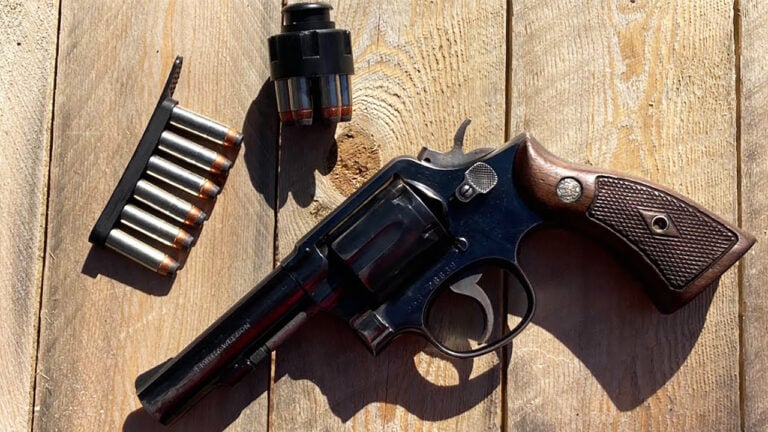
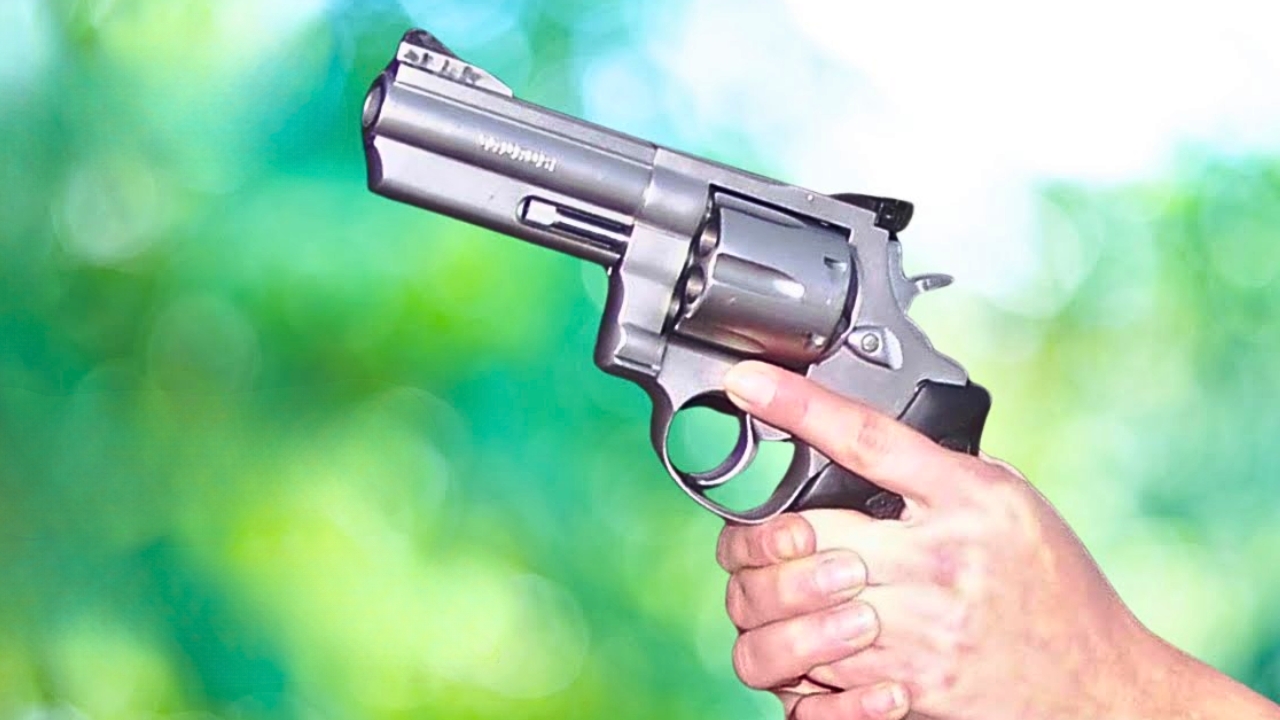
The .44 Magnum is most commonly carried in revolvers, and that matters in bear country. Revolvers don’t depend on slide movement, magazine springs, or precise grip technique. In cold weather, under stress, with gloves on, or when firing from awkward positions, that simplicity counts. A revolver loaded with heavy .44 Magnum rounds doesn’t care if the gun is pressed into something, if the shooter’s grip isn’t perfect, or if the ammo is too hot or too slow to cycle an action.
That doesn’t mean revolvers are flawless. They can fail, and when they do, the failures can be serious. But in the specific context of animal defense—where shots are few, distances are short, and conditions are ugly—many people still trust a revolver more than a semi-auto. The .44 Magnum fits naturally into that mindset because it was built around that platform from the start.
Shot placement still matters, even with a heavy hitter
One of the most dangerous myths around the .44 Magnum is that power replaces precision. It doesn’t. A miss with a .44 Magnum is still a miss, and a poorly placed hit can still fail to stop a determined animal quickly. Bears don’t react like steel plates or ballistic gel. Adrenaline, momentum, and sheer mass can keep them moving even after serious injury. You still need to hit something that disrupts movement or vital function.
This is where training reality creeps in. Heavy recoil, muzzle rise, and long double-action triggers make fast, accurate shooting harder than people like to admit. The .44 Magnum doesn’t forgive poor fundamentals. If you can’t put rounds where they need to go under stress, the caliber won’t save you. The people who succeed with it are usually the ones who shoot it regularly and honestly assess their limits.
Recoil is the biggest practical limitation
Recoil is where the .44 Magnum loses people, and for good reason. Full-power loads are punishing, especially in lighter revolvers. Follow-up shots are slower. Fatigue sets in faster during practice. Some shooters flinch without realizing it. All of that directly affects real-world performance. A caliber you don’t practice with enough becomes a liability, not an asset.
This is also why some people carry reduced-power loads or practice with lighter ammunition and only load heavy bear rounds in the field. That approach can work, but it requires discipline. You need to know exactly how your carry load shoots compared to your practice ammo. Point of impact shifts matter when distances are short and reaction time is minimal. The recoil tradeoff is real, and pretending otherwise doesn’t help anyone.
Capacity and reload speed are real disadvantages
Most .44 Magnum revolvers carry five or six rounds. That’s it. Reloads are slow under stress, especially with gloves, cold hands, or adrenaline. In most bear encounters, you’re not firing dozens of rounds, but you also don’t get a redo. If your first few shots don’t stop the charge, you’re already deep into worst-case territory.
This doesn’t automatically disqualify the .44 Magnum, but it does define the margin you’re working with. You’re betting on decisive hits rather than volume. Some people are comfortable with that. Others aren’t. It’s an honest tradeoff that should factor into your decision, not something to hand-wave away because the caliber sounds impressive.
Weight and carry comfort matter more than people admit
Big .44 Magnum revolvers are heavy. That weight can be a blessing when shooting and a curse when carrying all day. Hikers and hunters often underestimate how much that matters over miles of rough terrain. A gun that feels manageable at the trailhead can feel like an anchor hours later. Comfort affects whether you actually carry the gun consistently, and consistency matters more than theoretical performance.
This is where holster choice, belt quality, and carry method become just as important as caliber. A poorly supported revolver will get left behind. A well-supported one becomes part of your kit. People who successfully carry .44 Magnums in the woods usually invest as much thought into carry as they do into ammo selection.
Ammo choice matters more than the headstamp
Not all .44 Magnum ammo is created equal. For bear defense, penetration is the goal, not expansion. Heavy, hard-cast bullets with flat noses are commonly chosen because they hold together and drive deep through bone and muscle. Lighter, fast-expanding hunting loads designed for deer-sized game may not behave the same way on a large predator.
Availability matters too. Being able to source proven loads consistently is part of maintaining confidence in your setup. Retailers like Bass Pro Shops often carry a range of .44 Magnum options, but you still need to verify what your revolver shoots well and where it hits. The label on the box matters less than real-world performance from your gun.
Where the .44 Magnum still makes sense—and where it doesn’t
The .44 Magnum still makes sense for experienced shooters who can manage recoil, place shots under pressure, and are willing to carry a heavier revolver in exchange for deep penetration and mechanical simplicity. It’s especially common among people who spend extended time in bear country and want a sidearm that doesn’t rely on magazines or cycling under extreme conditions.
Where it falls short is for shooters who don’t practice enough, who are recoil-sensitive, or who prioritize lighter carry and faster follow-up shots. For them, the .44 Magnum can become more burden than benefit. Choosing it because of reputation alone is a mistake. Choosing it because it fits your skill set, environment, and tolerance for tradeoffs can still be a rational decision.
Like The Avid Outdoorsman’s content? Subscribe to our newsletter so you never miss an article.
Here’s more from us: