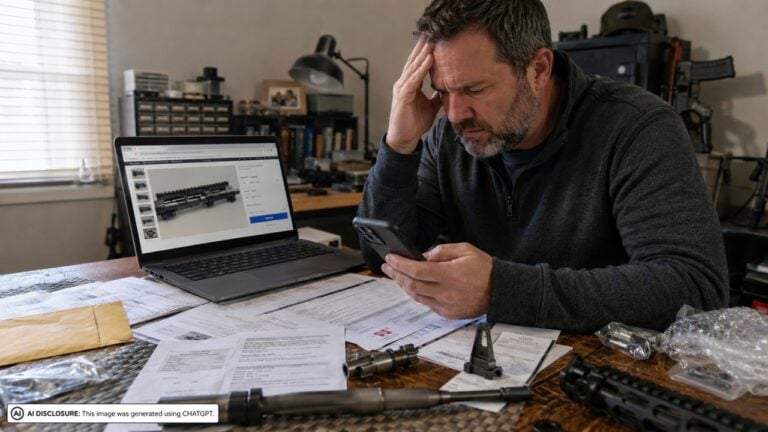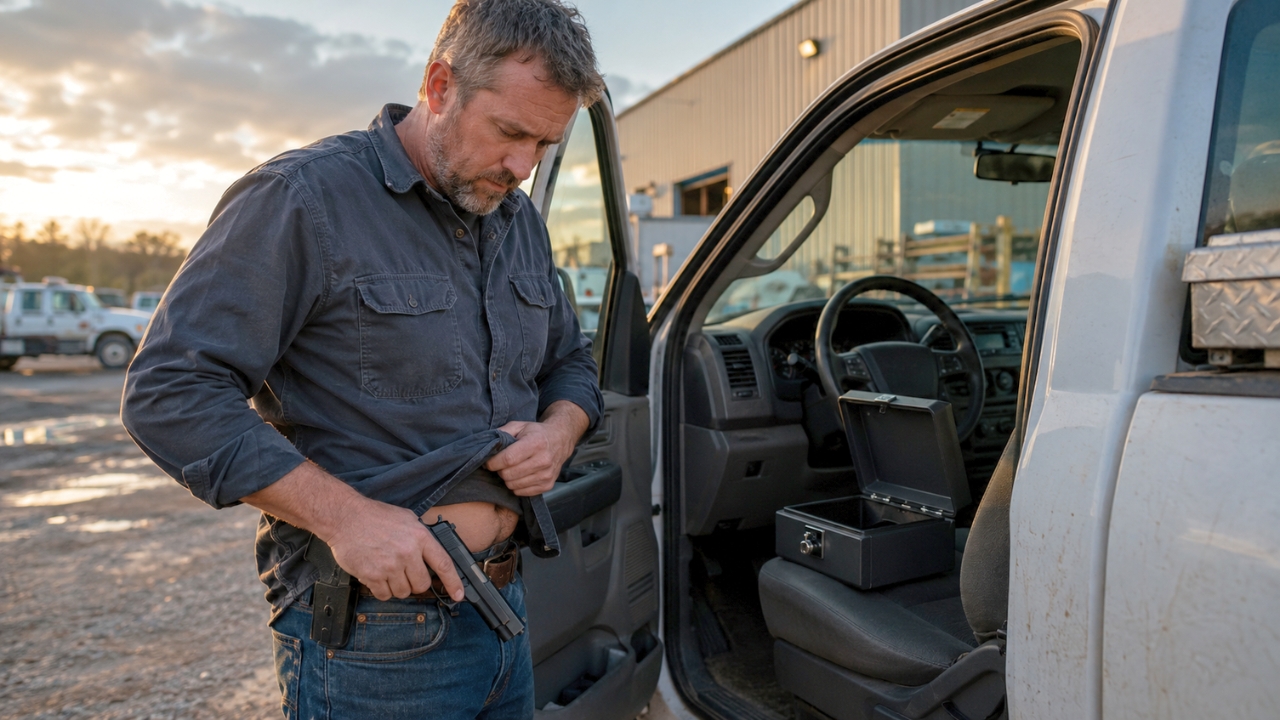
Photo credit: The Avid Outdoorsman
The worker had been at the job for almost three years.
That matters, because this was not a brand-new hire trying to stir the pot on day one. He had been there long enough to build a routine, understand the work, and probably know what kind of risks came with the job. Then the company announced a policy that changed the way he looked at staying there.
No firearms in company trucks.
In a Reddit post, the worker said his company had suddenly announced that employees could no longer have firearms in company vehicles. From the way he described it, this was a serious problem because he worked out of those vehicles and had been carrying for personal protection.
That is where workplace carry gets complicated fast.
A lot of people think of carry at work as a simple yes-or-no question. Either you can carry, or you can’t. But company vehicles create their own mess. You may not be inside an office. You may be driving between jobs, stopping for fuel, going into unfamiliar areas, working around strangers, or dealing with late hours. For some workers, the vehicle is basically their office, break room, and supply closet all in one.
So when the company says no firearms in the truck, it is not only banning carry at a desk. It is controlling what a worker can have with him all day.
The poster seemed to feel that pretty heavily. He was not talking about showing off a gun or making coworkers uncomfortable. He was talking about being on the road, in a company vehicle, and suddenly being told that the one thing he carried for protection was no longer allowed.
That puts a person in a hard spot.
If he follows the rule, he keeps the job but gives up carrying during work hours. If he ignores the rule, he risks termination if the company finds out. If he leaves, he loses a job he has had for years. None of those options feel great, especially if the worker genuinely believes the job takes him into places or situations where being armed matters.
The company’s side is also pretty easy to understand, even if the rule frustrates employees. A company truck belongs to the company. If something happens involving a firearm inside that truck, the employer may worry about liability, insurance, workers’ comp, public image, customer complaints, or policy enforcement. Management may decide it does not want to sort through who is responsible and careful and who is not.
So they make one blanket rule.
That blanket rule may feel unfair to the guy who has carried safely for years. But from the company’s view, simple policies are easier to enforce than judgment calls.
That is the cold part of it.
The worker had to decide what mattered more: keeping the job or keeping his carry routine. And that is not a small decision. People have bills. They have families. They have mortgages, vehicles, kids, and all the normal reasons adults cannot just quit every time a policy irritates them. At the same time, personal safety is not something people easily shrug off, especially if they have carried daily for years and feel uncomfortable being forced to stop.
A few details make these kinds of rules even more annoying for workers. Depending on state law, someone may be allowed to keep a firearm locked in a personal vehicle in a company parking lot. But a company truck is different. It is not the employee’s private vehicle. The company has more say over what goes into it. That distinction can catch people off guard.
It is also why switching to “just leave it in the car” may not work if the employee spends the day in a company vehicle far from his personal one.
So the worker was not just venting about a policy. He was weighing a real tradeoff. Does he obey and stay? Does he look for another job? Does he quietly keep carrying and accept the risk? Does he try to get an exception? Does he ask too many questions and put himself on the radar?
None of those choices are clean.
The bigger lesson here is that company policy can change overnight. A worker may spend years under one understanding, then a new rule comes down and suddenly everything has to be reconsidered. Sometimes it comes after an incident. Sometimes it comes after insurance review. Sometimes it comes from corporate. Sometimes nobody explains much at all.
For this worker, the message was clear: the truck may feel like his workspace, but it was not his truck. And once the company drew the line, carrying in it became a job-risk decision.
That is the kind of policy change that makes a person sit in the parking lot and think hard about what he is willing to give up to keep a paycheck.
Commenters mostly treated it like a tough but predictable workplace-policy problem.
Several people said company vehicles are different from personal vehicles. If the truck belongs to the employer, the employer can usually set rules for what is allowed inside it. That may be frustrating, but it is not surprising. A few commenters said the worker should not confuse his personal carry rights with what the company is willing to allow in its own equipment.
Others were more sympathetic. They said if the job sends workers into rough areas, late calls, remote sites, or unknown properties, the company should understand why employees want some way to protect themselves. Some felt it was unfair for the company to send people into risky situations while also banning the tools they trust most.
A lot of commenters warned him not to ask too many questions unless he was ready for the answer. Once a person starts pushing management on gun policy, he may put himself on the list of people they watch more closely. If he plans to comply, fine. If he plans to leave, fine. But if he plans to quietly ignore the policy, bringing attention to himself is about the worst move.
Some suggested looking for another job if carrying mattered that much to him. That advice sounds simple, but commenters understood it was not always easy. Still, several said a person has to decide where his line is. If being unarmed all day is unacceptable, then staying may not be worth it.
Others suggested non-firearm tools where legal and allowed: pepper spray, a flashlight, better situational awareness, and avoiding risky stops when possible. Nobody pretended those were the same as a firearm, but if the company bans guns and the worker stays, he still needs some kind of safety plan.
The main point was hard but clear: the company made the rule, and now the worker had to choose. Follow it, fight it, leave, or risk getting fired. There was no magic answer that let him keep everything exactly the way it had been.