Photo credit: The Avid Outdoorsman
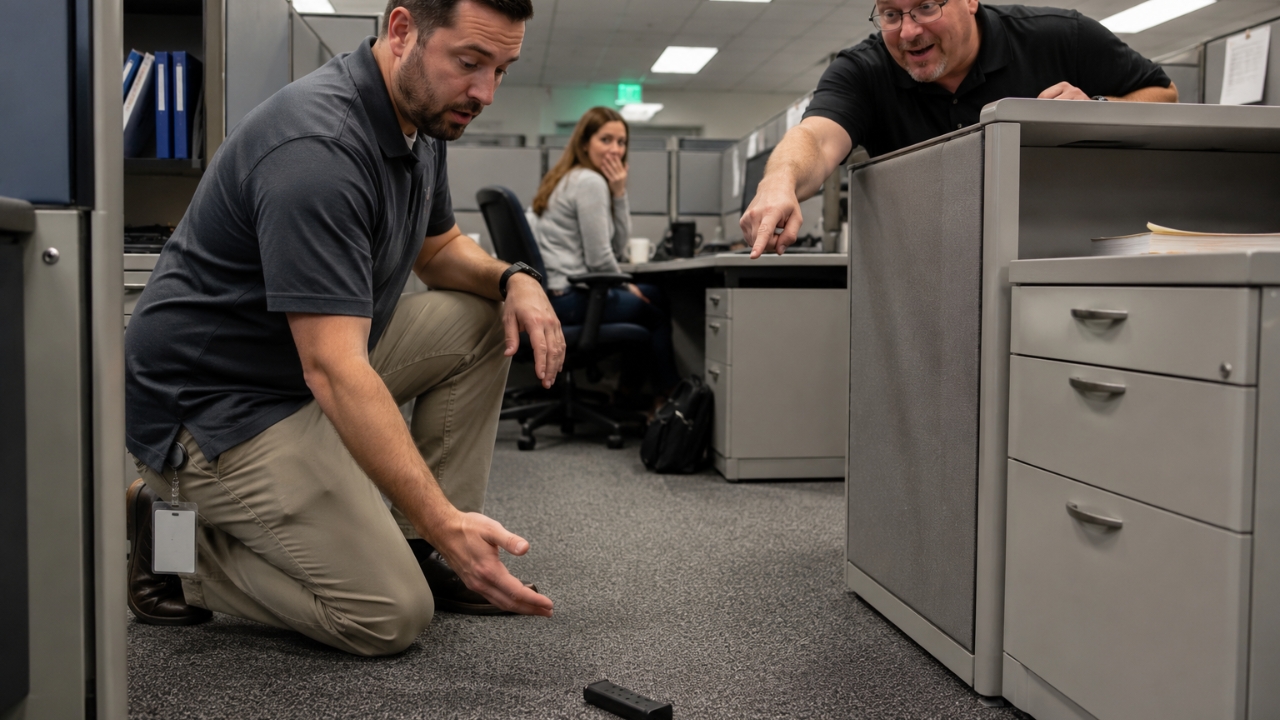
A concealed carrier in Reddit’s r/CCW shared a workplace carry mistake that never became a full-blown gun incident, but still left him exposed in the exact way concealed carriers try hardest to avoid. He said he worked in an office with a company policy of no guns, and twice in his cubicle he leaned back far enough that the spare magazine for his Ruger LCP fell out of the side pocket of his vest. Both times, a different coworker noticed it before he could recover cleanly. In the original Reddit thread, he told the story in the middle of a broader discussion about carrying at work and admitted he eventually had to come up with a better way to carry the spare mag: https://www.reddit.com/r/CCW/comments/1rpv7yu/do_you_carry_at_work/.
What makes the story so uncomfortable is how small the original failure sounds and how socially damaging it becomes once you picture it at a desk. This was not a pistol hitting the floor in a bathroom or a negligent discharge in a conference room. It was a magazine. But in an office with a no-guns policy, a spare magazine falling out is not just a piece of metal landing in carpet. It is a clue. It tells the wrong person the rest of the equation without ever showing the gun itself. Once a coworker recognizes what just hit the floor, the whole “concealed means concealed” idea is already breaking down.
The detail that really gives the story its shape is that it happened twice, and that a different coworker noticed each time. That means this was not one freak one-second embarrassment that he could chalk up to terrible luck and move past. The first time could still be treated as a fluke in his own mind, even if it rattled him. The second time turns it into a pattern. At that point the problem is not the coworker’s smirk or his own bad timing. The problem is the setup itself. Something about the way he was carrying that spare mag in the side vest pocket was loose enough, exposed enough, or poorly supported enough that ordinary movement at a desk could dump it into view.
That setting matters a lot. A cubicle sounds tame, which is exactly why this kind of failure is so revealing. He was not wrestling, running, climbing, or doing yard work. He was leaning back in an office chair. If a carry arrangement cannot survive that, then the issue is not that daily life became too dynamic. The issue is that the system was not really under control in the first place. Office carry has its own challenges — sitting all day, tucked-in clothing, close quarters, no room for obvious cover garments, and a lot of interactions where even tiny bits of printing or dropped gear get noticed fast. The magazine falling out twice in that setting is the carry equivalent of a silent alarm going off.
The comment itself was short, but the smirk detail tells you almost everything you need to know about the social fallout. Neither coworker apparently freaked out. They did not call security. They did not start yelling. They noticed the magazine, handed it to him, and gave him a look that he interpreted as at least a little amused. In some ways that is better than the alternatives. In other ways, it may be worse. A quiet, knowing smirk means the secret is not really secret anymore. It means the coworker has put the pieces together and decided not to make a formal issue out of it, at least not yet. For the carrier, that kind of silent awareness can be even more unnerving than open confrontation, because it leaves you wondering what exactly the other person now thinks, assumes, or might say later.
That is part of what makes workplace carry different from carrying almost anywhere else. If a gear issue shows up in a grocery store, you may never see those witnesses again. At work, the people who notice are the same people around you tomorrow morning, next week, and during every awkward breakroom conversation afterward. An exposed spare magazine does not just hit the floor and vanish. It changes the social air around the person who dropped it, especially in a company that does not allow firearms on site. Coworkers may say nothing. They may joke quietly. They may decide you are reckless. They may decide you are cool. But whatever conclusion they come to, you do not really get control over it once the magazine is in someone else’s hand.
The rest of the thread helps explain the environment this comment landed in. The broader discussion was full of people talking about whether they carry at work, whether company rules matter if personal safety is the bigger concern, and how people adapt when workplace policies and self-protection do not line up cleanly. In that context, the dropped-magazine story functions almost like the quiet version of the office “desk pop” people fear. No one got hurt. No shot was fired. No manager came running. But the same underlying issue is there: workplace carry stops being discreet the moment gear gets careless enough to announce itself.
The comments around work carry in that thread also show the kind of compromise people try to strike. Some said they keep firearms locked in their cars or in discreet locked cases in bags. Others said they simply do not carry at work because they are too far along in their careers to risk losing severance or benefits. A few talked about small pistols like the LCP as the easiest option when someone insists on workplace carry because they are so easy to hide. That makes the spare-magazine story even more interesting. The LCP itself may be easy to conceal, but the support gear still has to work. A tiny pistol does not guarantee tidy concealment if the magazine is riding loose in a pocket that dumps it onto the office floor every time the wearer shifts wrong.
There is also something uniquely telling about the phrase he used afterward: “Yes I figured out a better way to carry a spare magazine.” That line is dry, but it says a lot. He was not arguing that the coworkers were nosy or that the policy was unfair. He was not doubling down and pretending the setup should have worked. He had already accepted the real lesson. The fix was not social. The fix was practical. If a side vest pocket cannot hold a spare mag through normal desk movement, then that side vest pocket is not where the spare mag belongs.
That kind of quiet correction is probably what keeps these smaller workplace-carry stories from turning into disasters. Not every failure needs to end with police, HR, or a formal incident report to be serious. Sometimes the warning comes in a much softer form: a tiny metal magazine on the carpet, a coworker bending down to pick it up, and a smirk that tells you the margin between “nobody knows” and “someone definitely knows” is much smaller than you thought. In a no-guns office, that is enough.
By the end of the comment, the outcome was simple. He fixed the carry method. But the story lingers because of what had to happen first. Twice, in his cubicle, an LCP magazine fell out where coworkers could see it. That is not a dramatic gun story in the usual sense. It is something quieter and, for a person trying to carry discreetly at work, maybe just as bad: proof that the setup was already betraying him before the gun itself ever had to.