Photo credit: The Avid Outdoorsman
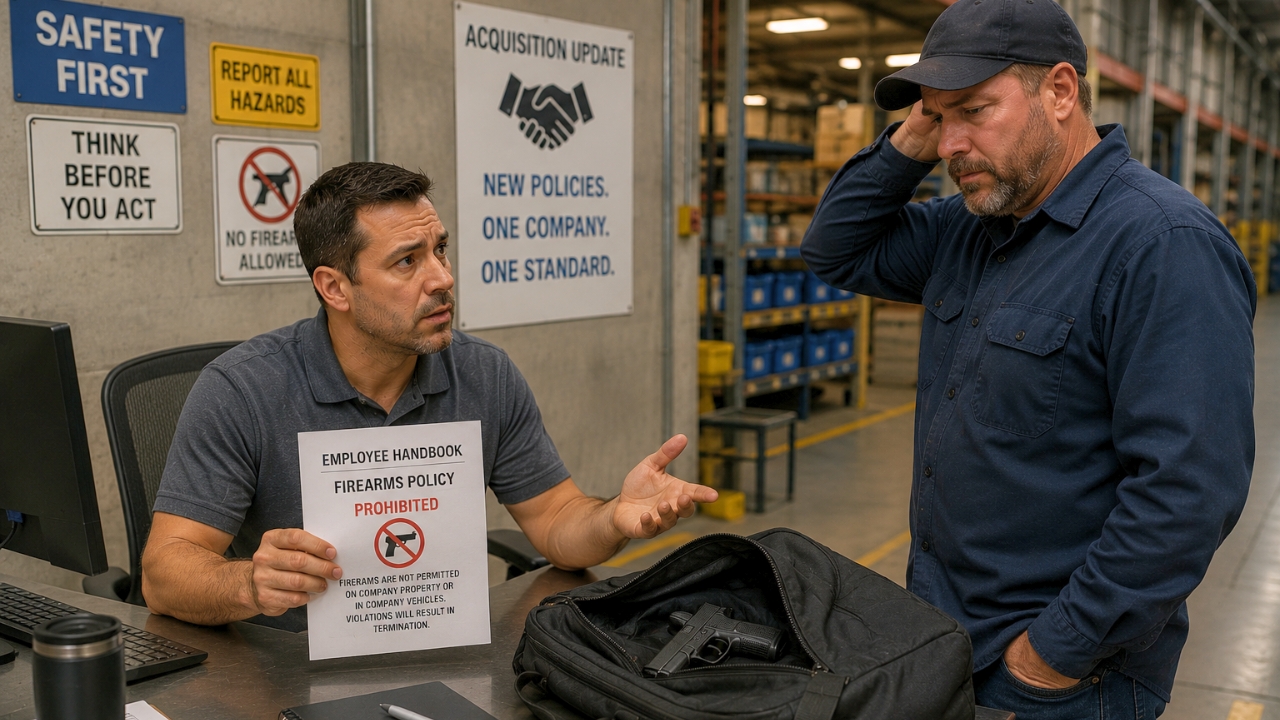
A Reddit user in r/CCW described a workplace carry situation that was already uneasy before one careless decision made it worse. He said his company had gone through an acquisition, and with it came a harder firearms policy than what people had been used to before. That alone had already changed the tone around carrying at work. But according to his comment, one guy still managed to leave his gun behind in a bag at work anyway. He told the story in this Reddit thread: https://www.reddit.com/r/CCW/comments/111is33/work_carry/
What makes the story work is that it is not really about one dramatic discovery. It is about the way workplace carry gets more fragile the second policy, management, and loose personal habits stop lining up. Before the acquisition, the environment apparently had more gray area, more room for people to treat carry as something quietly understood even if not officially embraced. Afterward, the rule got harder. Once that happened, every careless move carried more weight, because now the risk was not only safety or embarrassment. It was employment too.
That is what gives the forgotten gun-in-a-bag detail its force. A firearm left in a bag at work is already a bad idea in most settings. In a workplace that has just tightened its rules, it becomes even worse because the mistake no longer sits inside a quiet informal culture. It now exists inside an environment where management has more reason than ever to react hard if the wrong person finds it. The gun is no longer simply misplaced. It is now a policy problem waiting to happen.
The bag part matters because it says a lot about the false sense of control people get from off-body carry at work. A bag feels safer to some carriers because it is close, private, and easier to explain away than a gun on the waist. But a bag is only secure while it stays attached to the owner’s attention. The second it gets set down, left behind, or separated from the person carrying it, the firearm becomes something other people can access, discover, or report. In this story, that is exactly what turned a tense workplace rule environment into something much more concrete.
There is also something especially ugly about this happening after a policy change. When companies tighten firearms rules, workers usually know the room for error has gotten smaller. Even people who disagree with the policy understand that a single bad incident can now be used as proof that management made the right call. That is what makes the forgotten bag gun feel bigger than one person’s mistake. It hands the strictest voices in the building exactly the example they want. Once that happens, anyone else who hoped to quietly keep carrying is now working under the shadow of somebody else’s sloppiness.
The social side of it matters too. A gun found in a bag at work is different from a hidden gun no one ever notices. The moment it is discovered, someone else has to decide what to do with it. A coworker might panic. A supervisor might escalate immediately. Security or HR might get involved. Even if the gun owner gets lucky and the situation stays quiet, the trust inside the workplace has already changed. People now know the firearm was not only present, but separated from its owner and left where it should not have been.
That is part of what makes work-carry stories harsher than a lot of other carry mistakes. In a restaurant or movie theater, the fallout may be public embarrassment. At work, the fallout can hit your paycheck, your coworkers, and the entire future of what the company tolerates. One guy leaving a gun in a bag is not just one guy’s problem anymore. It becomes everybody’s example.
The replies in work-carry threads like this usually split between people who say workplace carry is worth the risk and people who say the risk ends the second the gun stops being under direct control. This story clearly fed the second camp. A firearm left in a bag at work is the kind of thing that makes even pro-carry people shake their heads, because it combines the worst parts of off-body carry with the worst parts of policy violation.
A lot of commenters tend to come back to the same point in situations like this: if you are going to carry at work in a place that does not want you to, then the burden to be disciplined gets much higher, not lower. That means keeping the gun on you, keeping it secure, and never letting it become something someone else finds before you do. Once it ends up in a forgotten bag, all the quiet logic people use to justify workplace carry gets a lot harder to defend.
What lingers is not a shootout, a dramatic arrest, or a screaming HR scene. It is something much more ordinary and, in a lot of ways, more damaging: a stricter workplace, a gun in a bag, and one careless employee proving exactly how fast a quiet carry culture can turn into a problem management feels forced to crush.
Like The Avid Outdoorsman’s content? Subscribe to our newsletter so you never miss an article.
Here’s more from us: