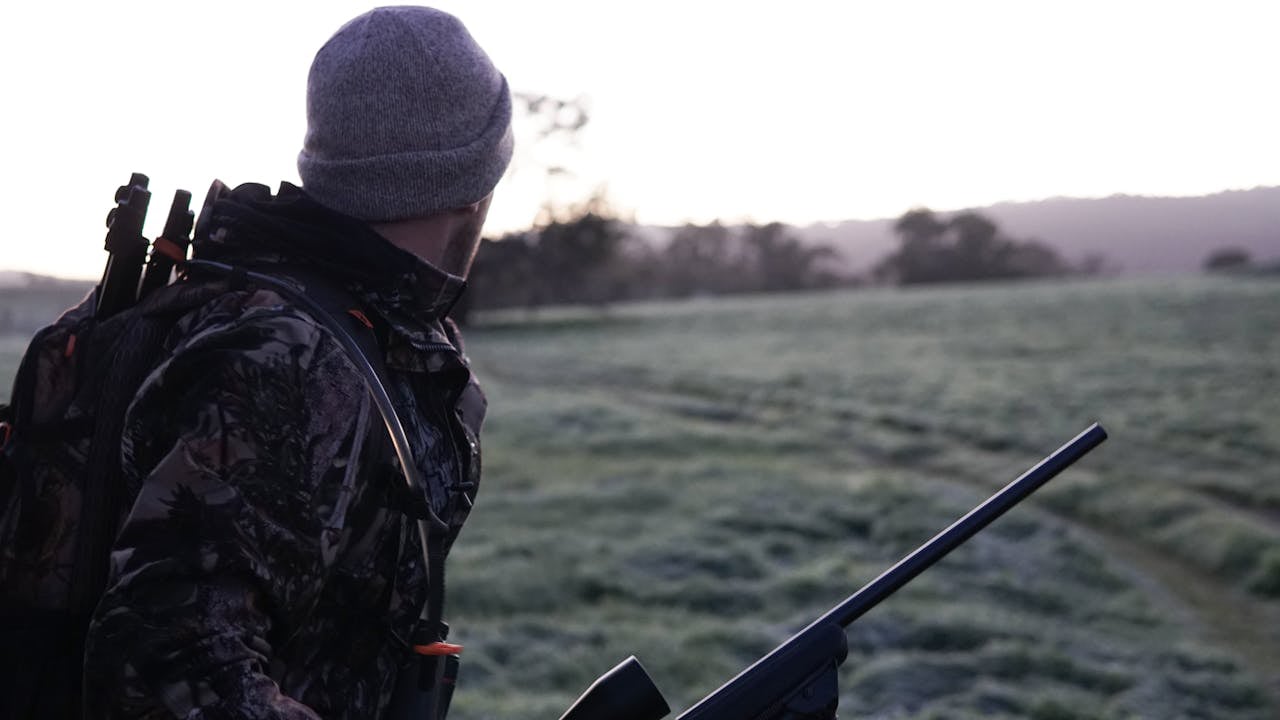
Photo credit: Elle Hughes/Pexels.com
He was hunting public land, so he already knew he was not out there alone.
That is part of the deal. You park at the access point, see other tire tracks, maybe pass another hunter on the way in, and remind yourself that the woods are big enough for everybody if people use their heads. Most public-land hunters accept that. They may not love the pressure, but they know it comes with the territory.
What they do not accept is a bullet coming close enough to hear it.
The story came up in a Reddit thread where hunters were sharing some of the scariest things they had ever experienced in the field. One commenter said his came during a public-land hunt, and it was bad enough that it changed how he looked at hunting public ground altogether.
He said a bullet whizzed past his head.
That is not the kind of thing you brush off. A branch cracking nearby is one thing. A shot somewhere across the ridge is one thing. But a bullet passing close enough that you know exactly what it was? That gets into your bones fast.
The hunter did not lay it out like some long, dramatic campfire story. That actually made it feel more believable. There are some moments people do not dress up with a bunch of extra words because the thing itself is enough. A bullet came by his head while he was hunting. That was the whole nightmare.
And if you have spent any time around hunting, you know why that would shake a person so badly.
Public land can bring out the best and worst in people. Some hunters are careful, respectful, and almost overly cautious because they know other people may be in the area. Others act like the woods empty out the second they step in. They shoot toward movement, rush decisions, ignore what sits beyond the target, or get so locked in on deer that they forget humans may be in the same timber.
That is what makes a close shot so terrifying. You do not even need to know who pulled the trigger to understand what went wrong. Somewhere nearby, someone fired a round without making sure the shot was safe. Maybe they did not know the hunter was there. Maybe they did not see him. Maybe the land rolled in a way that hid him. Maybe brush, distance, or low light played a role.
But none of that matters much when you are the one who hears a bullet go by.
A lot of hunters talk about public land like it is the great equalizer, and in many ways, it is. It gives people access who do not own land or have leases. It lets new hunters learn. It keeps hunting from becoming a rich man’s game. But the downside is you cannot control who else shows up, how careful they are, what direction they walk in, where they sit, or what they think is a good shot.
That lack of control is hard enough when someone walks under your stand or messes up a morning hunt. It is something else entirely when someone’s bullet nearly finds you.
According to the commenter, the experience was enough to make him go home and eventually buy his own land.
That detail says a lot. Buying land is not a small decision. It takes money, planning, maintenance, taxes, fencing, access work, and plenty of headaches. Nobody does that on a whim because one squirrel barked too loud. But a near miss with a bullet can change your math in a hurry.
All of a sudden, private land is not just about better deer or less pressure. It is about knowing who is hunting there. It is about setting the rules. It is about controlling where stands go, where shooting lanes point, and who has permission to be on the property. It is about not wondering if the guy over the ridge knows what he is doing with a rifle.
That is the emotional gut of the story. The hunter did not just get scared. He lost trust in the setup around him. Public land depends on strangers making good decisions. Most do. But the one who does not can ruin more than a hunt.
And that is what happened here.
He walked in expecting the usual public-land risks: pressure, competition, maybe somebody bumping deer. He came out with the kind of memory that makes a person rethink where he hunts, who he hunts around, and how much risk he is willing to accept just to spend a morning in the woods.
The thread was full of hunters sharing scary field experiences, so the bullet story fit right into a larger conversation about how fast things can go wrong outdoors.
Some hunters talked about animal encounters, strange sounds, and spooky moments in the woods. But stories involving gunfire had a different weight to them. A creepy noise might turn out to be a raccoon. A pair of eyes in the dark might be a deer. A bullet passing near your head is not something you can explain away once your pulse slows down.
Several commenters in the broader discussion pointed toward the same basic hunting rule: know your target and what is beyond it. That rule gets repeated so often that it can start sounding like background noise, but this is exactly why it exists. A missed shot does not simply disappear. A rifle round can travel a long way, and if the person behind the trigger does not know what sits beyond the deer, every other hunter in the area is trusting him with their life.
Others talked about public-land pressure and how chaotic it can feel during busy seasons. Opening weekends, firearm seasons, and easy-access parcels tend to draw people with wildly different levels of experience. Some are careful and seasoned. Some are new. Some are impatient. Some are too confident. And unless you know them personally, you are taking all of that on faith.
A few hunters said they understood exactly why the commenter bought land afterward. Not everyone can afford to do that, but the reasoning made sense to them. Private land does not eliminate risk completely, but it lets you reduce the number of unknown people with guns in the woods around you.
There was also an unspoken agreement in the thread that close calls stay with you. You can keep hunting after one. Plenty of people do. But you do not forget the sound, the timing, or the realization that somebody else’s bad decision almost became your family’s tragedy.
The story did not need a huge ending. Nobody had to be tackled. Nobody had to call the game warden. Nobody had to confront the shooter in a screaming match at the parking lot. The scariest part was that the hunter may never have known exactly who fired, what they were aiming at, or how close it came to being worse.
He just knew a bullet went past his head.
For a lot of outdoorsmen, that would be enough. Enough to leave early. Enough to rethink the place. Enough to start saving for land where the only people hunting nearby are people you invited.