
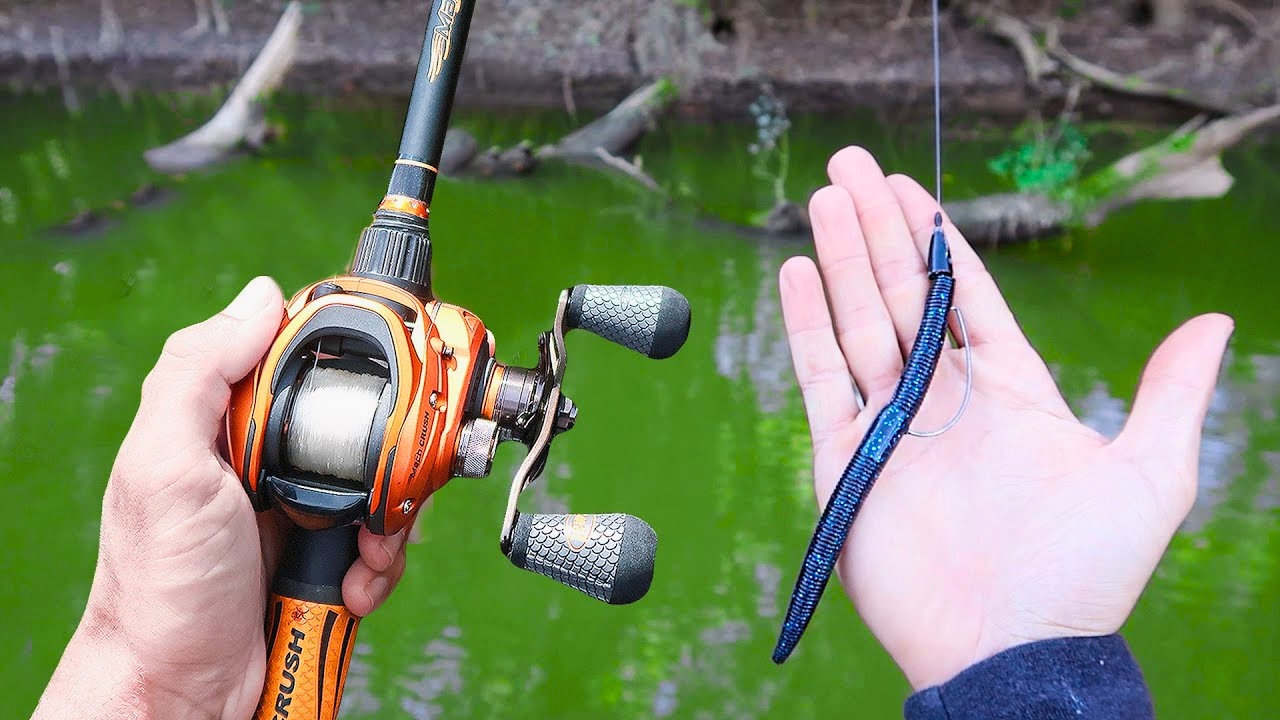
Photo credit: KickinTheirBASSTV/YouTube
Soft plastics are the backbone of bass fishing because they can be made to do almost anything: fall straight, glide, crawl, dart, or hover. They also catch fish when bass won’t commit to hard baits, which is why anglers lean on them during tough conditions and pressured water. But soft plastics only perform the way they’re supposed to when they’re rigged straight, balanced, and matched to the right hook and weight. The frustrating part is that a plastic can be rigged “almost right” and still look fine above water, while underwater it spins, falls awkwardly, hangs up more than it should, or presents the hook point in a way that leads to missed fish. A lot of slow days are not “no fish” days. They’re “bad rig” days.
The most common rigging issue is a bait that isn’t perfectly straight. When a worm, creature bait, or stick bait is even slightly crooked, it doesn’t fall naturally, and it often causes line twist, especially on weightless rigs. A crooked rig can also cause the bait to helicopter on the fall, which looks wrong to fish and pulls it out of the lane you meant to fish. That matters when you’re targeting edges, holes in cover, dock corners, or specific pieces of structure where the fall is the strike. If the bait isn’t falling straight into the strike zone, you’re not really presenting the lure you think you’re presenting, and fish that would eat a clean fall will follow a bad one and refuse or swipe without getting hooked.
Crooked Texas rigs ruin more bites than people want to admit
Texas rigging is supposed to make a bait weedless while still letting it move freely, but it only works when the hook runs down the exact centerline of the bait. The biggest mistake is entering the nose slightly off-center, then exiting the hook point through the body at a spot that “looks fine” but forces the plastic to bend. That bend creates constant torque during the retrieve and during the fall. In the water, that torque often makes the bait roll slightly or spin, especially if you’re using a heavier bullet weight and the bait is falling fast. Fish can still bite it sometimes, but you’ll get fewer confident eats and more “tap-tap, nothing” moments where the fish is investigating and deciding against it.
The fix is to slow down the rigging process and build a repeatable method. Insert the hook point dead center in the nose, come out at the exact distance needed for the hook bend, slide the bait up to the eye, rotate the hook, then lay the hook alongside the bait to see where the point should re-enter. That “lay it alongside” step is what many anglers skip, and skipping it is how you end up re-entering too far forward or too far back, which makes the bait kink. When you re-enter, make sure the point exits dead center on the back. If it exits slightly to one side, it will pull to one side underwater, and you’ll wonder why the bait feels wrong.
Hook gap and bait thickness have to match or you’re setting yourself up to miss
A soft plastic can be rigged straight and still fail if the hook size and hook gap don’t match the bait’s body. Too small of a hook gap relative to the bait thickness means the plastic blocks the hook point during a bite, and you get poor penetration. Too large of a hook can overpower the bait, make it look stiff, or cause it to hang in cover more than it should. Many anglers default to a single hook size for everything, especially with EWG hooks, but a thick creature bait needs different geometry than a slender worm. The correct match keeps the hook point accessible and the bait’s action natural.
A fast way to check is to look at the hook point when the bait is rigged. You should have a clear path for the point to drive through without having to fight a huge chunk of plastic. If the plastic fully fills the gap, you’re asking the fish’s mouth pressure to collapse the bait perfectly before the hook can bite, and that leads to missed fish. This is also where “texposed” rigging is misunderstood. Burying the point deep may feel weedless, but if the point is too buried, the hook may never clear the plastic on the hookset. The better approach is to keep the bait straight, keep the point lightly skin-hooked when needed, and use the correct hook gap so the point can do its job.
Bullet weight size and pegging choices change the entire fall
On a Texas rig, weight is not only about depth. It’s about fall rate and how the bait behaves when it hits cover. A weight that’s too heavy makes the bait drop unnaturally fast and can cause it to pendulum back toward you, missing the target lane. A weight that’s too light can keep the bait from getting through light cover or reaching fish holding slightly deeper. Pegging the weight is another detail that changes how the bait behaves. A pegged weight keeps the bait compact, helps it punch through vegetation, and makes the bait fall more as one unit. An unpegged weight lets the bait separate, which can look more natural in open water or around sparse cover because the bait has a freer glide.
Many anglers peg by default because it feels controlled, but pegging in the wrong situation can make a bait look unnatural or make it get stuck more. If you’re flipping thick cover, pegging makes sense because you need the weight and bait to travel together. If you’re fishing around rock, gravel, or scattered wood, leaving the weight unpegged can let the bait float slightly behind the weight and slip through gaps more naturally. The key is to choose pegging based on the cover and the fall you want, not as a habit you never revisit.
The quick tests that reveal a bad rig before you waste a dock line
You can diagnose most rigging problems with two quick tests. The first is the sightline test: hold the bait up and look straight down the back to confirm the hook shank sits centered and the bait is not kinked. The second is the fall test: drop the rig next to the boat in clear water and watch the fall for a few feet. A properly rigged bait should fall straight and stable. If it spins, helicopters, or pulls to one side, it will look wrong to fish, and it will also twist your line, which creates more issues as the day goes on. Line twist can turn a good presentation into a mess, especially with weightless plastics, because the bait ends up behaving inconsistently from cast to cast.
Another useful check is to make a short retrieve beside the boat and watch whether the bait tracks straight. A crooked worm often swims like it’s trying to curve or climb. A creature bait rigged off-center often rolls slightly and looks awkward. These tests take less than a minute, and they save hours of fishing a rig that never had a chance to look natural.
straight, balanced, and matched beats “close enough” every time
Soft plastics are forgiving in the sense that they can catch fish in a lot of conditions, but they are not forgiving about rigging quality when the bite is tough. A bait that is slightly crooked, matched with the wrong hook gap, or paired with a weight that forces an unnatural fall will get fewer committed bites and produce more missed fish. The fix is not complicated, but it requires discipline: rig slower, keep the bait perfectly straight, match hook geometry to bait thickness, and choose weight and pegging based on cover and fall behavior. When your plastics fall clean, track naturally, and expose the hook correctly, they become what they’re supposed to be: a presentation that catches fish even when nothing else looks edible.
Like The Avid Outdoorsman’s content? Subscribe to our newsletter so you never miss an article.
Here’s more from us:


