Photo credit: Gaspar Zald/Pexels.com
Most “camp hatchets” are short, light, and blunt. They’re fine for pounding stakes and hacking at small stuff, but they often bounce off knots and don’t drive deep unless you really swing hard. A good splitting tool for kindling isn’t about looking tough — it’s about wedge shape, weight where it matters, and control when your hands are cold and the wood is ugly. Some knives can do it (carefully), but the best options are tools designed to split without needing perfect technique.
Quick reality check: batoning any blade carries risk. If you care about your knife, use tools meant for splitting. If you baton a knife anyway, keep your hits straight, avoid twisting, and don’t try to “pry” the split open with the blade.
Small forest axe (better than most hatchets)

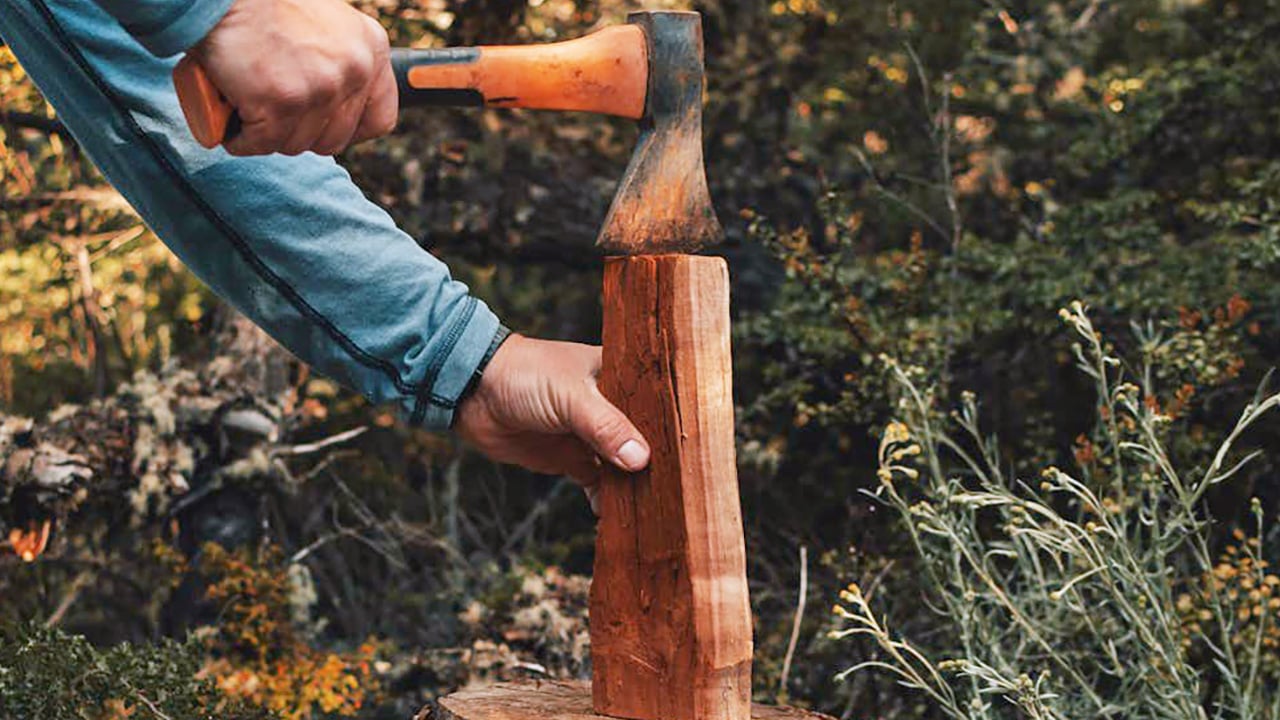
A short forest axe in the 19–24 inch range out-splits most tiny hatchets because it has more head weight and more handle leverage, which means it bites and drives without you swinging like a maniac. It’s easier to be accurate with, and it splits kindling faster because it actually pushes wood apart instead of just chopping at it.
For camp use, this is the sweet spot: big enough to split, small enough to pack. If you’ve ever fought a 1.25 lb hatchet that keeps sticking, this is the upgrade that makes you feel like you’re cheating.
Fiskars X7 Hatchet

If you want a true “grab-and-go” splitter that doesn’t cost a fortune, the X7 earns its reputation. It bites better than a lot of traditional hatchets because the head geometry and grind are optimized for splitting, and the handle design helps you swing with control instead of wild power. It’s light, but it punches above its weight on kindling.
Where it really wins is efficiency. It splits dry camp wood quickly, and it doesn’t demand perfect technique. If you want a simple, reliable tool that outperforms a lot of “cool-looking” hatchets, this is a smart pick.
Fiskars X11 Splitting Axe

The X11 is one of those tools that makes camp splitting feel easy. It’s not huge, but it has enough length and head shape to split kindling and small rounds cleanly. For many campers, it’s the “one axe” that handles both kindling and normal firewood without being bulky.
It also tends to stick less than some traditional axes because the wedge geometry pushes the split open. If you’re tired of having to yank a hatchet out of wood constantly, the X11 is a big step up.
Estwing Sportsman’s Axe (or similar one-piece camp axe)

One-piece axes earn trust because they’re tough and simple. The Sportsman’s Axe style has enough weight and a solid wedge profile to split kindling consistently, and the one-piece build means you’re not worrying about a loose head in the middle of a trip.
It’s not the lightest tool, but it’s dependable. If you’re hard on gear, or you want something that can handle camp chores without babying it, this is the type of axe that shows up in a lot of trucks for a reason.
Wood splitting maul (small, camp-friendly size)

A true maul is designed to split, not chop. Even a smaller maul drives through ugly wood better than most hatchets because it’s basically a heavy wedge on a handle. You don’t need speed — you need mass and a shape that forces the wood apart. That’s why mauls feel almost unfair on knotty kindling.
The drawback is weight and bulk. But if you’re car camping, hunting camp, or setting up a base camp where you’ll split a lot of wood, a small maul is the fastest way to turn big wood into kindling without fighting it.
Kindling splitter (the stationary ring style)

These are underrated because they look like a “gadget,” but they work. A stationary kindling splitter lets you set the wood in place and strike it with a baton or small hammer, and the blade splits it safely and predictably. No wild swings. Less risk. More control.
If you’re splitting kindling with kids around, in slick conditions, or you just want fewer close calls, this tool absolutely earns its keep. It’s not glamorous, but it’s one of the safest ways to make kindling quickly.
Fixed-blade bushcraft knife with thick spine (used for batoning)

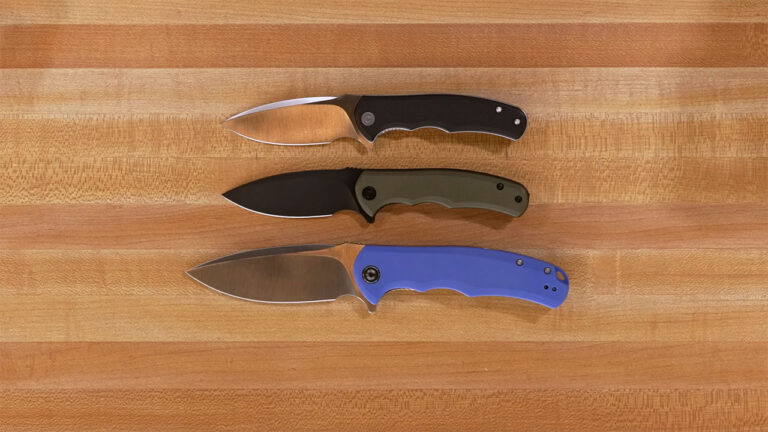
If you’re going to baton a knife, this is the category that actually holds up. You want a full tang fixed blade with a thick spine and a simple, tough steel that won’t chip easily. The blade should be wide enough to act like a wedge, not a thin slicer that just binds in the cut.
A proper bushcraft knife can split kindling well, but the key is using it like a splitting wedge, not like a pry bar. Straight hits, controlled wood, and no twisting. Done right, it works surprisingly well on kindling-sized pieces.
Mora-style fixed blades (for kindling, not brute force)

Mora knives are thin and slice well, which can make them effective for small kindling if the wood isn’t nasty. They can baton small sticks and split feather-stick stock quickly, especially if you’re working with dry pine or straight-grain pieces.
But they’re not made for heavy batoning through knots or thick rounds. If you use them in their lane — kindling and light splits — they work. If you try to force them through tough wood like a wedge, that’s where people get into trouble.
Kukri-style blades

A kukri-style blade can split kindling well because it carries weight forward and hits like a small axe when used properly. You’re getting chopping power plus wedge effect, and that can be very effective on small-to-medium wood. If you’ve ever felt like your hatchet is too short to bite, a kukri can feel like a better “swing tool” in some situations.
The downside is safety and control. It’s a big, fast blade. If you’re tired, cold, or working in a cramped camp setup, it’s easier to make mistakes. But in capable hands, kukri-style tools can outwork a lot of camp hatchets.
Heavy chopper knives (thicker “camp choppers”)

Some chopper knives are basically short machetes with thicker stock and a wedge grind. They can split kindling effectively because they drive into the wood and push it apart instead of just slicing. They’re also handy for brush and quick camp work, which is why people like them as a one-tool option.
The key is geometry. Thin choppers cut brush well but don’t split. Thick wedge-like choppers split better. If you pick the right style, you can get a tool that makes kindling fast without the sticking and bouncing you get from poor hatchets.
Small splitting wedges + a baton

This isn’t sexy, but it’s brutally effective. A couple small steel wedges and a baton (or the back of a small hatchet) will split ugly wood that makes knives cry. Wedges are meant to be hammered. They don’t care about knots, and they’re safer than trying to baton a thin blade through stubborn grain.
If you’re regularly splitting kindling from gnarly wood, wedges are the right tool. They also pack surprisingly well if you carry a small set, and they save your knives from taking abuse they shouldn’t.
Firewood “grenade” wedge (cone splitter)

These cone-shaped wedges look weird, but they work well on rounds and chunkier pieces. You strike the top and the cone forces the wood apart as it sinks. For kindling, it’s more than you need, but for taking larger pieces down into kindling stock, it’s fast and dependable.
This is a car-camping or base camp tool, not a backpacking tool. But if you want an easy way to split without worrying about edge damage, it’s a solid option that beats most hatchets on stubborn wood.
Hatchets with thin “chopping” profiles (why they disappoint)

A lot of hatchets are designed more like mini axes for chopping, not splitting. That means a thinner profile that bites but doesn’t wedge well, so it sticks. In the store they look sharp and aggressive. In camp they get buried and force you to yank them out over and over. That’s why they feel exhausting.
If your hatchet is constantly sticking, it’s usually not your technique — it’s the head geometry. A better splitting profile pushes wood apart instead of burying itself like a knife.
Short machetes used as splitters (when it works)

Some short machetes can split kindling because they’re broad and can be used with batoning or controlled chopping. If you’re in a warm-weather camp where you’re clearing brush and also making kindling, a short machete can pull double duty.
But the steel and grind matter. Many machetes are thin and designed for cutting green vegetation, not splitting wood. If it’s thin, it’ll bind. If it’s too flexible, it’ll feel sketchy. In the right design, it works. In the wrong one, it’s frustrating.
The real cheat code: a good saw + a splitting tool
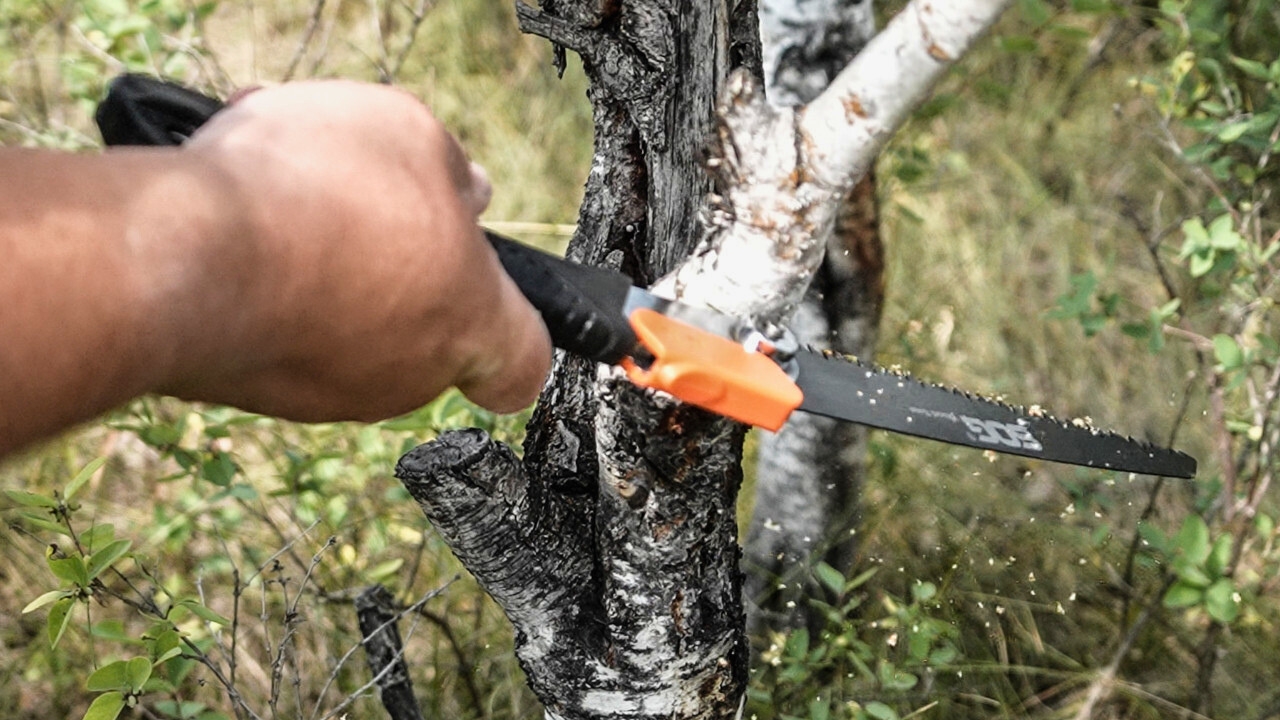
If you want kindling fast with less effort, a compact saw plus a splitting tool beats a hatchet-only setup. Saw the wood to length cleanly, then split it with a wedge/axe/maul. That combo makes everything easier because you’re not trying to brute-force awkward pieces.
A lot of “hatchet struggle” is really “bad wood prep.” Once you cut consistent lengths and split with a proper wedge shape, kindling becomes quick and predictable instead of a fight.
Like The Avid Outdoorsman’s content? Subscribe to our newsletter so you never miss an article.
Here’s more from us: