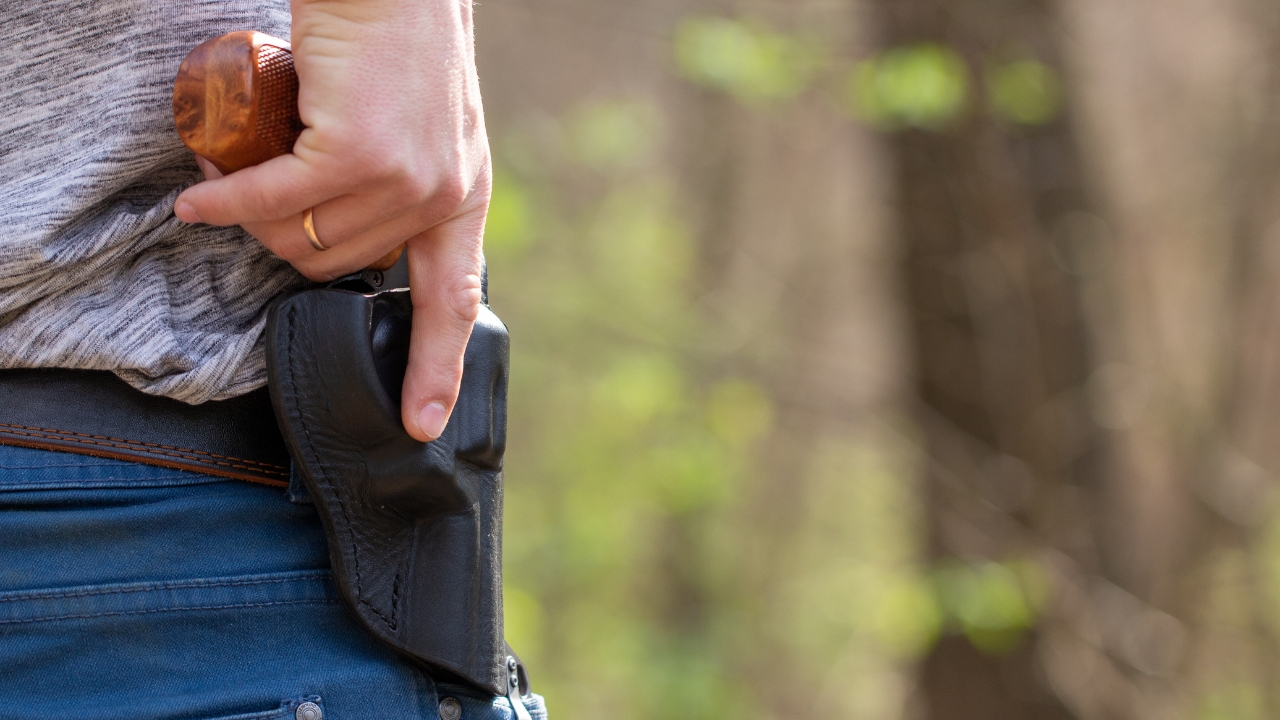
Photo credit: mykhailo pavlenko/Shutterstock
When you’re sweaty, tired, and miles from a signal, your “trail gun” needs to be the kind of tool that forgives you. You’re not standing under perfect range lighting with a clean shirt and a calm heartbeat. You’re climbing over deadfall, digging a bottle out of a pack, and wiping your hands on your pants because that’s all you’ve got.
That changes what matters. Corrosion resistance matters. A grip that stays planted matters. A trigger you can run with cold fingers matters. Controls you don’t have to babysit matter. The best trail guns aren’t always the biggest or the fanciest—they’re the ones you’ll actually carry, and the ones that keep doing their job when you’re running on fumes.
Ruger GP100 (4.2-inch, .357 Magnum)

The GP100 makes sense on long, grimy days because it’s built around stainless steel and a frame that doesn’t feel delicate. Sweat, dust, rain—none of that is a crisis. You get a full grip, enough weight to keep .357 loads manageable, and sights you can pick up when your eyes are tired.
The other win is how low-maintenance it feels in the field. You can carry it in a chest rig or a strong-side holster and forget it’s there until you need it. If you’re bouncing between snake country, two-legged worries at trailheads, and the occasional predator problem, the GP100 gives you flexibility without asking for perfect conditions.
Smith & Wesson Model 686 Plus (3-inch, .357 Magnum)

A 3-inch 686 Plus hits a sweet spot when you want real shootability without hauling a boat anchor. The L-frame soaks up recoil, the seven-shot cylinder buys you a little extra breathing room, and the stainless finish holds up when your shirt is soaked through and everything feels gritty.
Where it really shines is in “messy handling” moments—when your grip isn’t textbook and you’re shooting from a weird angle around brush. The 686 still points naturally, and the trigger tends to feel predictable shot to shot once you’ve run it a bit. It’s not the lightest option, but it’s one of the easiest revolvers to shoot well when your body is already cooked.
Ruger SP101 (3-inch, .357 Magnum)

The SP101 is a trail-gun classic because it’s small enough to actually come along, but strong enough that you don’t feel like you brought a toy. The 3-inch version gives you a better sight picture and a little more velocity than the shortest snubs, and the stainless construction plays nice with sweat.
It also carries in places that make sense on a hike. A good belt holster, a chest rig, even a pack belt setup—none of it feels awkward. With .38 +P it’s comfortable for long practice, and with .357 it’s still a serious tool inside realistic trail distances. When you’re tired, “easy to keep on you” matters as much as raw power.
Ruger LCRx (3-inch, .357 Magnum)

The 3-inch LCRx is for the days when you want a revolver that’s light enough to disappear, but not so tiny that it’s miserable to shoot. The polymer-aluminum frame cuts weight, the longer barrel helps you track the front sight, and the exposed hammer gives you the option of a careful single-action shot if you have time.
It’s also a practical answer to sweat and grime because there’s not much to rust and not many controls to fuss over. Drop it in a quality holster, keep lint and debris out of the cylinder window, and it tends to keep running. If you’ve ever finished a hike thinking, “I almost left my gun at home,” the LCRx is the kind of carry that prevents that mistake.
Smith & Wesson Model 69 (2.75-inch, .44 Magnum)

The Model 69 is a smart pick when you want real .44 power but don’t want a full-size N-frame on your belt all day. It’s a five-shot L-frame that carries far better than most people expect, especially in a chest holster where the weight rides close and stable while you climb.
The key is being honest with ammunition. Full-house .44 Magnum can be a handful when you’re tired, but there are plenty of controllable loads that still hit hard. The Model 69 gives you that option in a package you’ll actually keep on you. In bear country, that balance—carry comfort and serious punch—counts more than internet bragging rights.
Ruger Redhawk (4.2-inch, .44 Magnum)

If you want a revolver that shrugs off abuse, the 4.2-inch Redhawk is hard to argue with. It’s heavy, yes—but that weight is also what makes it controllable when you’re running stout loads. The stainless build handles sweat, rain, and neglect better than most guns you’ll meet.
On the trail, it’s a “commitment gun.” You carry it with intention—usually in a chest rig—because a belt holster can get old fast with a pack. The payoff is confidence when the situation is ugly and close. If you practice with it and pick grips that fit your hand, the Redhawk gives you a level of durability and steadiness that lighter magnums can’t fake.
SIG Sauer P320 XTen (10mm Auto)

The P320 XTen is a strong trail choice when you want 10mm power with a grip that doesn’t feel like a brick. You get a full-size sight radius, modern capacity, and a recoil impulse that’s easier to manage than most people expect—especially if you choose loads that don’t beat you up.
Where it earns its keep is in “sweaty hands and fast decisions” moments. The controls are familiar, the gun points naturally, and you can run it hard without the grip turning into a bar of soap. With a solid holster and a little maintenance, it’s the kind of pistol you can hike with all day and still shoot well when your arms feel like noodles.
Smith & Wesson M&P 10mm M2.0

The M&P 10mm M2.0 makes sense when you want a duty-style pistol that’s easy to hang onto in heat, humidity, and exhaustion. The grip texture is aggressive enough to stay locked in when your hands are wet, and the ergonomics help you keep the gun flat when you’re shooting quickly.
It also fits the reality of trail life: you might be carrying with a pack, moving through brush, sweating nonstop, and still wanting a gun that draws cleanly and shoots predictably. The M&P has the “grab it and go” feel a lot of people want in a woods pistol. It’s not glamorous, but it does the job—and it does it in conditions that make lesser grips feel slippery and vague.
Springfield Armory XD-M Elite 3.8 Compact (10mm Auto)

A compact 10mm that you can actually control is a rare thing, and the XD-M Elite 3.8 Compact pulls it off better than most. The shorter slide carries well, the grip shape gives you good leverage, and the magazine options let you choose between easier concealment and more capacity depending on the trip.
It’s also a practical “tired shooter” gun. When your stance gets sloppy and your arms are fatigued, a pistol that returns to target cleanly matters. The XD-M’s balance helps, and the controls are straightforward enough that you’re not hunting for levers under stress. Pair it with a chest rig for pack compatibility, and you’ve got a 10mm that stays realistic for real hikes.
FN 510 Tactical (10mm Auto)

The FN 510 Tactical is built like a serious service pistol, and that shows when you’re sweaty and not operating at 100 percent. You get a big, stable grip, good sights, and a slide that’s easy to run even when your hands feel clumsy. It’s the kind of gun that feels composed with full-power 10mm.
For trail use, it also offers flexibility. You can run a micro red dot if your eyes aren’t what they used to be, or keep it iron-sighted and simple. Either way, you’re getting a pistol that’s easy to shoot well when you’re fatigued. It’s not light, but it carries comfortably in the right holster, and it shoots like a gun that wants to stay under control.
CZ P-10 C (9mm)

Not every trail problem has fur. If your biggest concern is sketchy trailheads, weird encounters, and general “out of service” reality, a compact 9mm that you shoot well can be the smartest choice you make. The CZ P-10 C brings a great trigger feel, strong grip texture, and a shape that points naturally.
It’s also the kind of pistol that doesn’t punish you for being tired. Recoil is easy to track, follow-up shots come fast, and you can carry it comfortably all day without feeling like you strapped a brick to your body. In heat and sweat, a gun you can actually control beats a bigger caliber you dread practicing with. The P-10 C stays shootable and practical.
SIG Sauer P365 XMacro (9mm)

The P365 XMacro is a modern answer to the “carry it or leave it” problem. It’s slim enough to ride comfortably under a pack strap or in a chest setup, but it still gives you a real grip you can clamp down on when your hands are slick. You get good capacity without the bulk of a full-size pistol.
Where it shines is on the worst days—when you’re dehydrated, cramped up, and your grip strength is fading. The XMacro is easier to manage than most small guns because it doesn’t feel tiny in your hand. You can carry it close, draw it clean, and shoot it with confidence. For most hikes outside of big-bear country, it’s a very realistic “always on you” choice.
Heckler & Koch P30SK (9mm)

The HK P30SK is one of those guns that feels like it was designed for imperfect hands. The grip shape and texture lock in well, and the pistol stays controllable when you’re sweaty and your grip pressure isn’t consistent. It’s also famously durable, which matters when the gun lives in a holster through heat, rain, and dirt.
As a trail carry pistol, it rides well and doesn’t feel fragile. You can carry it concealed at a trailhead, then keep it accessible once you’re away from people. The recoil impulse is manageable, and the gun tends to stay reliable even when it’s been carried hard. When you’re tired, you want a pistol that feels steady and predictable—the P30SK fits that role.
Ruger Mark IV 22/45 Lite (.22 LR)

A .22 isn’t a bear gun, but it’s one of the most useful trail tools you can carry. The Mark IV 22/45 Lite gives you cheap practice, small-game ability where legal, and a way to deal with pests around camp without burning through your defensive ammo. It also carries comfortably compared to most full-size pistols.
The real win is how well you can shoot it when you’re smoked. Low recoil means you can stay accurate even with tired arms, and the gun is friendly for long sessions. The Mark IV also has a reputation for being easy to maintain, which matters when you’re back from a trip and don’t feel like turning cleaning into a project. It’s a practical companion gun that earns its spot.
Smith & Wesson 642 Airweight (.38 Special)

The 642 exists for one reason: you will actually carry it. When you’re sweaty, tired, and stripped down to essentials, a lightweight snub that disappears in a pocket or rides comfortably on a belt can be the difference between being armed and being unarmed. The enclosed hammer keeps it snag-free and easy to draw.
It’s not a range toy, and it’s not a high-capacity solution. It’s a “get off me” gun that still works when you’re not at your best. With quality .38 Special loads and a grip you can hold onto, the 642 stays relevant for real trail life. It gives you a reliable option that doesn’t demand perfect clothing, perfect holsters, or perfect energy levels.
Ruger Super Blackhawk (4.62-inch, .44 Magnum)

A single-action revolver is a niche pick, but it makes sense in the woods for certain people. The Ruger Super Blackhawk is strong, durable, and comfortable to shoot with heavy loads compared to many lighter double-actions. That classic grip shape can roll in recoil instead of slamming straight back into your hand.
On a long hike, it carries best in a chest rig, and it rewards deliberate shooting. When you’re tired, deliberate is often what you can deliver anyway. You’re not going to win speed contests with it, but you can place a heavy bullet with confidence if you’ve practiced. For hunters and outdoorsmen who grew up around single-actions, it’s still a legitimate trail gun that holds up when conditions are rough.
Like The Avid Outdoorsman’s content? Subscribe to our newsletter so you never miss an article.
Here’s more from us: