Photo credit: d4guns/GunBroker
The Remington 742 Woodsmaster is one of those rifles that a lot of hunters remember from deer season, family gun cabinets, and old-school camp stories, but not everybody knows the full story behind it. Standard reference history says the Model 742 was produced from 1960 to 1980, and the Smithsonian’s collection lists examples made around that same era as classic Remington semi-auto centerfire hunting rifles. It was built as a gas-operated autoloader for hunters who wanted faster follow-up shots without stepping into military-style rifles or bolt-gun handling.
What makes the 742 especially interesting is that it became famous for two very different reasons at once. On one hand, it was hugely successful, with standard reference history listing total production at 1,433,269 rifles. On the other hand, it also built a reputation for problems when guns were heavily used, poorly maintained, or run far beyond the kind of deer-hunting life many owners gave them. That tension is a big part of why the 742 still gets talked about so much.
1. The 742 replaced the earlier Model 740

The 742 did not come out of nowhere. The Remington Society’s history of the autoloading centerfire line says the original Model 740 was introduced in 1955, and the Model 742 followed it as the next step in the series. Standard reference history also identifies the 742 as the main semi-auto centerfire Remington hunting rifle of the 1960 to 1980 period.
That matters because the 742 was not some isolated experiment. It was part of a larger Remington effort to keep a gas-operated hunting-rifle line alive and relevant for American deer hunters.
2. It launched in 1960

A lot of shooters think of the 742 as a “1960s rifle,” and that is accurate. Standard reference history lists production beginning in 1960, while the Smithsonian collection also shows a Woodsmaster example dated around 1960.
That timing matters because the rifle landed right in the middle of a period when Americans were buying sporting rifles in huge numbers and semi-auto hunting rifles still felt modern and appealing in a very specific way.
3. “Woodsmaster” was part of the official identity
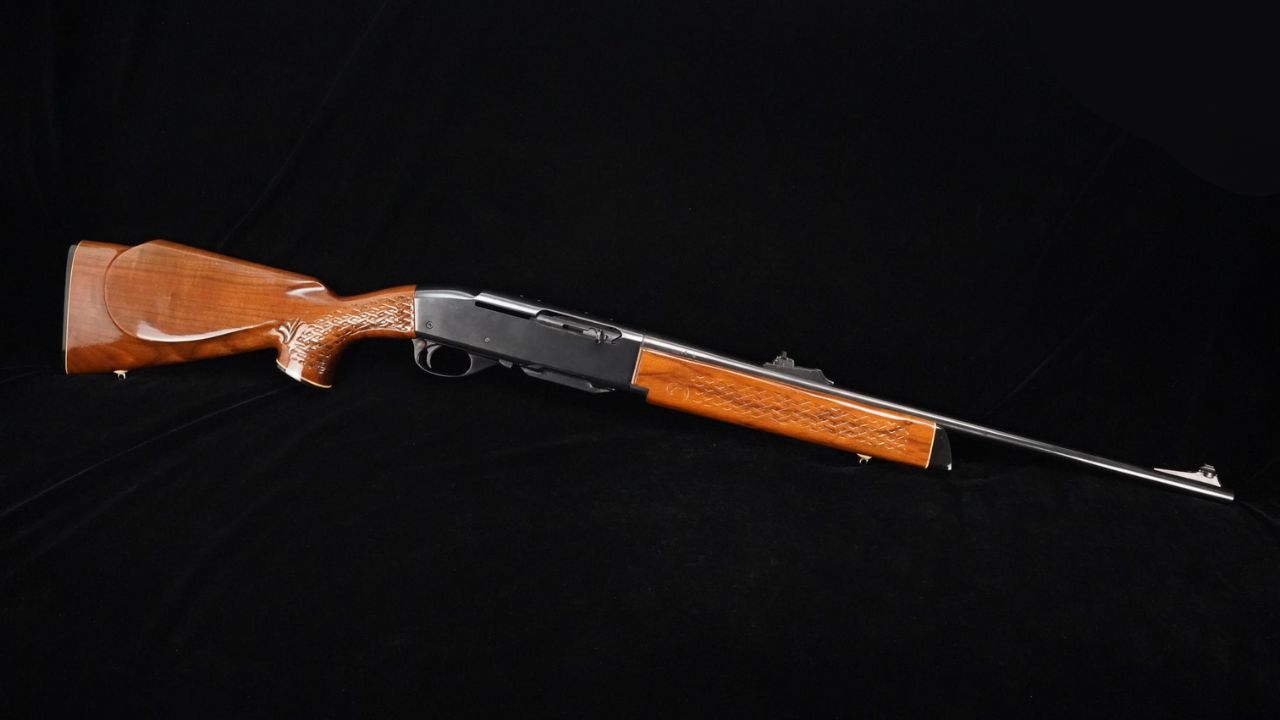
A lot of people casually say “742” and forget the rifle’s full branding. The PDF manual is titled Model 742 Autoloading Centerfire Rifle and specifically calls it the “Woodmaster” Model 742, while standard reference history also notes the Woodsmaster name.
That name tells you exactly how Remington wanted the rifle understood. This was a woods-hunting autoloader first, not a military-style rifle or a pure range piece.
4. It was made for hunters, not the military market

The 742’s chamberings and configuration make that pretty obvious once you look at them. Standard reference history lists cartridges like .243 Winchester, 6mm Remington, .280 Remington, .308 Winchester, and .30-06 Springfield. Those are classic hunting rounds, not the sort of mix you would expect from a service-rifle program.
That is one reason the 742 became such a deer-camp staple. It was designed squarely around sporting use and familiar North American hunting cartridges.
5. More than 1.4 million were made

Standard reference history lists total production at 1,433,269 rifles. That is a huge number for a centerfire semi-auto hunting rifle.
That kind of production volume helps explain why the 742 still shows up so often in used racks, estate sales, and old family collections. It was not a niche rifle. It was everywhere.
6. It used detachable box magazines, not a fixed internal magazine

The 742 fed from a detachable box magazine. Standard reference history lists a four-round magazine as standard, and also notes that 10-round and rarer 20-round magazines existed.
That detachable-magazine setup was a meaningful convenience feature for hunters, especially in an era when many sporting rifles still centered around internal magazines or slower reload systems.
7. A carbine version existed
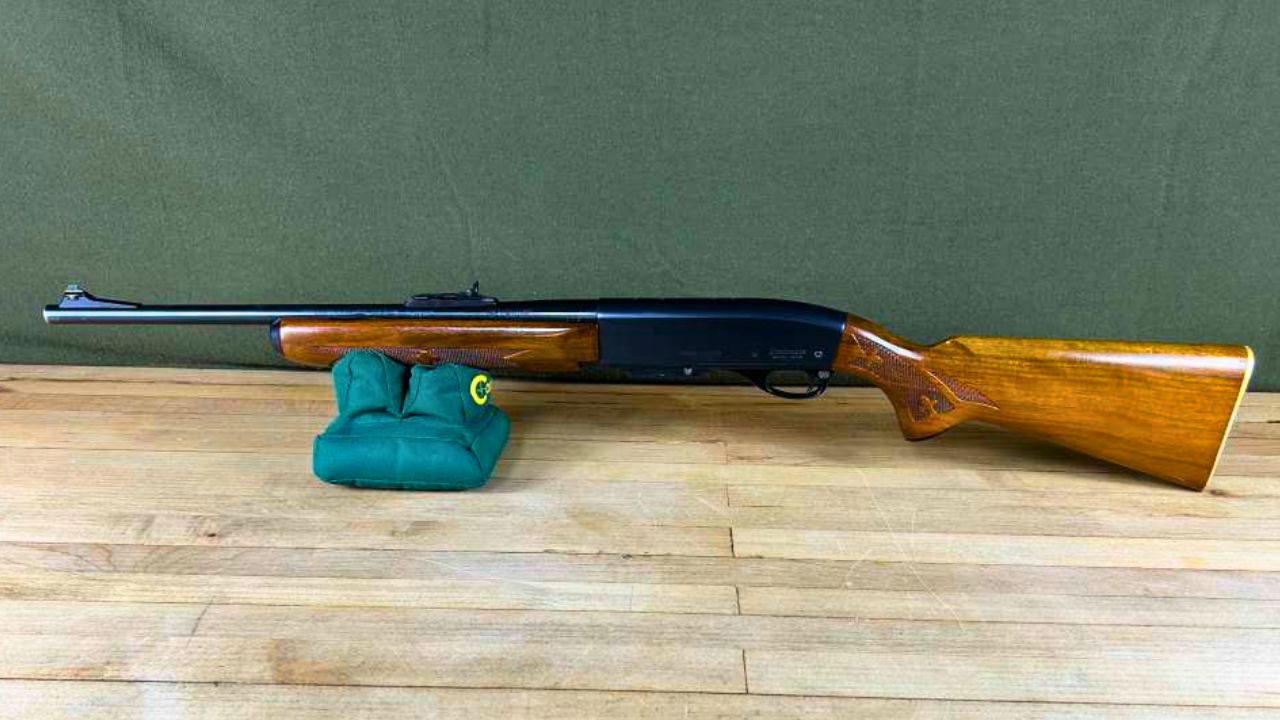
A lot of people picture the 742 only as a standard deer rifle with a full-length barrel, but standard reference history says there was also a C model with an 18-inch barrel. The Smithsonian collection separately lists a Remington 742 Woodsmaster semiautomatic carbine made between 1961 and 1980.
That shorter branch is a good reminder that Remington was willing to stretch the platform beyond one exact hunting-rifle format.
8. It came in multiple grades
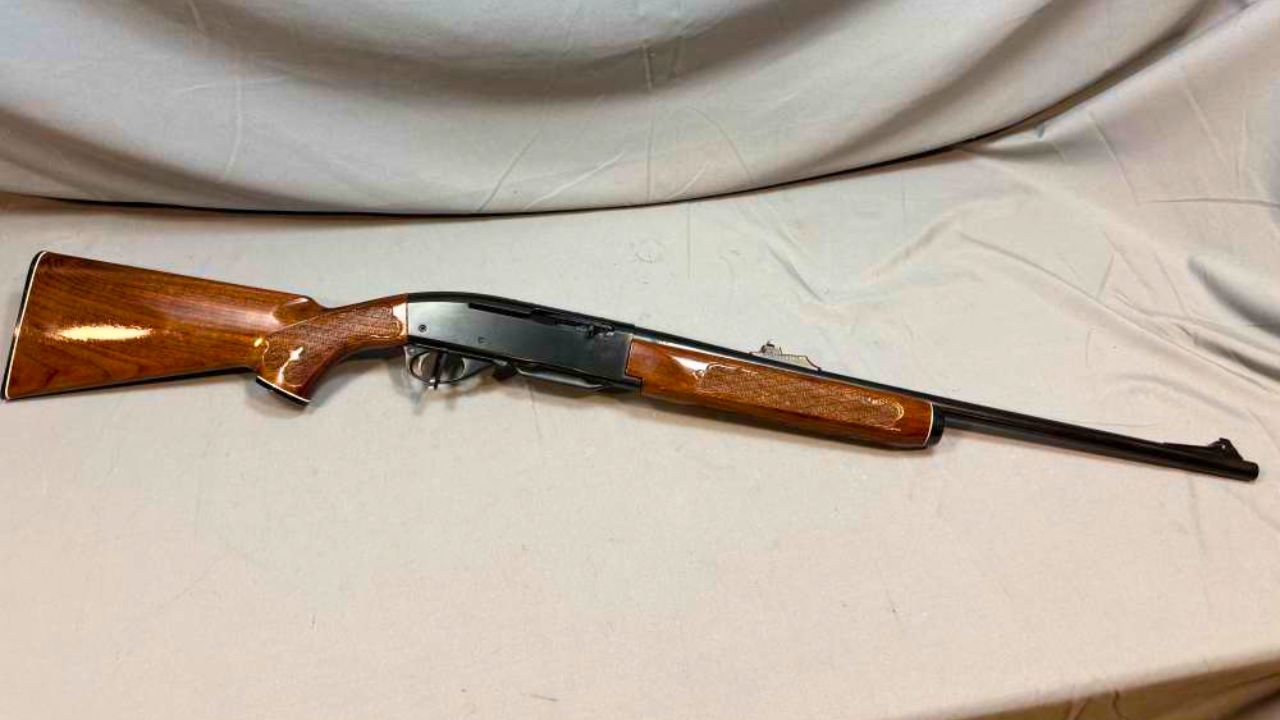
The 742 was not sold in only one plain configuration. Standard reference history lists grades including ADL Deluxe, DBL Deluxe, CDL, Peerless, and Premier Grade.
That matters because the rifle was broad enough in appeal that Remington offered both straightforward hunting versions and nicer, more polished trims for buyers who wanted something fancier.
9. It was replaced by the 7400 in 1980

The 742’s main production life ended in 1980. Standard reference history says it was followed by the Model 7400, and Field & Stream also notes that the 742 was followed in 1980 by the 7400, which kept the Woodsmaster name alive.
That helps place the 742 historically. It was not the end of Remington’s autoloading centerfire line, but it was the end of one of its most recognizable chapters.
10. The 742 was part of a much bigger Remington autoloading tradition

The Remington Society says more than 2.5 million gas-operated Remington autoloading centerfire rifles were sold across the 740, 742, and 7400 line.
That means the 742 sits inside a much bigger family story. It was not just one lucky rifle. It was one of the central models in a long-running Remington hunting-rifle formula.
11. It was tied closely to classic Eastern deer-country hunting

Field & Stream’s 2024 piece on the 742 talks about the rifle in the context of old-school deer hunting and the kind of practical woods use that made Remington autoloaders so common. That fits the chamberings and overall role the rifle filled.
That image is a big part of why the 742 still sticks in people’s memory. It was very much a whitetail-era, iron-sight-or-low-scope, fast-follow-up rifle for ordinary hunters.
12. It built a reputation for reliability issues over time

This is one of the most load-bearing facts in the 742 story. Field & Stream’s blunt 2024 piece says the Model 742 and related Remington autoloaders developed a reputation for jamming badly enough that many shooters nicknamed them “Jamomatics.”
That reputation is a huge part of why the 742 remains so debated. Some owners remember them fondly as great hunting rifles. Others remember extraction problems, wear, and hard-use failures. Both of those stories are part of the rifle’s real legacy.
13. Remington itself eventually started a replacement program partly because of 742 issues

American Rifleman’s history of the 760/7600 pump rifles says Remington began a major product-improvement program in 1974 to replace both the autoloading 742 and the pump-action 760. By 1976, the “New Generation Rifles” project was well underway.
That tells you the company clearly knew it needed to move beyond the 742 era. The rifle had been commercially successful, but Remington was already looking for a more durable and better long-term answer before the 742’s run ended.
14. Today, the 742’s condition matters a lot more than its name
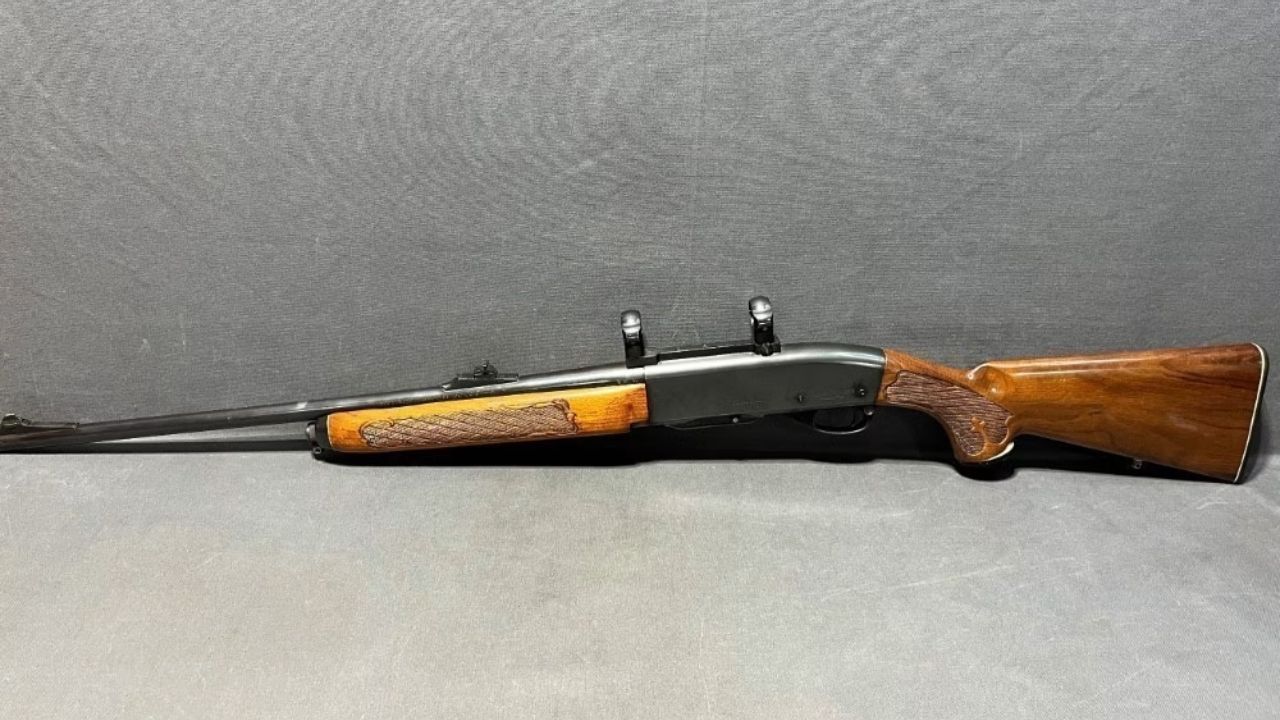
This is partly an inference from the sources, but it is a grounded one. Because the 742 built such a reputation for wear and jamming issues, especially in rifles that saw lots of use, modern buyers tend to care less about the model name alone and much more about the condition of the individual rifle. Field & Stream’s criticism makes that concern pretty clear.
That is one reason 742 conversations can sound so different from one shooter to another. A lightly used deer rifle and a worn-out autoloader can create two completely different impressions of the same model.
15. Its biggest legacy is that it was both wildly successful and deeply flawed

That tension is really the heart of the Remington 742 story. It sold in huge numbers, covered classic hunting cartridges, and became part of American deer-rifle culture. At the same time, it developed a strong reputation for reliability problems and was eventually replaced by newer designs.
That is what makes the 742 interesting all these years later. It was not just a forgotten old semi-auto. It was a rifle a whole lot of hunters actually used, loved, cursed, and argued about—and that kind of legacy usually means the gun mattered.
Like The Avid Outdoorsman’s content? Be sure to follow us.
Here’s more from us: