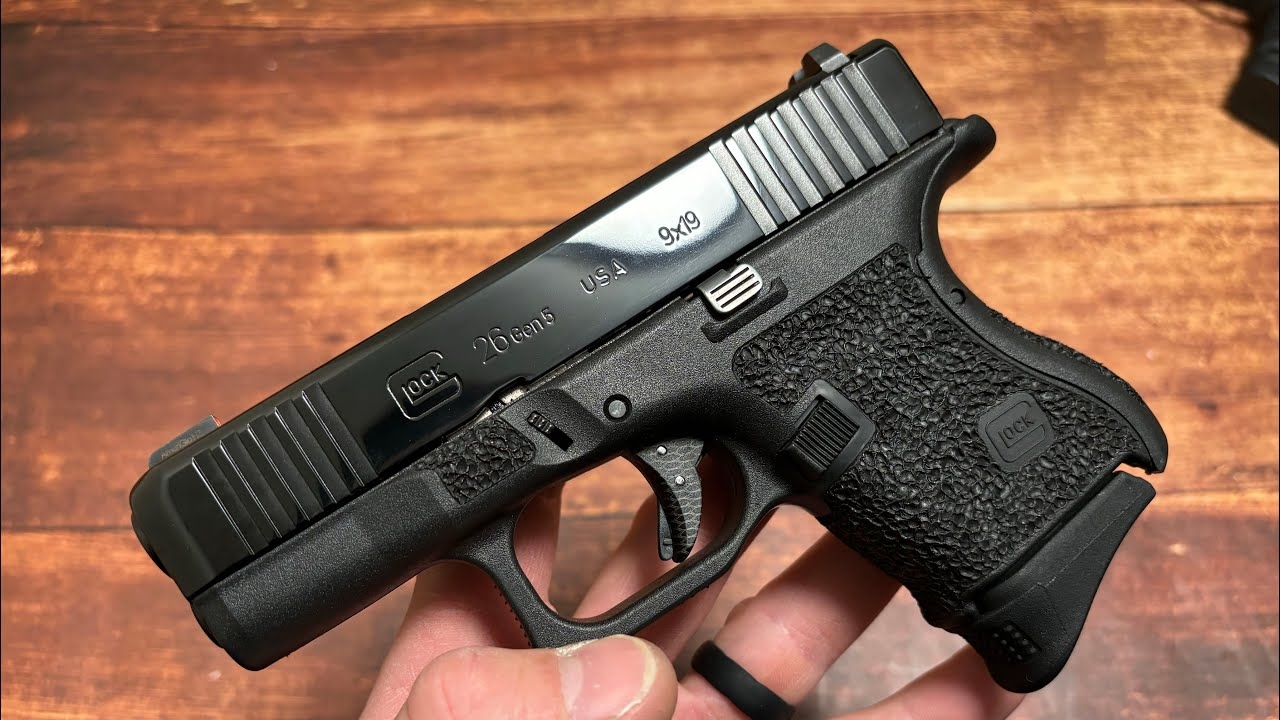
Photo credit: SPN Firearms/YouTube
The Glock 26 is one of those pistols that can look almost too ordinary until you remember what it changed. Today, people often see it as the chunky little Glock that sits somewhere between the G19 and the newer slim carry guns. But when it arrived, the G26 helped establish the subcompact double-stack 9 mm as a real concealed-carry category instead of just a compromise option. American Rifleman says the G26 was introduced to American shooters in 1996, while later coverage calls it instrumental in establishing the subcompact polymer-framed semi-auto as a standard for more comfortable carry.
What makes the G26 especially interesting is that it was never just “a small Glock.” It was the pistol that proved a short-gripped, double-stack 9 mm could still be a serious defensive handgun while sharing magazines, controls and feel with the larger Glock family. Over time, that made it one of the most enduring carry pistols Glock ever built. Even after the micro-compact wave showed up, the G26 kept hanging around because it offers a different kind of small-gun solution: not the thinnest, but one of the most familiar, flexible and shootable for its size.
1. The Glock 26 was introduced to American shooters in 1996

A lot of people mentally place the G26 later than it really belongs, probably because it still feels current enough to compete in today’s carry market. But American Rifleman’s 2020 article says Glock introduced the original G26 to American enthusiasts in 1996. That makes it much older than many people realize, especially once you compare it to the later micro-compact 9 mm wave.
That matters because the G26 was solving a carry problem long before the market became crowded with tiny double-stack and stagger-stack 9 mms. It was an early answer to the question, “How small can a serious 9 mm get while still feeling like a duty pistol?” That historical position is a big reason the gun matters.
2. It helped establish the subcompact polymer 9 mm as a real category

American Rifleman’s 2022 micro-nine overview says the Glock G26 was instrumental in establishing the subcompact size polymer-framed semi-automatic pistol as a standard for more comfortable carry. That is a pretty big claim, but it fits the gun’s timing and market role.
That is important because the G26 was not just a successful model. It helped teach buyers what a “subcompact service-style 9 mm” could be. Before the flood of later carry pistols, the G26 had already shown that a short, thick, double-stack 9 mm could still make a lot of sense for concealed carry.
3. The G26 is older than many people’s favorite “carry revolution” pistols

Because the carry market changed so much in the 2010s, some shooters talk about the G26 like it is just an older holdover that got left behind. But the pistol predates many of the guns that later redefined concealed carry, which makes its staying power more impressive. The G26 was already there in the 1990s, filling a role that later guns would only refine differently.
That matters because it changes how you judge it. The G26 was not trying to beat 2018 or 2021-era micro-compacts at their own game. It came from an earlier carry philosophy: keep the gun short, keep it thick enough for full Glock magazine geometry, and make it feel like part of the main duty-pistol family.
4. It was one of the first Glocks to introduce grip finger grooves

Shooting Illustrated’s 2018 Gen5 Glock 26 review says the subcompact G26 and G27 were the first Glock handguns to introduce the molded-in finger grooves on the grip frontstrap as well as the dimpled thumb-rest areas on the frame. That is a neat little Glock-history detail a lot of people never hear.
That matters because the G26 was not just following the bigger Glocks stylistically. In this specific way, it actually introduced a frame feature that later became widely associated with Glock generations more broadly. It is a small point, but it shows the G26 had more influence on Glock’s overall design language than people usually give it credit for.
5. Those finger grooves were added for import-rule reasons, not just comfort

The same Shooting Illustrated review explains that those early finger grooves and thumb-rest details were added to gain enough “points” under a rule connected to the Gun Control Act of 1968 import system. That is one of the stranger little backstories in Glock design history.
That matters because it reminds you not every design feature comes from some pure ergonomic epiphany. Sometimes guns look the way they do because of legal or regulatory pressure. In the G26’s case, those now-familiar Glock grip details were tied to import-compliance logic as much as user comfort.
6. The G26 was never a slim pistol, and that was part of the point
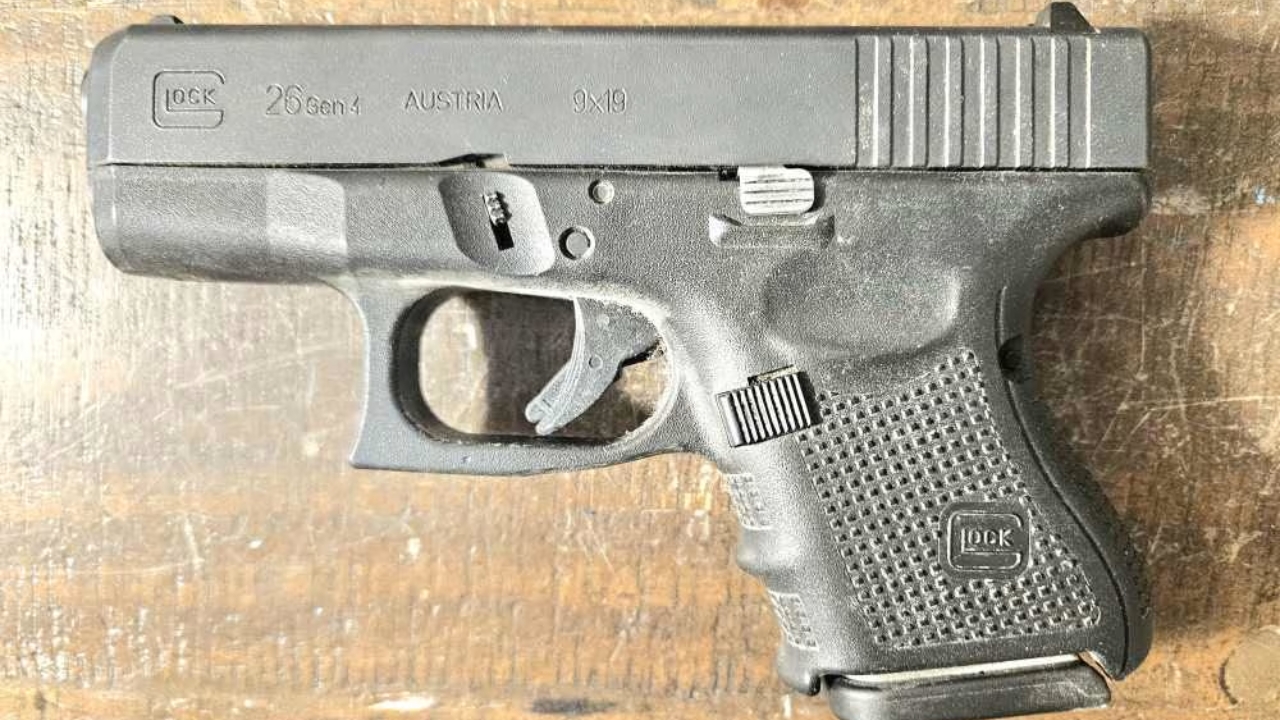
One easy way to misunderstand the G26 is to judge it like it was supposed to be a thin single-stack or slimline gun. It was not. American Rifleman’s micro-nine piece says the G26’s frame is 1.15 inches wide, leaving room for double-stack magazines holding 10 or 12 rounds, while the slide is about 1 inch wide.
That matters because the G26’s identity was always different from the later G43-style idea. The pistol sacrificed slimness in exchange for magazine capacity, family compatibility and a thicker grip that many shooters find more controllable than ultra-thin carry guns. If you expect a slim pistol, you are reading the gun wrong. If you expect a shortened service pistol, it makes perfect sense.
7. The standard magazine is 10 rounds, but the gun’s flexibility goes beyond that

The G26’s standard magazine capacity is 10 rounds, and that has long been part of the pistol’s identity. American Rifleman’s 2022 overview lists it with 10- or 12-round options depending on configuration, while Shooting Illustrated’s 2023 9 mm Glock roundup highlights the 10-round magazine feeding the 3.43-inch barrel.
That matters because the G26 always sat in a useful middle ground. It offered more on-board ammunition than many slim carry pistols of its era, but without requiring the longer grip and overall size of the compact G19. It was a “small but still serious” gun, which is why so many people stayed loyal to it.
8. It became especially appealing because it fit into the larger Glock magazine ecosystem

One of the strongest practical points in the G26’s favor has always been that it lives inside the broader Glock 9 mm family. Even when the pistol itself is short and compact, shooters can still pair it with larger magazines from bigger Glocks for reloads or alternate setups. That family compatibility is part of why the pistol stayed attractive even as newer small guns appeared.
That matters because capacity is not only about what is in the gun. It is also about how the gun fits into the rest of your equipment. The G26 always benefited from being “small Glock, same ecosystem,” and that is one reason it kept a following even when newer carry guns started chasing smaller footprints.
9. The G26 became a huge seller again when the Gen5 version arrived
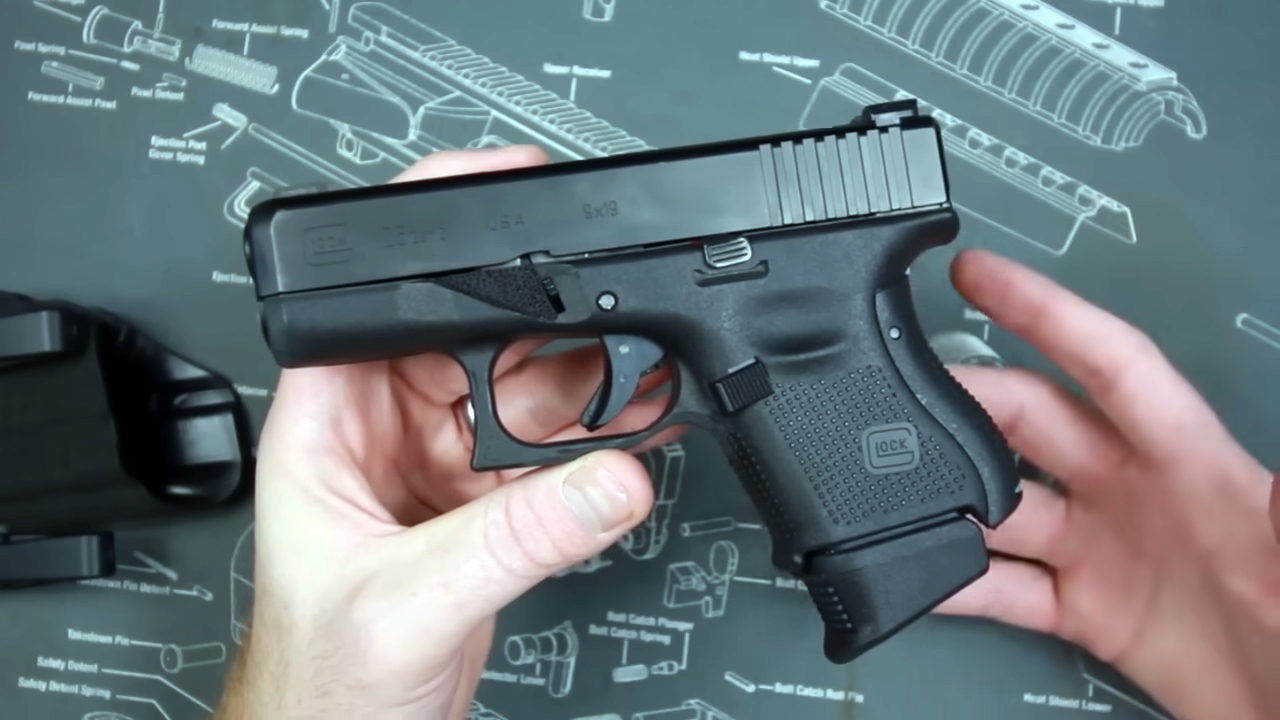
American Rifleman’s 2020 “hottest handguns” piece says the Gen5 improvements added to select Glock models in August 2017 helped breathe new life into older variants, and when those changes reached the G26, sales soared. Another American Rifleman piece on 2019’s best-selling handguns also ties the G26’s popularity to the Gen5 rollout.
That matters because it shows the G26 was not just a relic that happened to still be cataloged. The Gen5 refresh proved there was still real buyer demand for the concept once Glock modernized the pistol enough to keep it feeling current.
10. The Gen5 update mattered because it trimmed away some of the old baggage

American Rifleman’s Gen5-era sales piece says the updated G26 benefited from refinements like the nDLC finish and other Gen5 changes, while Shooting Illustrated’s 2018 review notes the new-generation pistol removed the finger grooves and picked up the broader Gen5 treatment.
That matters because the G26 concept itself was still strong. What it needed was not a complete reinvention so much as a cleanup—better finish, cleaner grip shape, and the newer-generation improvements that made buyers feel like the pistol had not been left behind. The Gen5 version reminded people why the G26 had lasted in the first place.
11. The G26 was always more of a “shrunken duty gun” than a true pocket pistol
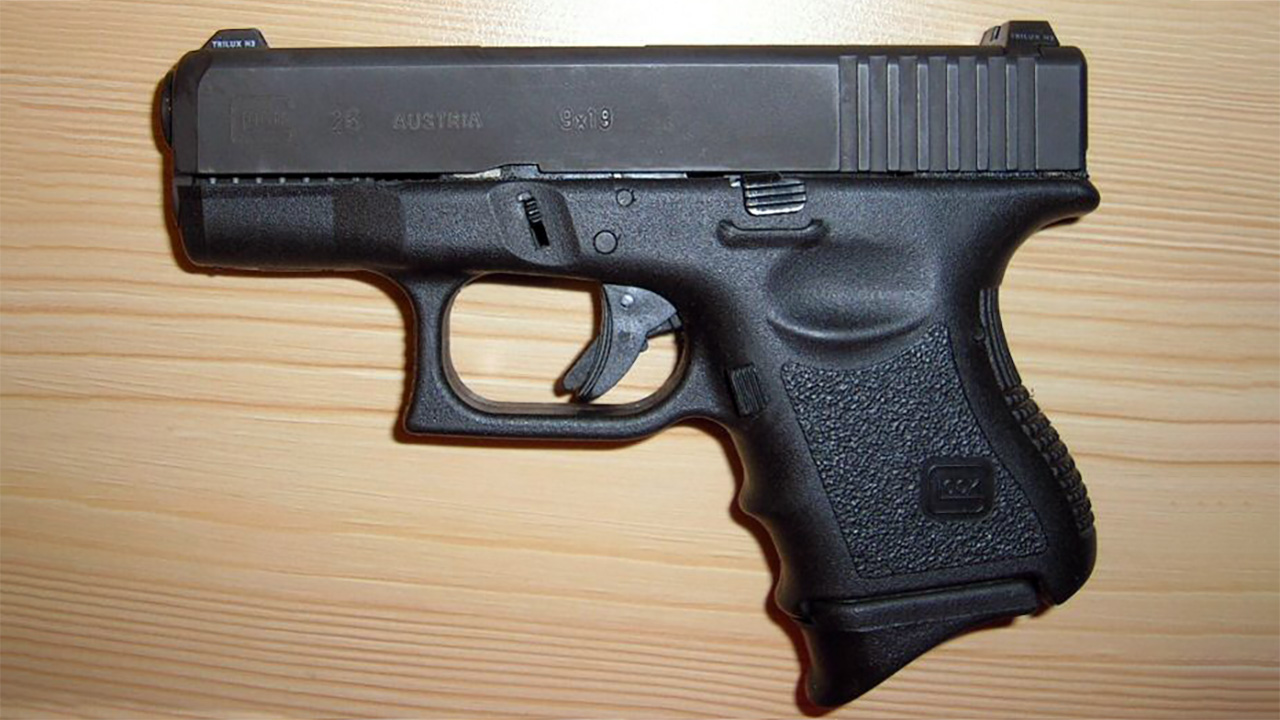
Some people look at the G26’s short grip and assume it belongs in the same conceptual lane as tiny pocket pistols. That is not really right. Shooting Illustrated’s 2023 9 mm Glock roundup says the G26 takes what the G19 started and shrinks it smaller, which is a better way to think about it.
That matters because it explains why the G26 tends to feel more substantial than ultra-small carry guns even though it is still very concealable. It is really a compact service-pistol concept compressed downward, not a tiny pistol stretched upward. That is a different carry philosophy, and for a lot of shooters it is still a very appealing one.
12. It stayed relevant even after the slimline Glock era began
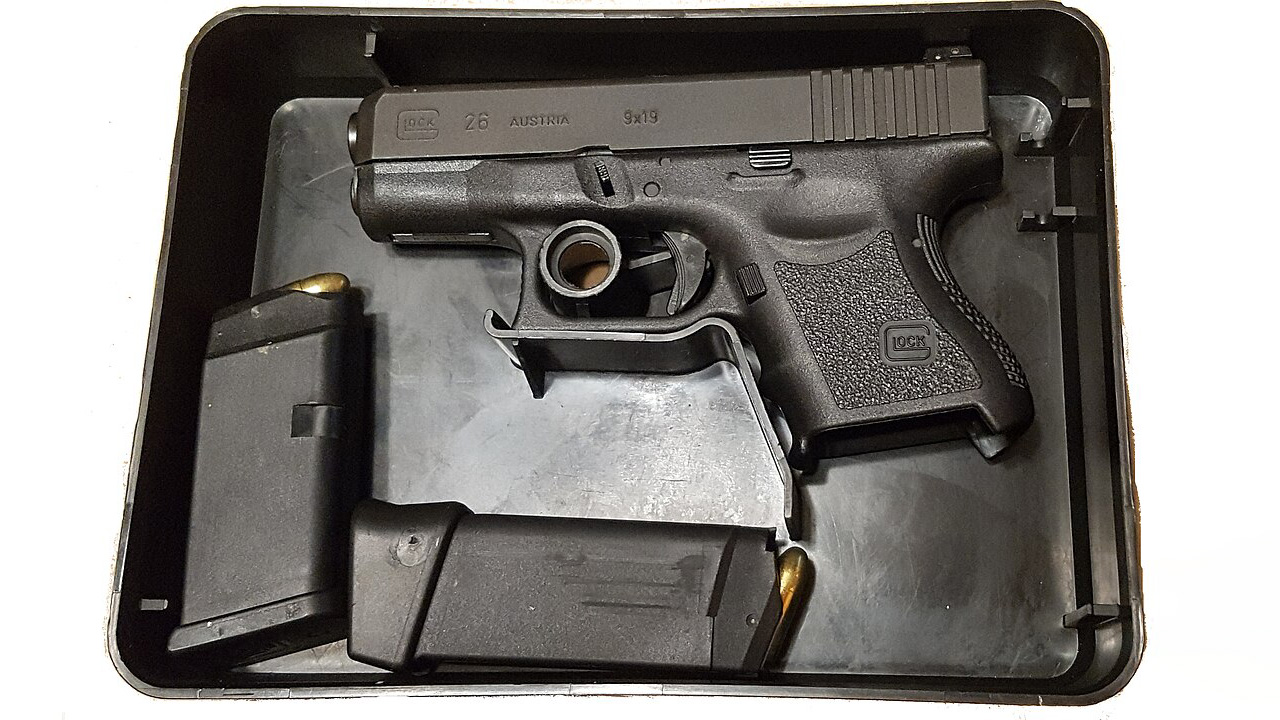
Once the G43, G43X and G48 showed up, some buyers assumed the G26 would fade away as “the old thick carry Glock.” That never fully happened. The G26 remained useful because it offered something the slimline guns did not: a short, concealable package with traditional double-stack Glock magazine architecture and a more service-pistol-like feel.
That matters because the G26 was never competing only on thickness. It competed on familiarity, capacity structure, reload compatibility and shootability for people who prefer a denser, fuller-feeling little gun over a thinner one. That is why it survived the slim-pistol boom instead of being erased by it.
13. It even ended up on the FBI’s list of approved personally owned handguns

American Rifleman’s FBI handguns history says that while the Bureau issued larger Glock pistols, the only personally owned handguns on the approved list included the Glock 26 and Glock 27 among a very short selection.
That is a neat little credibility detail because it shows the G26 was taken seriously in professional circles even as a subcompact. It was not viewed merely as a civilian convenience gun. It had enough trust behind it to appear in a very specific institutional allowance framework.
14. It became one of the most successful “bridge guns” between duty and carry worlds

One reason the G26 lasted is that it always sat in that useful overlap between duty-gun familiarity and concealed-carry practicality. American Rifleman’s sales piece says the pistol’s popularity was helped by the growing number of armed citizens wanting a dedicated carry gun that was smaller and easier to conceal than a G19.
That matters because the G26 was not trying to be the smallest possible 9 mm. It was trying to be small enough while still feeling like a “real Glock” in the hand and on the range. That bridge-gun role turned out to be very powerful.
15. The biggest surprise may be that the G26 stayed important even after the market moved on around it
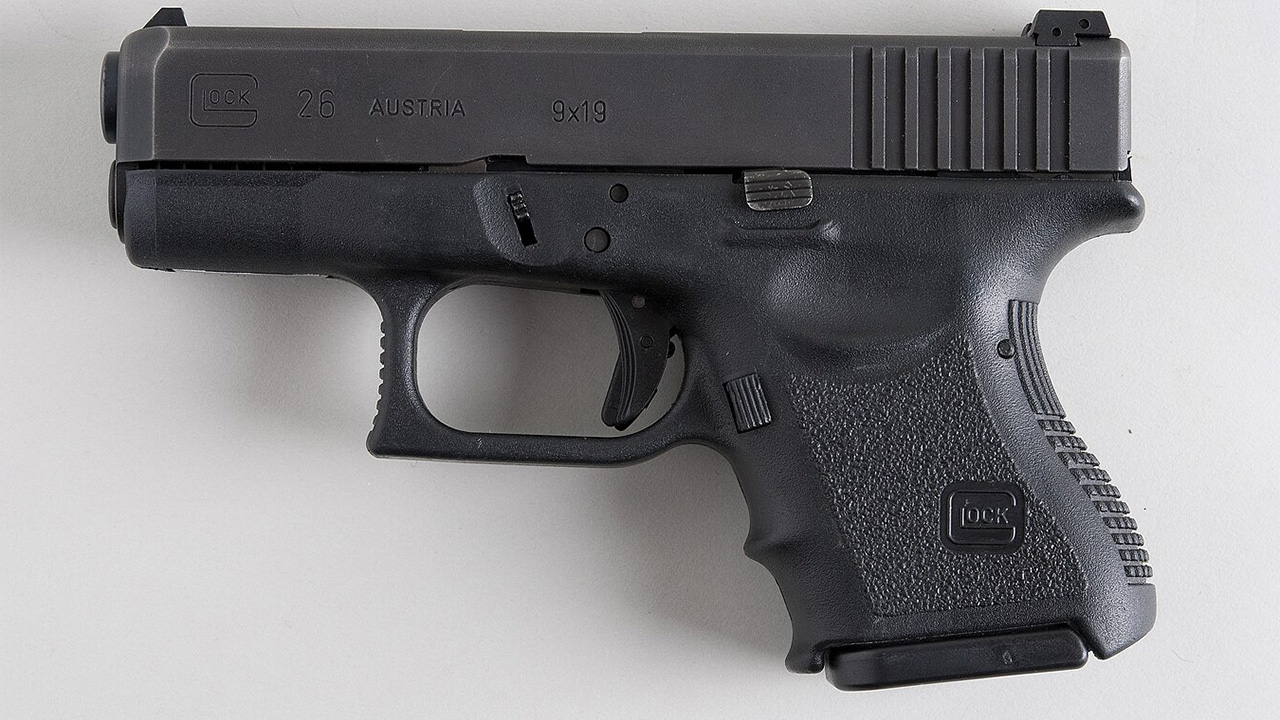
This is probably the best way to understand the Glock 26 now. The pistol came from an earlier concealed-carry era, helped define a whole class of subcompact double-stack 9 mms, then survived the arrival of slimline and micro-compact carry guns without disappearing. That is not easy for any handgun to do.
That is what makes the G26 more interesting than its plain appearance suggests. It is not just the “baby Glock.” It is one of the few carry pistols that helped create a category and then stuck around long enough to keep mattering after the category evolved past it.
Like The Avid Outdoorsman’s content? Subscribe to our newsletter so you never miss an article.
Here’s more from us: