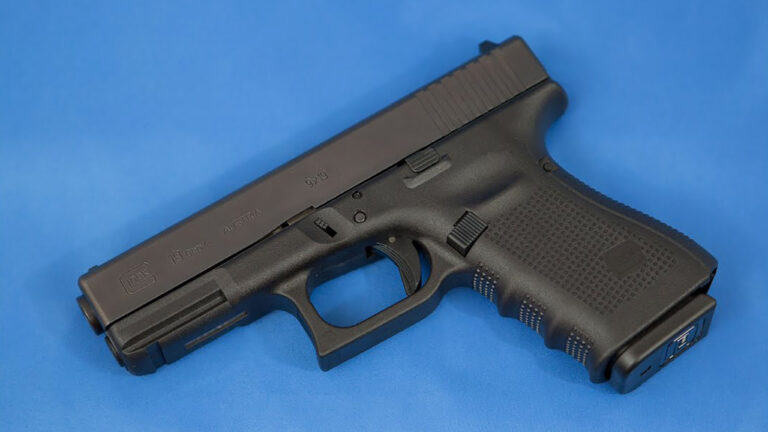
Photo credit: Glockstore.com
The sixth generation of Glock pistols is no longer a rumor or a prototype quietly circulating at trade shows. With the Gen6 rollout centered on the G17, G19, and G45, you are looking at a family of handguns that keeps the familiar Glock profile while reworking how the pistol fits your hand, interfaces with optics, and resists illicit modification. Instead of a radical redesign, the company has leaned into targeted upgrades that matter on the range, in a holster, and in evidence lockers.
For you as a shooter, that means the headline is not just that Glock confirms “Gen6 pistols,” but that these models arrive with a deliberate ergonomic overhaul, a new approach to optics mounting, and internal changes shaped by legal and law enforcement pressure. If you already know your way around earlier generations, the question is not whether Gen6 looks different, but whether it runs, points, and maintains better for the way you actually use a handgun.
Gen6 confirmed: what Glock is actually launching
You are not getting a full catalog refresh with Gen6, at least not yet. Glock has confirmed that the initial wave focuses on the duty-size G17, the compact G19, and the crossover G45, positioning these three as the core of the new line rather than spreading resources across every niche variant at once. In its own language, GLOCK, Inc describes the new pistols as the 6th Generation of GLOCK pistols, signaling that this is a platform-level shift rather than a limited run or special edition.
Independent testers who traveled to SMYRNA to handle the launch guns report that the Gen6 G17, G19, and G45 feel like a coherent family, not three separate experiments. One early hands-on account notes that a trip to Glock headquarters to shoot the new G19, G45, and G17 left the impression that these pistols are “much improved” compared with their predecessors, particularly in how the grip and controls interact with your hand under recoil, a point underscored in a detailed Glock launch breakdown. For you, that means the first Gen6 models are aimed squarely at the roles where reliability and shootability are scrutinized the hardest: duty carry, concealed carry, and high-volume training.
Ergonomic overhaul: palm swell, beavertail, and controls
The most visible shift you will notice when you pick up a Gen6 is the frame geometry. Glock has added a more pronounced palm swell and reshaped the backstrap to fill the hand without forcing you into an awkward grip angle, a change that directly targets complaints from shooters who felt earlier generations were either too blocky or too flat. Reporting on the launch highlights that the ergonomic frame with palm swell is a central feature of the new line, with the company itself emphasizing that the new generation of GLOCK pistols is engineered to fit a broader range of hands.
At the top of the grip, the beavertail has grown larger than even the add-on backstraps that many shooters used to retrofit onto earlier models. That enlarged beavertail is designed to let you ride your hand higher without risking slide bite, and it pairs with subtly recontoured controls that are easier to reach without breaking your firing grip. A technical rundown of the V-series pistols notes that this enlarged beavertail is one of the defining external changes, and when you combine it with the palm swell and revised texturing, you get a pistol that locks into your hand more like a custom grip module than a mass-produced frame.
RTF6 grip texture and frame feel in real use
Texture is where you feel Glock’s incremental philosophy most clearly. Instead of reverting to the aggressive “cheese grater” patterns that some shooters loved and others hated, Gen6 introduces an RTF6 surface that aims for more traction without tearing up your skin or clothing. Detailed coverage of the sixth generation explains that RTF6 is a new texture with greater grip in wet, cold, or sweaty conditions, giving you a more secure purchase when your hands are less than ideal, a point spelled out in a technical look at RTF6 grip performance.
On the range, that translates into less need to over-grip the pistol to keep it from shifting during strings of fire, which can reduce fatigue and help you maintain a consistent trigger press. Early testers who spent extended time shooting the new models describe the frame as “much improved,” with the grip texture offering more control while still being comfortable enough for concealed carry against bare skin, a balance that is highlighted in the refined evolution overview. If you have ever found yourself adding skateboard tape or aftermarket panels to a Glock, Gen6 is Glock’s attempt to give you that level of traction out of the box.
Optics readiness: a new mounting system that finally catches up
Where earlier generations often felt like they were retrofitted for red dots, Gen6 treats optics as a first-class citizen. The slide is machined with a revised footprint and mounting pattern that is designed to accept modern pistol optics more directly, reducing the stack of plates and adapters that can introduce tolerance issues. A detailed explanation of the new approach notes that Glock Gen 6 adopts a different optics-ready system aimed at more secure mounting and improved durability for duty and competition use, with one analysis describing it as a new approach to optics readiness.
Machining details matter here, and independent range testing has zeroed in on how the new slides differ from the flat cuts of earlier MOS models. One extended review points out that Glock has machined the Gen 6 slides with more robust optic pockets than the flat cuts of yore, a change that you can see when you compare the depth and contour of the mounting area on the new guns to older ones, as described in a hands-on Gen 6 review. For you, that means less worry about screws loosening under recoil and more confidence that your dot will hold zero through hard use.
Trigger, recoil system, and internal refinements
Internally, Glock has not torn up its blueprint, but it has made targeted changes that you will feel in the trigger and recoil impulse. Reports from early testers describe a trigger that breaks cleaner and resets more positively than typical out-of-the-box Gen5 units, with a slightly revised geometry that aims to reduce stacking and provide a more predictable wall. A comprehensive breakdown of the new pistols lists the trigger system and internal updates alongside frame and grip changes as key enhancements, underscoring that the Key Enhancements are not limited to what you can see from the outside.
Perhaps the most controversial internal decision is Glock’s move back to a single, captive recoil spring in the V-series pistols, reversing the dual, nested unit that had become standard in recent generations. Technical coverage of the launch notes that the company has returned to a single recoil spring, describing it as a deliberate design choice rather than a cost-cutting measure, with the Single recoil spring highlighted as a defining mechanical change. For you, the practical effect is a slightly different recoil feel and potentially simpler maintenance, especially if you are used to swapping recoil assemblies as part of your regular upkeep.
Range performance: how Gen6 actually shoots
On paper, ergonomic tweaks and internal refinements sound promising, but the real test is how the pistols behave when you run them hard. Early range reports are broadly positive, with shooters noting that the combination of palm swell, RTF6 texture, and enlarged beavertail makes it easier to maintain a high, consistent grip through rapid strings of fire. One extended hands-on account describes how the new pistols delivered high scores in structured drills, with the author emphasizing that the Gen6 guns Delivers High Scores in a review with range time that focused on upgraded features and the optic-ready system.
Those impressions are echoed by other testers who put the pistols through mixed strings of slow-fire accuracy work and rapid transitions. A detailed field review notes that the Gen 6 pistol is the answer to the most common complaints about earlier generations, particularly in how the slide tracks and how the grip texture behaves when your hands are sweaty, a point driven home in a widely shared The Glock Gen range test. If you are already comfortable with Glock’s sight picture and trigger feel, you are likely to find that Gen6 simply lets you shoot a little faster and a little cleaner with less effort.
Legal pressure and anti-switch redesign
Not all of the Gen6 story is about ergonomics and performance. Legal and political pressure has been building on Glock over the proliferation of illegal “switch” devices that convert semi-automatic pistols into machine guns, and that pressure has shaped how the company is redesigning its internals. Investigative reporting details how, facing legal pressure, Glock revamps pistols to prevent machine gun conversions, describing a broader effort to address concerns from law enforcement agencies and policymakers who have threatened to ban the gunmaker’s products if the problem is not addressed, as laid out in an in-depth look at how Glock Revamps Pistols To Prevent Machine Gun Conversions.
For you as a buyer, that means some of the internal geometry and component interfaces in Gen6 are designed not just for reliability, but to resist tampering and block the installation of common conversion devices. While the company has not published a step-by-step breakdown of every anti-switch feature, the context is clear: the sixth generation is arriving in an environment where regulators and large institutional customers are demanding that manufacturers harden their designs against illicit modification. If you carry a Glock professionally, those changes may become part of agency procurement conversations, and if you are a civilian owner, they are a reminder that the design of your pistol is now shaped as much by courtrooms and city councils as by competition stages.
How Gen6 fits Glock’s refinement philosophy
Stepping back, Gen6 looks less like a revolution and more like the latest expression of Glock’s long-standing habit of incremental improvement. Commentators who have tracked the company’s evolution argue that Glock’s philosophy is refinement over reinvention, and that the sixth generation is a textbook example of that mindset, a point captured in an analysis that frames Glock Gen 6 as Explained, What Changed and why it matters. You are not being asked to relearn the platform, but you are being offered a version that tries to sand down the rough edges that have bothered serious users for years.
That approach is echoed in coverage that praises Glock for doing iterative improvement better than most of its competitors, noting that the Gen6 changes address real feedback from people who have burned through Glocks in every configuration. One detailed feature on the launch emphasizes that the ergonomic improvements, including the palm swell and redesigned optics mounting system, are not gimmicks but responses to specific user complaints, highlighting how G17, G19, and G45 Get Ergonomic Overhaul as part of a broader pattern. For you, the takeaway is that Gen6 is not trying to be a fashion statement; it is trying to be the Glock you already know, just tuned more closely to how you actually shoot, carry, and maintain your pistol.
Should you upgrade, and what to watch next
Whether you should move to Gen6 depends on how you use your current Glock and which generation you are coming from. If you are carrying a Gen3 or Gen4, the combination of RTF6 texture, enlarged beavertail, improved optics mounting, and refined trigger gives you a tangible step forward in control and modularity, especially if you plan to run a red dot. Coverage that walks through the launch notes that Glock announced its Generation 6 pistols with availability starting in Januar, framing the rollout as the latest step in ergonomic refinement aimed to better accommodate diverse shooters, a point summarized in a detailed Generation 6 overview.
If you already own a Gen5 that you have tuned with aftermarket triggers, grip work, and a carefully chosen optic, the calculus is more nuanced. You may find that Gen6 offers many of the upgrades you have already paid for, but in a factory package that is easier to support and maintain, especially if you are part of an agency or training program that prefers stock guns. One detailed analysis of what the sixth generation actually brings notes that Glock Gen6 is about giving you a pistol that feels more dialed in out of the box, capturing the question of What the new generation brings to the table. As more variants and calibers inevitably follow the G17, G19, and G45, the decision to upgrade will likely become less about whether Gen6 is better, and more about when it aligns with your budget, training cycle, and duty or competition needs.
Like The Avid Outdoorsman’s content? Be sure to follow us.
Here’s more from us: