Photo credit: Lucky Gunner Ammo/YouTube
The Ruger Mini-14 has always had a weird place in the rifle world. It has never completely disappeared, but it also never got the same nonstop attention as the AR-15. Even so, this rifle built a loyal following for a reason. It is light, handy, familiar-looking, and has been used for everything from ranch work to law enforcement to casual range shooting. A lot of people know what a Mini-14 is, but far fewer know the little details that make it interesting.
That is part of what keeps this rifle around. The Mini-14 is one of those guns that has a much bigger story than people expect. It has military roots, TV fame, practical field use, and a reputation that has changed a lot depending on which generation you are talking about. Some shooters dismiss it too quickly, and others swear by it because it does things an AR does not always do in quite the same way. Here are 15 surprising facts about the Mini-14 that most people never hear.
It was heavily inspired by the M14

One of the biggest reasons the Mini-14 feels so familiar in the hands is because Ruger intentionally borrowed from the M14. The action layout, general profile, and operating style all reflect that influence. Bill Ruger liked the M14 platform and wanted a scaled-down rifle that offered a similar feel in a lighter, handier package chambered for .223 Remington.
That is why the Mini-14 has always felt different from black-rifle designs that came later. It does not handle like a tiny bolt gun, and it does not feel like an AR either. It has more of that old-school service-rifle personality, just in a trimmer format. For shooters who like traditional rifle lines and a Garand-style action, that has always been part of the Mini’s appeal.
The “14” in the name points back to the M14

A lot of people assume the name Mini-14 was just picked because it sounded good, but it is actually a direct nod to the M14. Ruger was telling you exactly what the rifle was supposed to be: a smaller rifle with the same general spirit and styling cues as the military battle rifle that inspired it.
That name helped frame the Mini-14 from the beginning. Ruger was not trying to hide the rifle’s roots or market it as something futuristic. The company leaned into the idea that this was a scaled-down, more compact semi-auto for practical civilian use. Once you know that, the name makes a lot more sense, and so does the rifle’s overall look and feel.
Early Mini-14s built a reputation for mediocre accuracy

A lot of shooters today know the Mini-14 through either newer-production rifles or secondhand stories, but older rifles really did struggle with accuracy more than many fans like to admit. Plenty of early Minis were fine for close-range utility work, but they were not known for printing tight groups. The pencil-thin barrel and heat buildup did them no favors once you started firing strings.
That reputation stuck hard, and in some circles it never went away. For years, people talked about the Mini-14 like it was a rifle that could hit a coyote-sized target just fine but would never embarrass a good AR on paper. Some of that criticism was fair, especially with older guns. A lot of the Mini’s long-running accuracy baggage comes from those early examples.
Ruger improved the rifle’s accuracy over time

The Mini-14 people joke about from the 1980s is not exactly the same rifle Ruger has been shipping in more recent years. Over time, the company made real changes to the barrel profile and manufacturing details, and newer rifles generally shoot better than the older ones that gave the platform its mixed reputation. That does not mean every Mini-14 is a tack driver, but the later guns are not the same story.
That matters because a lot of shooters still judge the platform by what they heard 20 years ago. If their only experience came from an older ranch rifle with a hot, whippy barrel, they may not realize newer examples tightened things up. The Mini-14 still is not usually bought as a precision rifle, but the idea that all of them shoot loose groups just is not as true as it used to be.
It became a favorite ranch rifle for a reason

The Mini-14 earned real-world respect in ranch country long before internet arguments turned it into a comparison piece. A lot of folks liked that it was light, quick to the shoulder, reliable enough for practical work, and chambered in a cartridge useful for varmints, predators, and general property duty. It rode well in a truck and did not look or feel overly complicated.
That kind of field use matters more than range-bench bragging in a lot of places. A ranch rifle gets judged by whether it works when you grab it fast, carry it often, and use it in less-than-perfect conditions. The Mini-14 fit that role well, and that helped build a loyal following. For many owners, it was never about beating another rifle on a spec sheet. It was about being handy and dependable.
The rifle found real law-enforcement use

A lot of people think of the Mini-14 as a civilian utility gun, but it also saw meaningful law-enforcement use, especially before patrol rifles became overwhelmingly AR-based. Agencies liked the rifle because it was simple, reliable, and less politically loaded in appearance than some alternatives. In certain departments, that mattered as much as the rifle’s actual performance.
Back then, a rifle that looked more traditional could be easier to issue and easier to sell to administrators or communities that were wary of military-style guns. The Mini-14 slipped into that gap pretty well. It gave officers more reach and capability than a handgun or shotgun in some situations, while still looking familiar and relatively low-drama compared with other rifles on the market.
It got a huge boost from television

A lot of people who know the Mini-14 but have never owned one probably recognize it from The A-Team. That folding-stock AC-556/Mini-pattern rifle became one of the most recognizable TV guns of its era. The show burned that silhouette into people’s brains, even if they did not know the exact model name at the time.
That kind of exposure matters more than people think. A gun that shows up week after week in pop culture tends to build a following that goes beyond hard-core shooters. The Mini-14 got some of that benefit. It became one of those rifles people “knew” before they really knew anything about it. For some buyers, TV absolutely helped cement the Mini as a cool and familiar choice.
There was a select-fire version called the AC-556

One fact a lot of casual shooters miss is that Ruger made a selective-fire variant of the Mini-14 called the AC-556. It was designed for military and law-enforcement sales and could fire in semi-auto, burst, or full-auto depending on the configuration. That gives the Mini-14 family a more serious service history than many people realize.
The AC-556 is also one reason the platform has a bigger collector footprint than some folks expect. Transferable machine guns are already a niche world, and Ruger’s factory select-fire Mini variant sits in that conversation. Even for people who will never own one, it is a reminder that the Mini-14 was not just a sporting rifle with no deeper branch on the family tree.
Magazine quality has always mattered with this rifle

Mini-14 owners learn fast that magazine choice matters a lot. The rifle has long run best with factory Ruger magazines, and that has been a recurring theme for years. Cheap aftermarket mags caused enough feeding headaches over time that plenty of shooters blamed the rifle itself when the real problem was the magazine hanging out of the bottom of it.
That has shaped the Mini-14’s reputation more than it should have. A rifle that runs fine with proper mags can seem unreliable when someone stuffs it full of bargain-bin junk. AR shooters have had magazine problems too, but the Mini has always seemed a little less forgiving in this area. If you talk to longtime Mini owners, many of them will tell you the same thing: buy good magazines and save yourself the frustration.
Its looks helped it survive political pressure in certain places

The Mini-14 gained a special kind of popularity in places where laws or public attitudes were hostile toward rifles with overtly tactical styling. A wood-stock Mini with a traditional profile often drew less attention than an AR, even when both rifles offered similar practical capability in semi-auto form. That made the Mini attractive to buyers who wanted function without the same visual baggage.
This is one of the reasons the rifle never fully faded away. In some areas, appearance absolutely affected what people felt comfortable owning, transporting, or explaining to neighbors and family. The Mini-14 gave them a rifle that looked more like a classic sporting arm than a modern tactical carbine. For some buyers, that was not a small detail. It was the whole reason they bought one.
It is one of the few rifles that really lives in both gun worlds

The Mini-14 has always straddled two camps. Traditional rifle guys often appreciate the wood-stocked, old-school feel, while modern shooters appreciate that it is still a light semi-auto rifle chambered in a fast, practical cartridge. Not many guns bridge that gap as naturally as the Mini does. It feels at home in a truck, on a ranch, at a range, or leaning in a safe beside older sporting rifles.
That crossover appeal helps explain why it keeps hanging around. It does not fully belong to the bolt-gun crowd, and it does not fully belong to the tactical crowd either. But it pulls a little respect from both. A lot of firearms get boxed into one identity. The Mini-14 never really did, and that has probably helped it stay relevant longer than some people expected.
The Mini-30 proved the design could stretch beyond .223
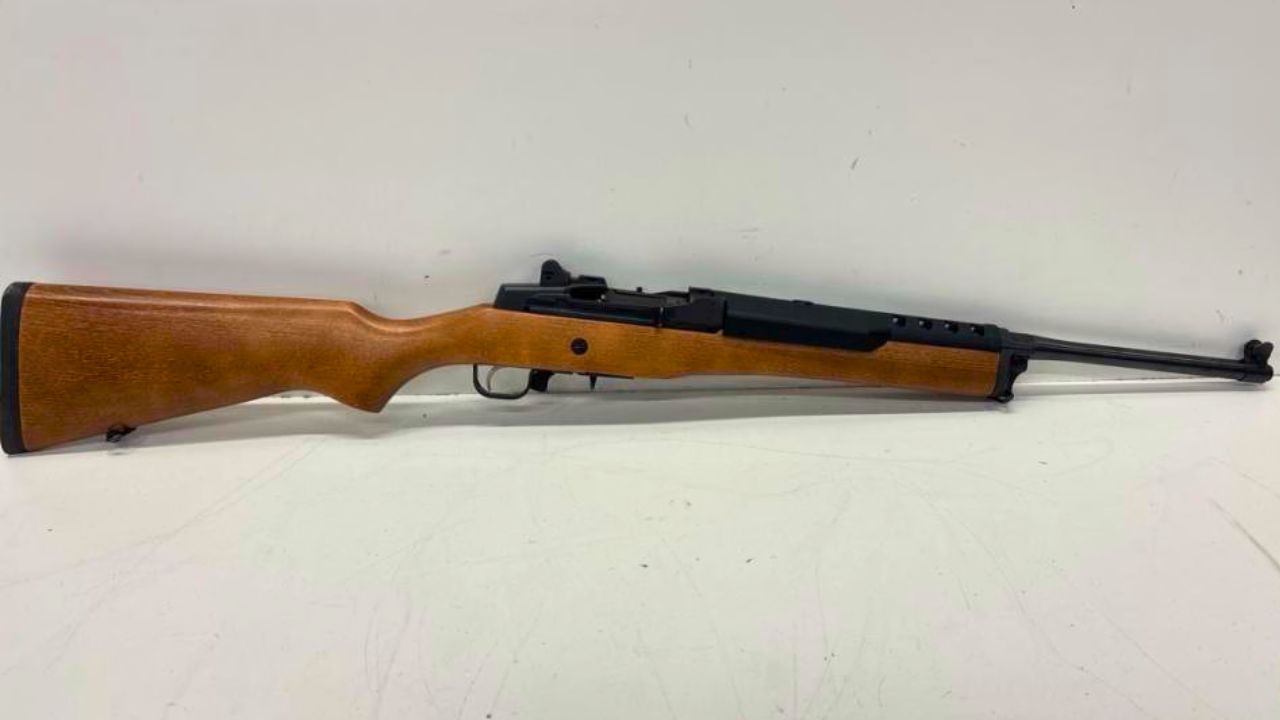
People sometimes forget the Mini-14 was not the end of the line. Ruger expanded the platform into the Mini-30, which chambered 7.62×39 and gave shooters a similar rifle with a different personality and cartridge. That move showed Ruger had enough faith in the basic design to build out the concept rather than leave it as a one-off curiosity.
The Mini-30 also helped underline what made the original Mini-14 interesting in the first place. The platform was adaptable, compact, and useful enough that Ruger believed it could serve more than one role. Even if the Mini-30 has its own pros and cons, it reminds people that the Mini-14 was not just a dead-end experiment. It was a design Ruger thought was worth developing further.
Folding-stock versions helped boost the rifle’s cool factor

Even shooters who usually prefer plain rifles can admit the folding-stock Mini variants carry a certain old-school cool. Whether people know them from TV, law-enforcement associations, or older catalogs, those versions helped give the Mini-14 a more aggressive image than the standard ranch rifle sometimes gets credit for. They made the platform feel more versatile and a little more serious.
Of course, cool factor alone does not keep a rifle alive for decades, but it definitely helps keep interest up. A plain wood-stock Mini is practical. A folding-stock Mini has personality. Those versions helped broaden the rifle’s identity beyond just being a ranch gun or utility rifle. They made it easier for the Mini-14 to live in both the working-gun world and the collector-and-fan world.
The Garand-style action is part of why people trust it
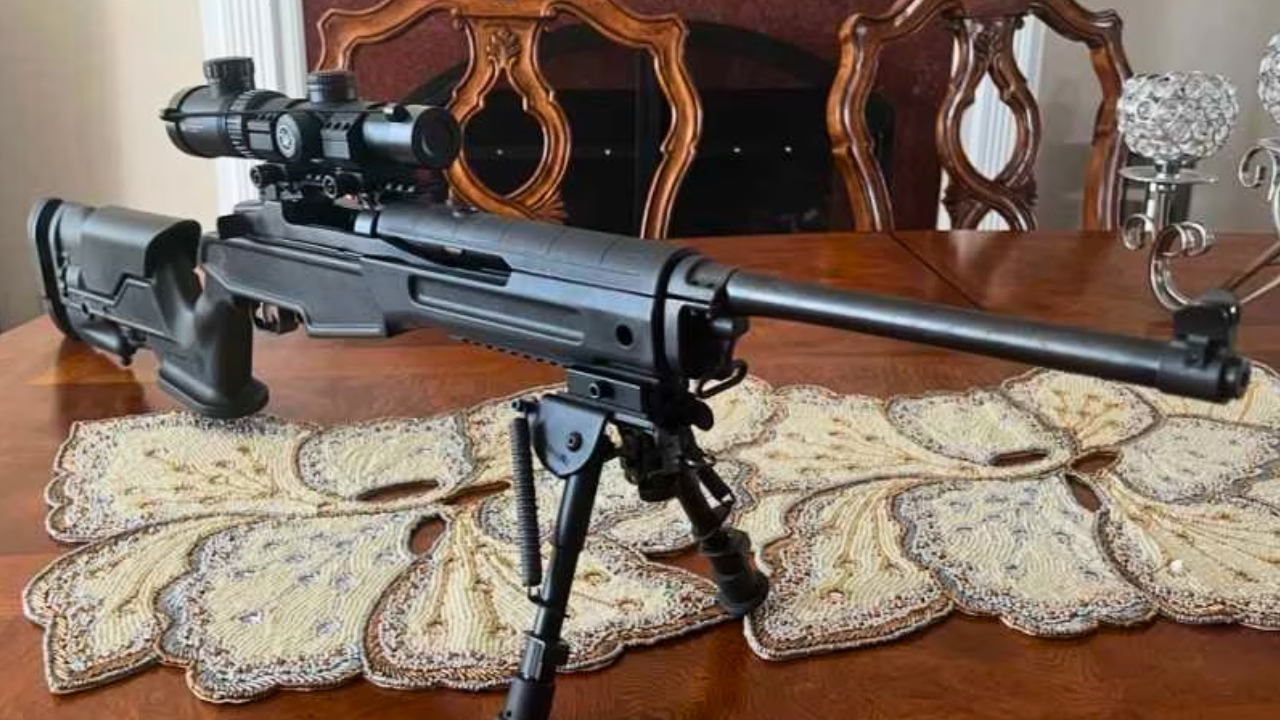
One thing that draws shooters to the Mini-14 is the action itself. The rifle uses a Garand-style rotating bolt and operating system lineage that feels proven and familiar. For a lot of people, that is a lot more appealing than a rifle that feels built around pure modularity. There is something reassuring about a mechanical design that traces back to battle-tested ideas.
That does not automatically make the Mini superior to other rifles, but it does help explain why people trust it. Shooters who like older service-rifle design features often find the Mini-14 easier to connect with than something that feels more modern and stripped down. It has a certain mechanical honesty to it. You run the bolt, feel the action cycle, and it feels like a real rifle in a very old-fashioned way.
It was never really trying to be an AR-15 clone

A lot of the worst Mini-14 takes happen when people judge it like it was supposed to be an AR-15 competitor on identical terms. That misses the point. Ruger did not build the Mini as a copy of the AR platform. It was aimed at shooters who wanted a compact semi-auto with a more traditional feel, different controls, and a different personality entirely.
Once you look at it that way, the rifle makes more sense. The Mini-14 is not for the guy who wants endless customization, cheap mags everywhere, and a full parts ecosystem that stretches to the moon. It is for the shooter who wants a simple, handy rifle that feels like it came from a different era. A lot of people still buy them for exactly that reason, and that is probably why the Mini-14 is still with us.
Like The Avid Outdoorsman’s content? Subscribe to our newsletter so you never miss an article.
Here’s more from us: