Photo credit: GDN LIMITED/GunBroker
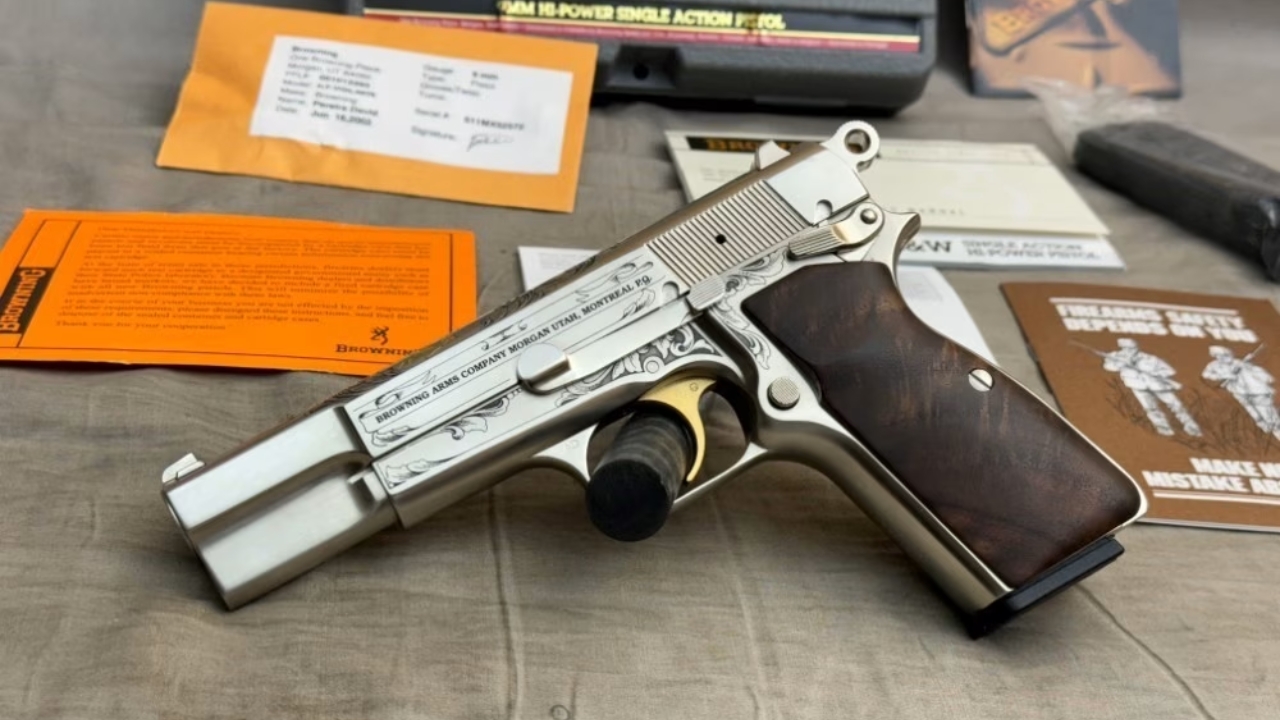
The Browning Hi-Power is one of those pistols that gets simplified into one easy line: John Browning’s last great handgun, high-capacity 9 mm, military classic. All of that is broadly true, but the real story is a lot more layered. The Hi-Power came out of a French military requirement after World War I, was finished by Dieudonné Saive after Browning’s death, and ultimately became one of the most widely used military handguns of the 20th century. FN says the design was completed in 1934/1935, and American Rifleman notes the pistol was developed from French “Grande Puissance” requirements that demanded a compact, lethal service pistol with at least a 10-round magazine.
What makes the Hi-Power especially interesting is that it is not just one gun story. It is a story about design handoff, naming confusion, wartime production on both sides of World War II, and a pistol that stayed relevant long enough to become both a military legend and a custom-shop favorite. Here are 15 little-known facts about the Browning Hi-Power.
1. John Browning did not finish it himself

This is probably the biggest Hi-Power fact many shooters still get fuzzy. American Rifleman says the pistol was designed in part by John Moses Browning, but the final development work was completed by Dieudonné Saive after Browning died in 1926. FN’s own history says Saive completed the design in 1934 and FN began production after that.
That matters because the Hi-Power is not just “Browning’s last pistol” in the simple sense people often mean. It is really a Browning-Saive pistol, with Browning starting the project and Saive carrying it across the finish line.
2. It was born from a French military requirement

The Hi-Power did not begin as a generic commercial pistol. American Rifleman says the French military, after World War I, issued requirements in 1921 for a new Grande Puissance service pistol that had to be compact, accurate, lethal to 50 meters, hold at least 10 rounds, and include a magazine disconnect.
That explains a lot about the pistol’s final form. The Hi-Power’s famous capacity and service-oriented size were there because the gun was being shaped around a real military wish list from the beginning.
3. “High Power” referred to magazine capacity, not cartridge power

FN’s company history says the pistol was called “High Power” because its 13-round capacity was almost twice that of comparable sidearms of the period and used the industry’s first double-stack magazine.
That is easy to miss now because “high power” sounds like a ballistic claim. In reality, the name was really about capacity advantage. In the 1930s, 13 rounds in a service pistol was a very big deal.
4. The double-stack magazine was one of its biggest breakthroughs
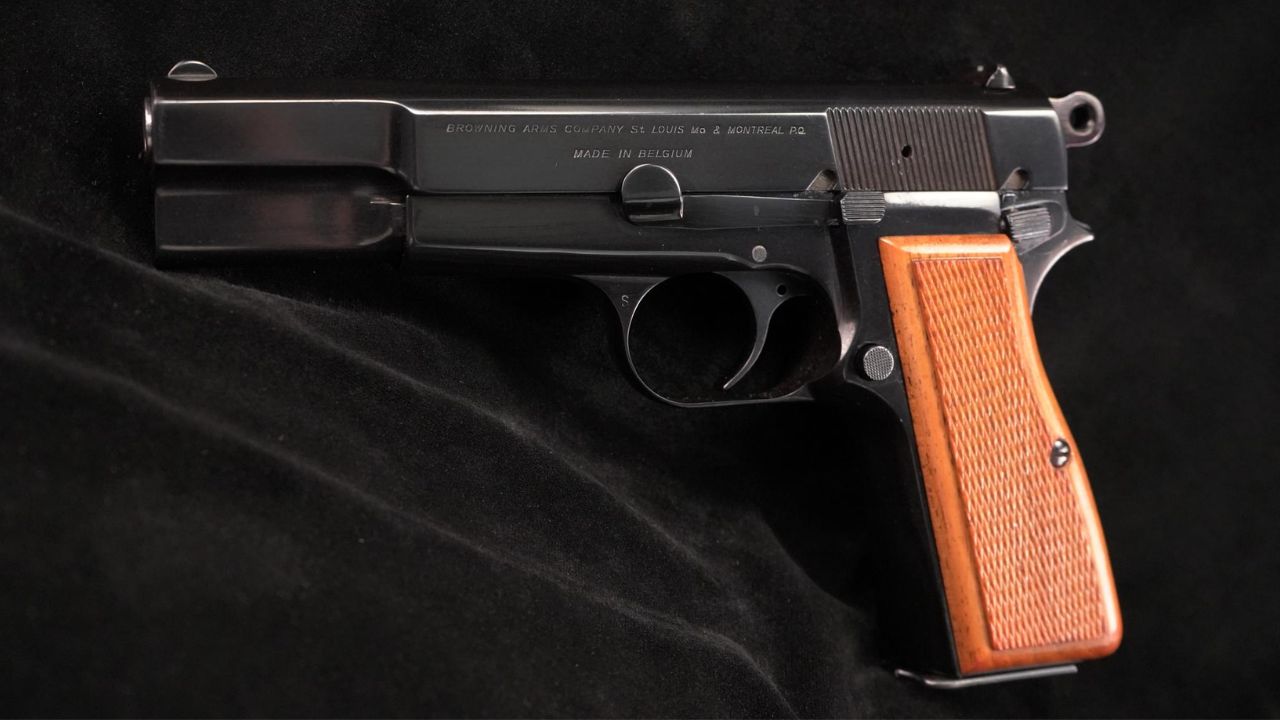
Today a double-stack 9 mm magazine feels normal. Back then it did not. FN’s history explicitly ties the pistol to the first double-stack magazine in this class, and American Rifleman’s exploded-view piece says the final M35/Grande Puissance design carried 13 rounds, which was a major leap for the time.
That is a huge reason the Hi-Power mattered so much. It was not just a handsome military pistol. It helped set the template for what a high-capacity service sidearm could be.
5. The pistol was finished in 1935, not during Browning’s lifetime

FN says the design was completed in 1934, while its marketing and American Rifleman’s technical histories consistently place the pistol’s final form and launch in 1935.
That matters because the Browning name is so strong that people sometimes assume he lived to see the finished gun. He did not. The Hi-Power became famous after Browning was already gone.
6. “High Power” and “Hi-Power” are not exactly the same label

American Rifleman’s “5 Little-Known Facts” piece says if the pistol is marked Fabrique Nationale, it is a High Power. If it is marked Browning Arms Company, it is a Hi-Power. The “Hi-Power” spelling was introduced by Browning in the 1950s to avoid confusion with the Browning High-Power rifle.
That is a small but very real collector detail. People often use the spellings interchangeably, but the markings and import branding actually tell a more specific story.
7. The French wanted it, but they did not end up adopting it

This is one of the stranger twists in the gun’s history. American Rifleman’s wartime Hi-Power piece says the French government ultimately passed on the pistol, even though their requirement helped create it.
That is a great reminder that gun development stories are rarely clean. A military can inspire a design and still not become the one most associated with it.
8. It was used by both sides in World War II

This is one of the coolest facts about the Hi-Power. Shooting Illustrated’s 2025 WWII feature says the pistol was used by both sides during the war, and American Rifleman explains why: when Germany occupied Belgium, FN production served the Germans, while Allied production took place in Canada through John Inglis & Co.
That gives the Hi-Power one of the strangest war records of any major handgun. The same basic pistol design ended up in the hands of opposing armies during the same global conflict.
9. The Germans gave it their own military designation

American Rifleman says that after occupying Belgium in 1940, the Germans renamed the FN-made Hi-Power Pistole 640(b).
That is the kind of detail collectors love because it shows how deeply the pistol was folded into wartime procurement and occupation reality, not just civilian legend.
10. It came to the U.S. commercial market later than many people think

American Rifleman says civilian U.S. importation began in 1954 via Browning Arms Company.
That is later than many shooters assume, especially since the pistol itself dates to the mid-1930s. The American commercial identity of the Hi-Power was a postwar story, not an immediate one.
11. It became one of NATO’s most trusted sidearms

FN’s current High Power materials say more than one million pistols served more than 50 NATO armies, and describe it as NATO’s trusted sidearm for more than 80 years.
That is a massive service footprint. However people rank it personally, the Hi-Power was not a niche military pistol. It became one of the great institutional handguns of the 20th century.
12. It stayed in production for a very long time before being discontinued

Shooting Illustrated reported that Browning ended Hi-Power production in 2018, with dealer availability already drying up in 2017. American Rifleman’s 2023 FN High Power coverage says the original design had become “long in the tooth” by the 21st century before production finally stopped.
That matters because the Hi-Power was not some short-run historical piece. It had a production and service life long enough to span generations of soldiers, police, and civilian shooters.
13. It became a custom-gun favorite after factory production ended

Shooting Illustrated’s 2018 and 2016 pieces on custom Hi-Powers show how strongly the pistol stayed alive in the custom world through shops like Nighthawk.
That says a lot about the design’s appeal. Even after factory support faded, shooters still cared enough to keep the platform alive through custom work and upgrades. The gun had moved beyond simple catalog life and into classic-gun territory.
14. FN brought the High Power name back in modernized form
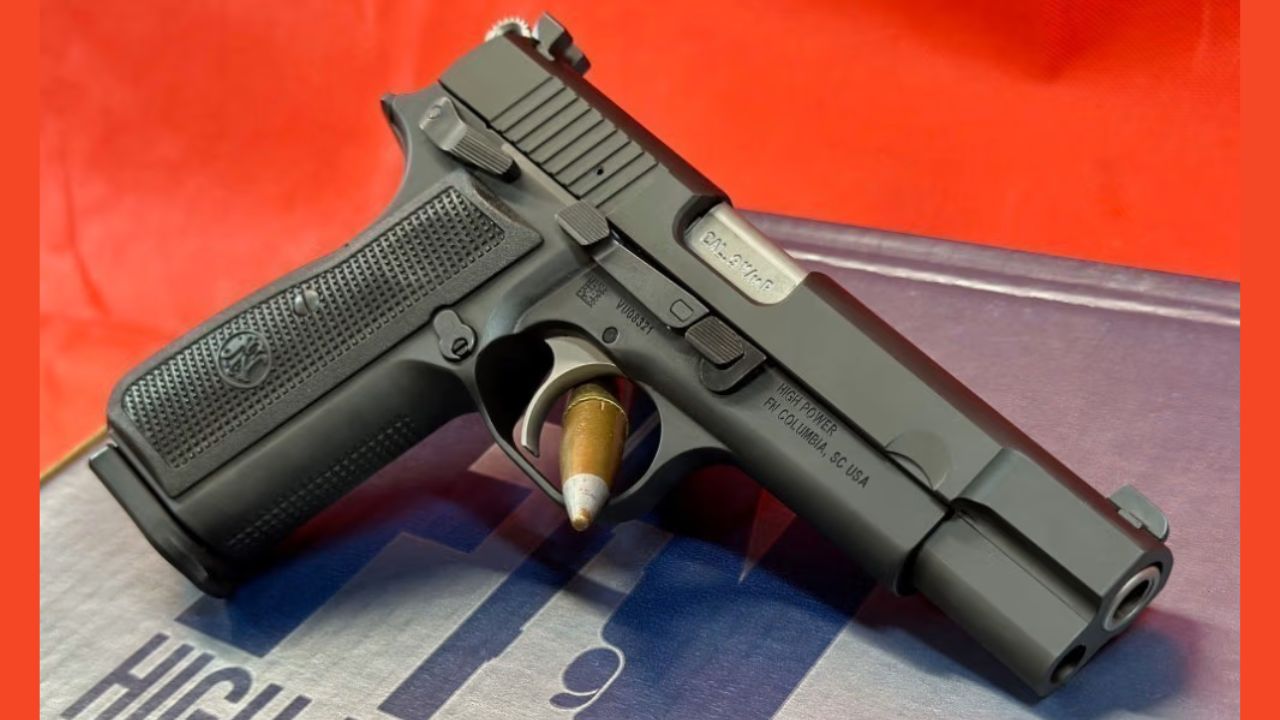
FN announced a new FN High Power in 2022, describing it as a reimagined version of the legendary 1935 pistol. FN’s launch materials explicitly say the new gun carries forward the original design’s signature traits while modernizing the platform for today’s shooters.
That is important because the Hi-Power/High Power story did not simply end with discontinuation. FN believed the name still had enough weight to return in a modern form.
15. The biggest little-known fact may be that it is really a “two-designer” legend

More than anything else, this is what people miss. The Hi-Power is famous under Browning’s name, and fairly so. But the gun people actually know—the finished, adopted, world-famous service pistol—also belongs to Dieudonné Saive in a major way. American Rifleman and FN both make that clear.
That does not diminish Browning. It makes the story better. The Hi-Power is not just a final Browning masterpiece. It is one of the great handoff stories in firearms history: a legendary design begun by one giant and completed by another.
Like The Avid Outdoorsman’s content? Be sure to follow us.
Here’s more from us: