Photo credit: 9-Hole Reviews/YouTube
FN is one of those firearm names a lot of shooters recognize without realizing how deep the company’s history really runs. Some people know FN because of the SCAR. Others think of the FN 509, Five-seveN, FAL, or Browning Hi-Power. But FN’s story is much bigger than one rifle, one pistol, or one modern military contract.
The company has been tied to military rifles, machine guns, sporting arms, pistols, cartridges, and major designs that shaped the firearms world far beyond Belgium. FN is not just another brand on the shelf. It is one of the names that quietly sits behind a surprising amount of modern firearm history.
FN stands for Fabrique Nationale

A lot of shooters say “FN” without ever thinking about what the letters mean. FN stands for Fabrique Nationale, short for Fabrique Nationale d’Herstal. That matters because the company is not some newer tactical brand that appeared during the modern rifle boom.
Its roots are Belgian, and Herstal remains a major part of the company’s identity. When you buy or discuss FN firearms, you are talking about a company with a long European industrial and military background. That gives the name more weight than many casual buyers realize.
FN’s history is tied closely to John Browning

John Moses Browning is usually associated with American firearm history, but FN played a huge role in bringing many of his designs to life. Browning worked closely with FN, and that relationship shaped pistols, shotguns, and other firearms for generations.
That connection matters because FN was not only a manufacturer copying ideas from elsewhere. It helped produce some of the most important Browning-linked firearms ever made. The Browning Auto-5, early Browning pistols, and later Hi-Power lineage all tie FN to one of the most important designers in gun history.
FN helped make the Browning Auto-5 famous

Many shooters think of the Browning Auto-5 as a Browning shotgun first and an FN product second. But FN production was central to the Auto-5 story. For decades, Belgian-made Auto-5s carried a level of quality and reputation that still matters to collectors and bird hunters.
That shotgun helped prove FN could build sporting arms with lasting appeal, not just military weapons. A clean Belgian Auto-5 still has a feel that many modern shotguns do not duplicate. FN’s manufacturing helped turn Browning’s long-recoil design into one of the most recognizable semi-auto shotguns ever made.
The FN FAL earned the “right arm of the free world” reputation
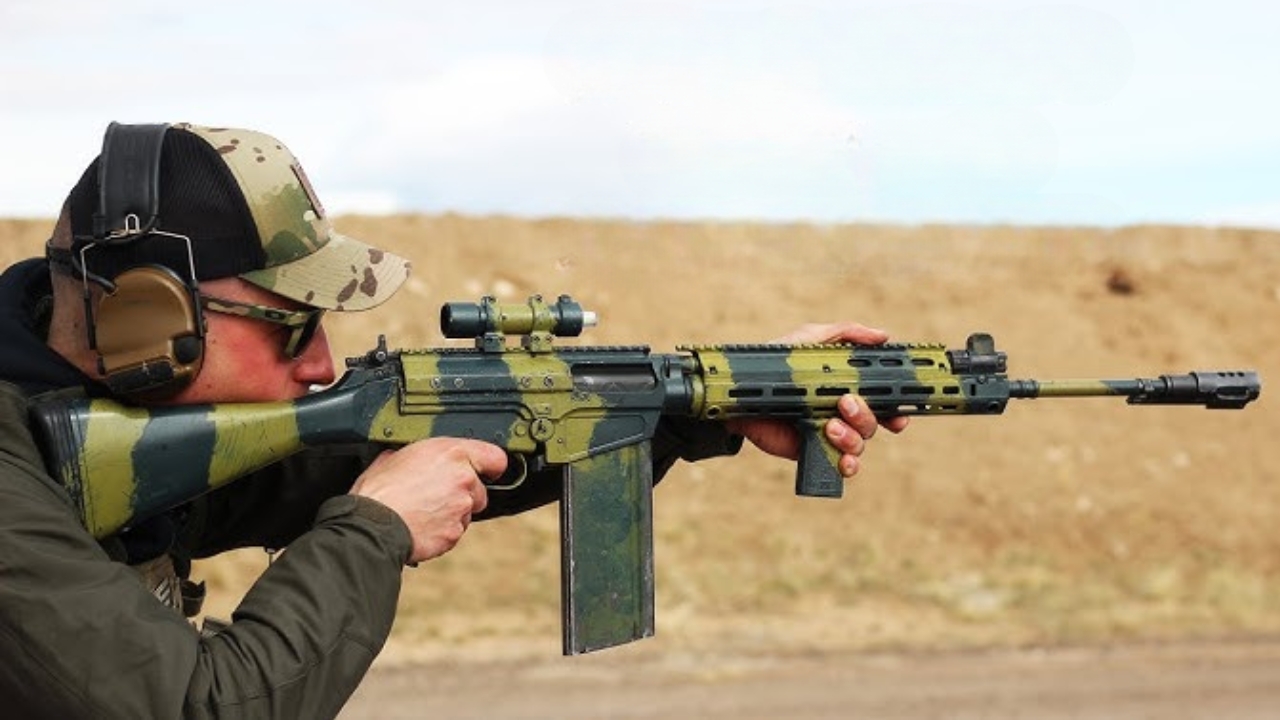
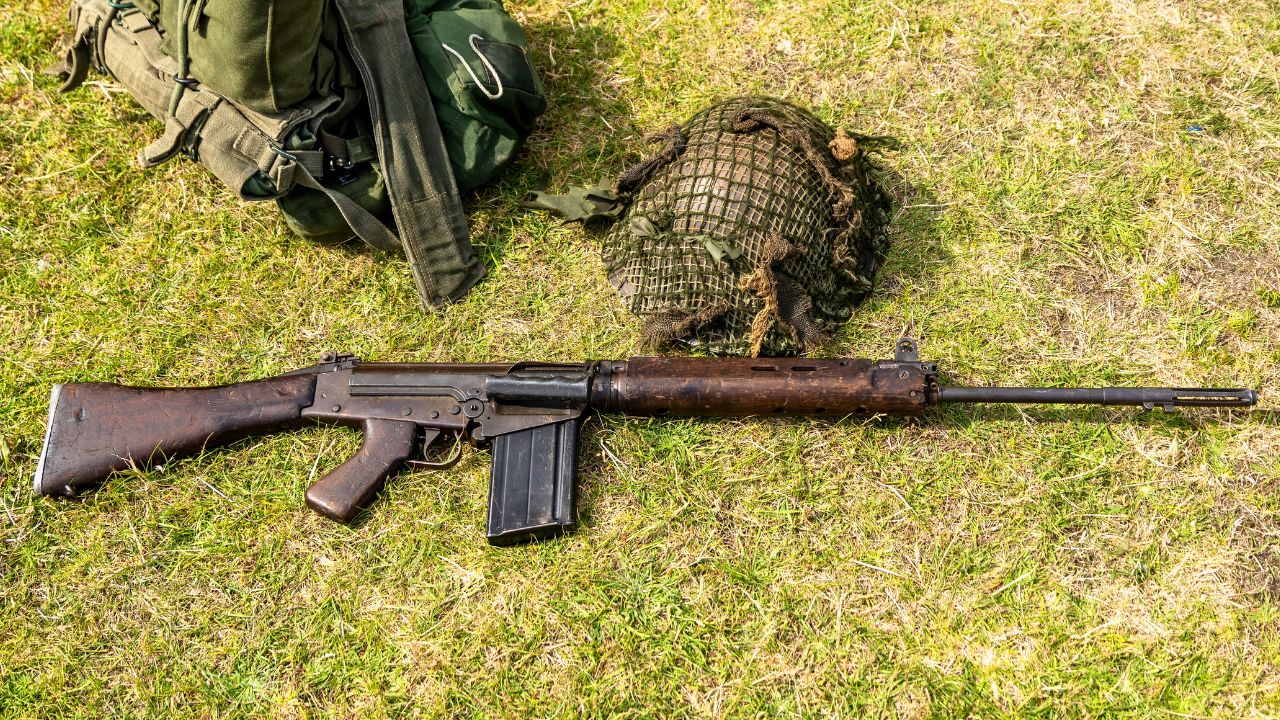
The FN FAL is one of FN’s most famous military rifles, and for good reason. It became widely adopted by many Western-aligned countries during the Cold War and gained a reputation as one of the defining battle rifles of its era.
Shooters sometimes know the nickname before they understand the rifle. The FAL was chambered in 7.62 NATO, used a piston-driven system, and served in a huge range of climates and conflicts. It was not a lightweight modern carbine, but it gave FN one of the strongest military rifle legacies in the world.
FN did not build its name only on rifles

FN is often talked about through rifles like the FAL, SCAR, and military machine guns, but the company’s pistol history is just as important. FN pistols have influenced concealed carry, military sidearms, police pistols, and modern high-capacity handgun design.
That broad reach is part of what makes the company interesting. FN has never been limited to one lane. It has built pocket pistols, service pistols, sporting shotguns, military rifles, and belt-fed weapons. Few companies have touched as many categories with that much long-term impact.
The Browning Hi-Power has deep FN roots

The Browning Hi-Power is one of the most respected 9mm pistols ever made, and FN was central to its production and identity. Many shooters call it a Browning, but FN’s role is impossible to separate from the pistol’s history.
The Hi-Power mattered because it combined a double-stack magazine, good ergonomics, and service-pistol reliability long before modern striker-fired guns took over. It influenced how people thought about 9mm duty pistols. FN’s connection to that pistol gives the company serious credibility among handgun people who know the history.
FN’s Five-seveN was stranger than most pistols when it arrived

The FN Five-seveN did not look or feel like a normal service pistol when shooters first encountered it. Lightweight frame, high capacity, and the 5.7x28mm cartridge gave it a futuristic personality that was easy to either love or dismiss.
What many shooters miss is that the pistol was part of a larger weapon system idea alongside the P90. It was not simply a random oddball handgun. FN was chasing a different role with the 5.7 cartridge, focused on low recoil, capacity, and specialized military use. That context explains why the Five-seveN feels so different.
The P90 was not just made to look futuristic

The FN P90 gets attention because it looks like something from science fiction. The top-mounted magazine, compact bullpup layout, and 5.7x28mm chambering make it stand apart from almost everything else.
But the design was not just about looks. FN built the P90 around a compact personal-defense-weapon concept, meant for users who needed more capability than a pistol but less size than a traditional rifle. Whether you love or hate the design, it was an actual attempt to solve a specific problem. That is why it still gets attention decades later.
FN has a serious machine gun legacy
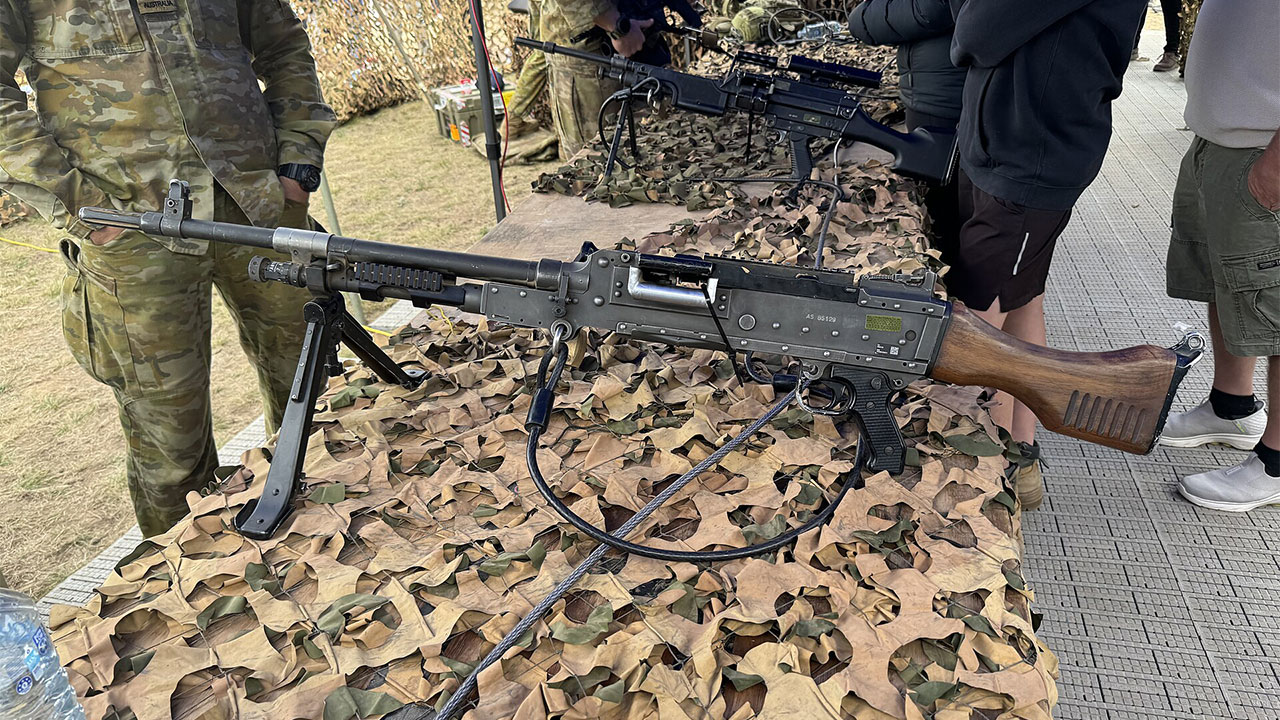
A lot of casual shooters know FN for civilian rifles and pistols, but FN’s machine gun history is a major part of why the brand matters. Designs like the MAG 58 and Minimi became important military weapons across the world.
That background affects how people view FN today. A company that has built belt-fed guns for serious military use carries a different kind of credibility. It does not mean every civilian FN is perfect, but it does explain why the brand has a hard-use reputation that goes beyond marketing language.
The M249 connection boosted FN’s American recognition

Many American shooters first learned FN through military weapons, especially the M249 SAW. FN’s U.S. presence became more visible because of its role in producing arms for American military use.
That matters because FN was not only a European name sitting across the ocean. It became connected to U.S. service rifles, machine guns, and contracts. That gave American buyers a different kind of familiarity with the brand. When people saw FN on civilian firearms, the name already carried military seriousness.
The SCAR became famous partly because it looked different

The FN SCAR earned attention because it did not look like another AR-15. The folding stock, reciprocating charging handle on earlier versions, monolithic upper feel, and military connection made it stand out immediately.
But the SCAR also became controversial because price and expectations were so high. Some shooters love it, especially for its piston system and lightweight feel in .308 versions. Others question whether it delivers enough over cheaper platforms. Either way, the SCAR gave FN one of the most talked-about modern rifle families in the civilian market.
FN pistols often feel more duty-minded than flashy
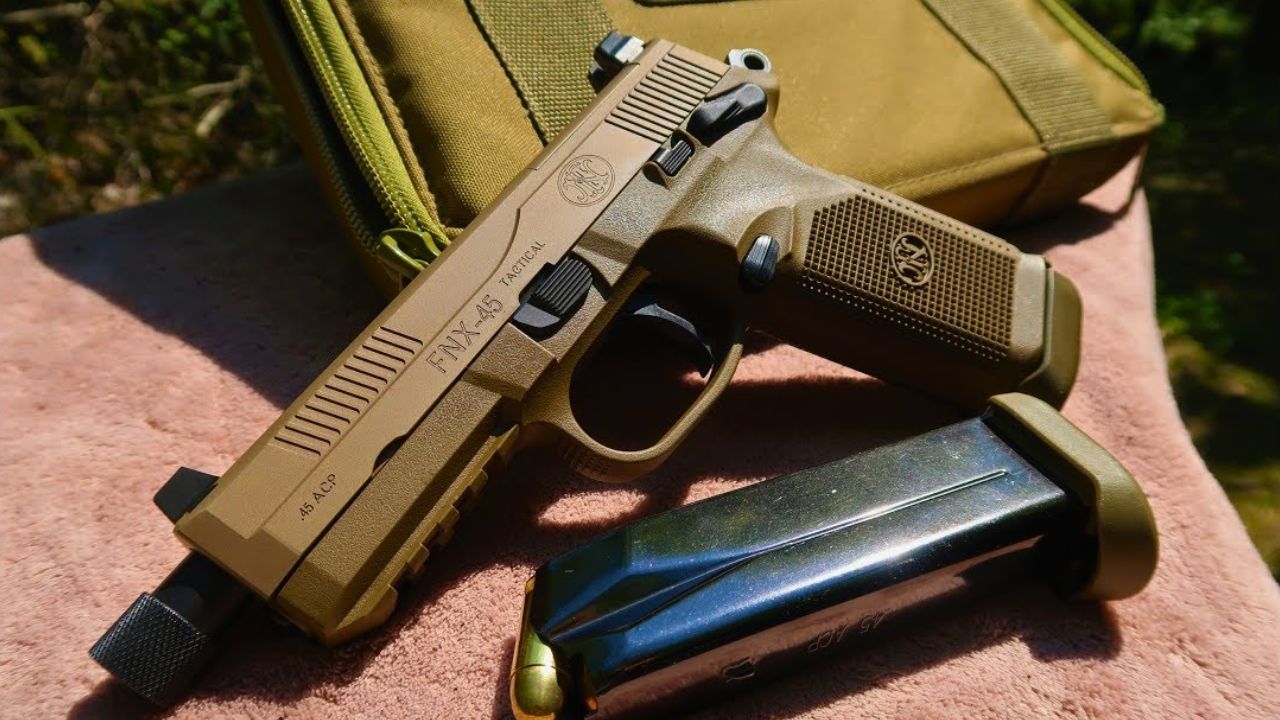
Modern FN pistols like the FNX, FNS, and 509 lines have often felt more duty-focused than stylish. They are not usually the pistols people buy because they are the prettiest in the case. They are bought because they feel serious, durable, and built for defensive or service use.
That can make FN pistols a little underrated. The triggers do not always win everyone over, and the grip feel varies by shooter. But the guns tend to project a working-pistol attitude. FN has leaned into function more than fashion, and serious shooters usually notice that over time.
The FNX-45 Tactical helped shape the modern tactical pistol image
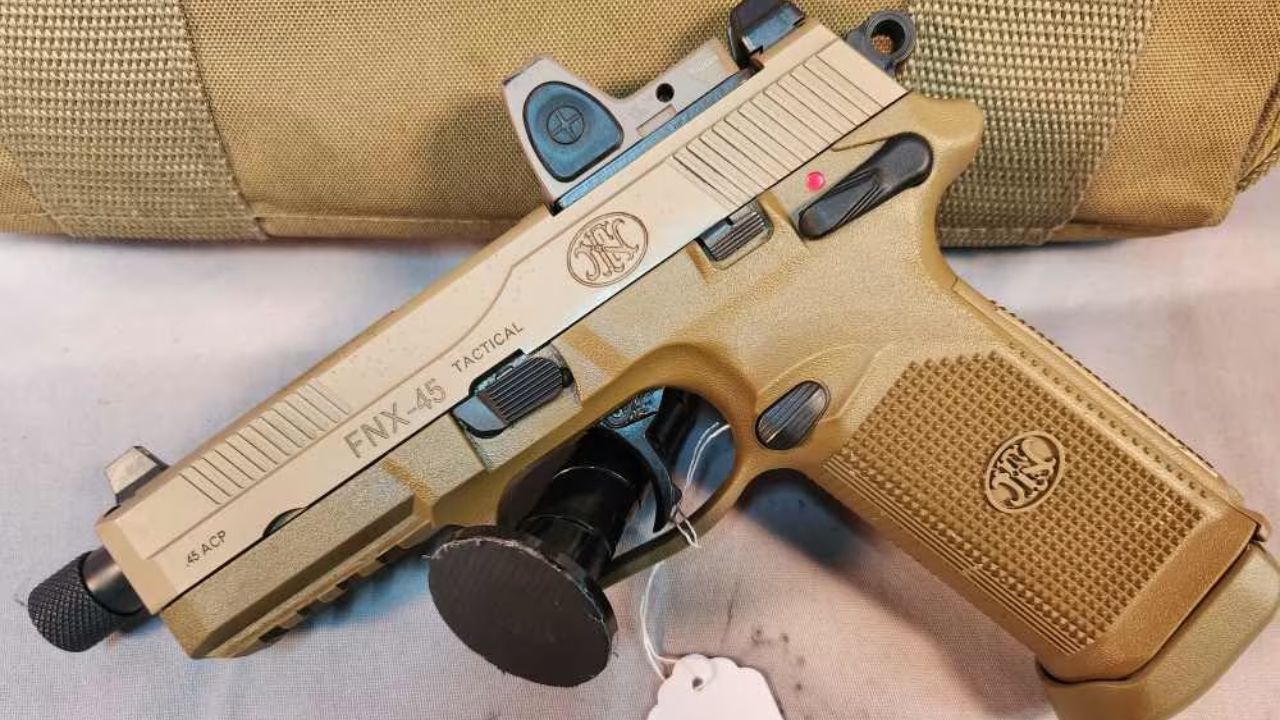
The FNX-45 Tactical became one of those pistols that seemed purpose-built for the suppressor-and-optic crowd before that setup became as common as it is now. Threaded barrel, tall sights, optics capability, and high .45 ACP capacity made it stand out.
It is a big pistol, and not everyone needs one. But it helped FN show that it could build a feature-rich tactical handgun that felt ready for modern accessories. Long before every pistol line had tactical variants, the FNX-45 Tactical gave shooters a very complete package.
FN’s civilian guns often carry military expectations
One challenge FN faces is that buyers expect a lot because of the military background. When a brand is tied to the FAL, P90, SCAR, M249, and other serious weapons, people expect civilian models to feel nearly bombproof.
That can be both a strength and a problem. It gives FN instant credibility, but it also makes buyers less forgiving on price, triggers, parts support, or small complaints. FN firearms often get judged against the company’s own reputation. That is a tough standard, but it is one FN created through decades of serious work.
FN’s biggest strength is range across categories

FN is not respected because of one famous gun. It is respected because the company has mattered in so many different areas: military rifles, machine guns, service pistols, sporting arms, PDWs, and modern tactical firearms.
That range is what many shooters miss. Plenty of brands are known for one lane. FN has influenced several. From the Auto-5 and Hi-Power to the FAL, P90, SCAR, 509, and belt-fed military guns, FN has left fingerprints all over firearm history. That is why the name keeps carrying weight, even when individual models spark debate.
Like The Avid Outdoorsman’s content? Subscribe to our newsletter so you never miss an article.
Here’s more from us: