Photo credit: Dmitri T/Shutterstock.com
If you’re torn between a classic 1911 and a modern polymer pistol, you’re not alone. This isn’t just a style preference—it’s about weight, trigger feel, reliability, and how each one fits into your life. A lot of folks grab one without thinking through the trade-offs. So let’s break it down honestly—no fluff, no gun-store hype—just real pros and cons to help you figure out what actually works for you.
Weight and Carry Comfort

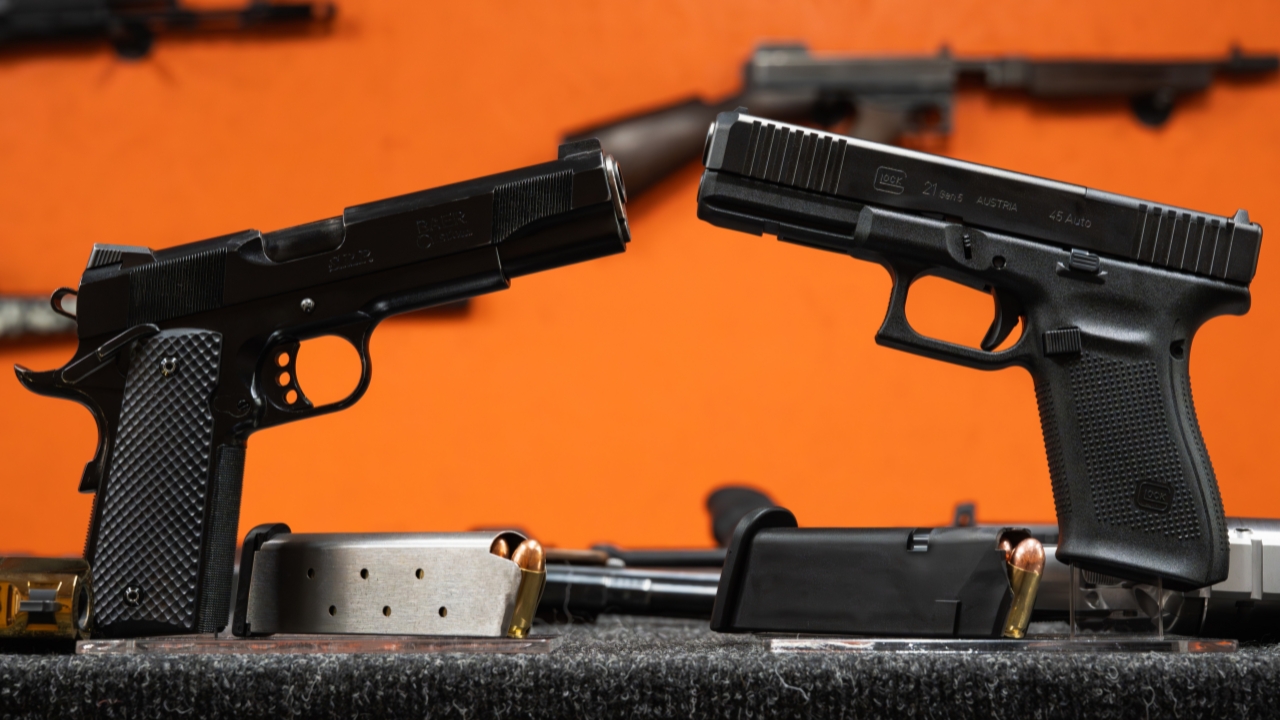
The first thing you’ll notice with a 1911 is the heft. That all-metal frame isn’t doing you any favors if you’re carrying all day. For some, that weight means better recoil control. For others, it just means back pain.
Polymer pistols are usually lighter and easier to carry. That matters if you’re tucking it inside your waistband or hiking with it. Less weight means you’re more likely to actually carry it—which might matter more than anything else.
Trigger Feel and Control
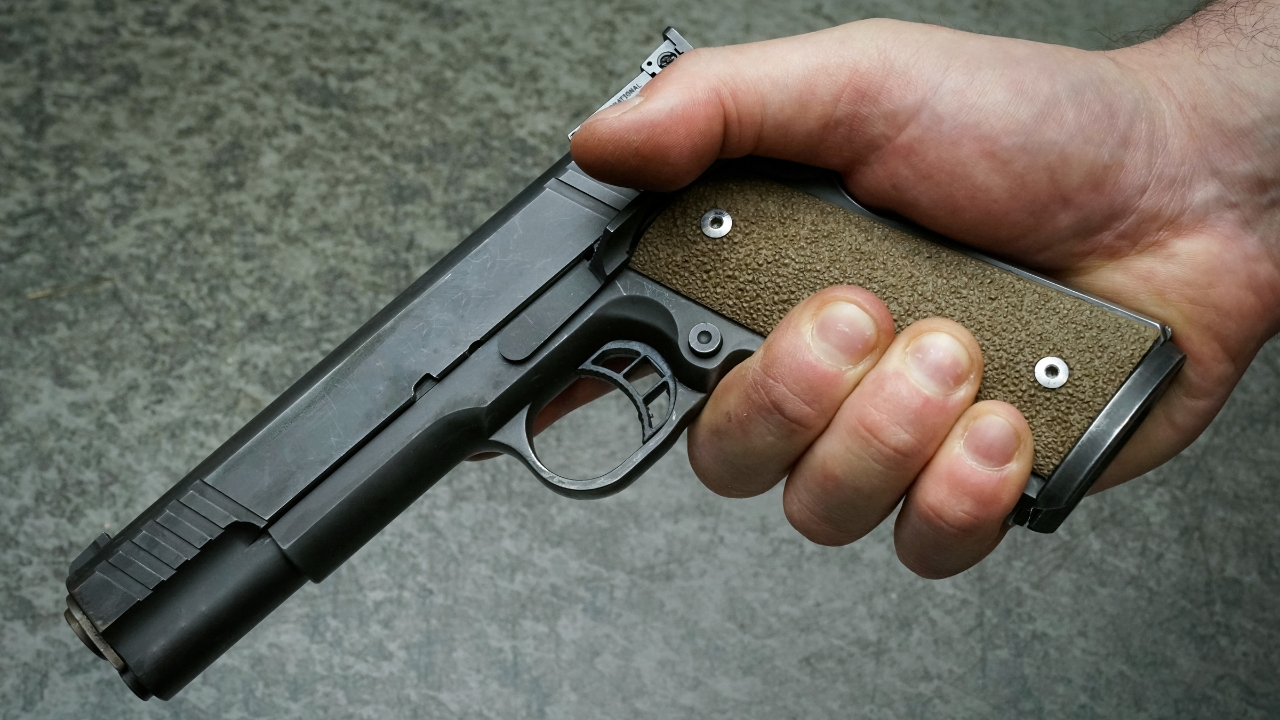
A good 1911 trigger feels like it’s on a hair trigger—in a good way. Clean break, short reset, and none of the spongey feel you get with some modern striker-fired guns. That’s one of the biggest reasons people love 1911s.
But polymer pistols have come a long way. Some striker-fired triggers are decent right out of the box, and aftermarket upgrades are everywhere. It might not be match-grade, but it’s plenty good for defensive use.
Magazine Capacity
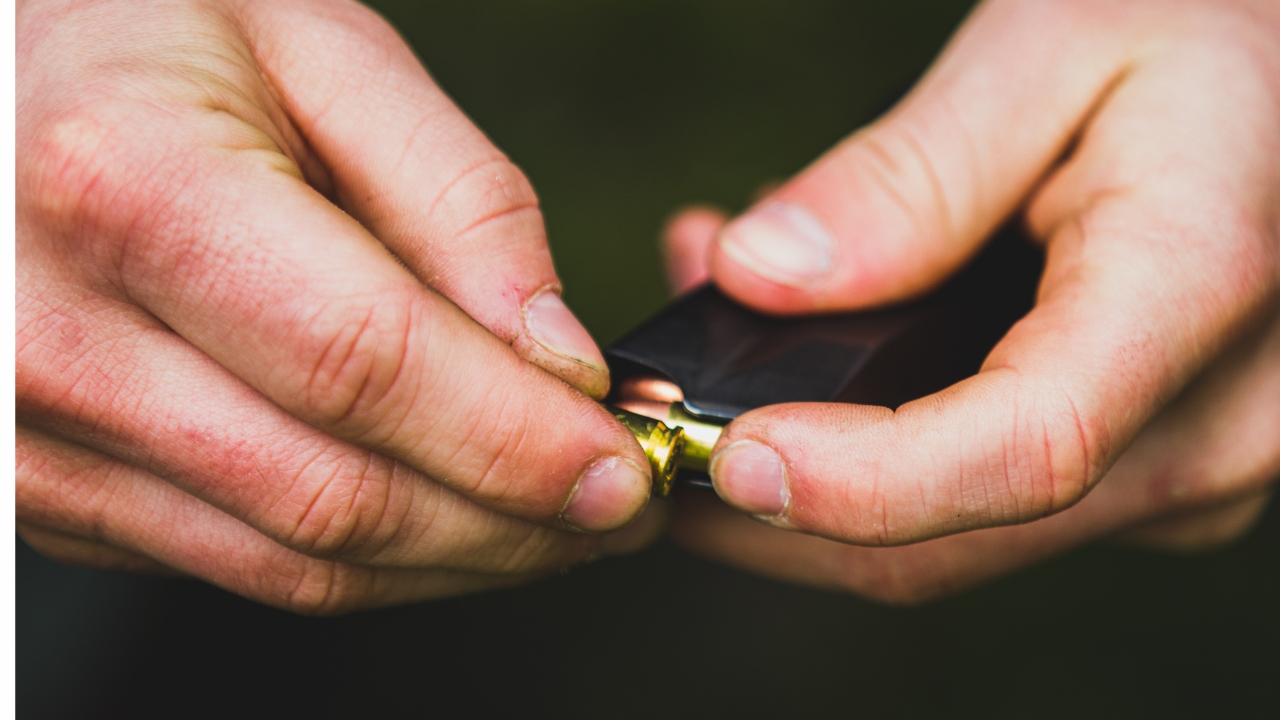
Here’s where the 1911 starts to feel a little dated. Most 1911s in .45 ACP run 7 to 8 rounds per mag. Even with a 9mm variant, you’re not pushing high numbers unless it’s a double-stack model.
Polymer pistols usually carry more without needing extra bulk. It’s not hard to find a 9mm polymer gun with 15+ rounds. For some folks, that’s peace of mind. For others, it’s just extra weight they don’t want to carry.
Maintenance and Durability

A well-made 1911 runs smooth but wants to be cleaned and oiled regularly. It’s more particular about ammo and more sensitive to grime and neglect. If you treat it right, it’ll treat you right—but it won’t forgive you for laziness.
Polymer pistols tend to take more abuse without a fuss. Toss it in the glovebox, run it dirty, drop it in the mud—it’ll probably keep going. That makes a big difference if you need something low-maintenance.
Cost and Customization

Off-the-shelf 1911s can get pricey fast, especially if you want decent fit and finish. The good news? There’s a huge aftermarket if you like tuning and tinkering. You can make it your own, but it’ll cost you.
Polymer pistols are usually cheaper up front, and there’s no shortage of holsters, lights, sights, and trigger kits. You can slap upgrades on without taking out a second mortgage. It’s easier to build a solid setup without going broke.
Concealability

Standard 1911s are slim but long and heavy. They print less than you’d think for a full-size pistol, but they can still be tough to hide under light clothing—especially in summer.
Most polymer pistols come in compact or subcompact sizes that disappear under a t-shirt. If deep concealment is your top priority, that edge usually goes to the polymer crowd.
Recoil Management

The weight of a 1911 does help absorb recoil, especially in .45 ACP. The steel frame and low bore axis keep it flat and manageable, even for newer shooters.
Polymer guns, especially lightweight ones, can feel a little snappier. That said, with proper grip and technique, most people shoot them just fine. It’s a trade-off between comfort and carry weight.
Aesthetics and Sentimental Value

Let’s be honest—1911s have a certain look and feel that polymer guns just don’t match. There’s history in that frame, and it feels like you’re holding something built to last forever. A lot of folks get attached to their 1911s in a way that’s more emotional than practical.
Polymer pistols are more about function than looks. They’re workhorses, not showpieces. If you care more about performance than polish, this might not matter—but for some shooters, aesthetics carry real weight.
Safety Features

1911s usually come with both a thumb safety and a grip safety. Some folks like that extra layer of security, especially if they’re carrying cocked and locked. It’s one more thing to train with, but some find it reassuring.
Polymer pistols often skip external safeties entirely, relying on internal safeties and a trigger safety. That can make them quicker to deploy under stress, but you’ve got to trust your holster and your trigger discipline.
*This article was developed with AI-powered tools and has been carefully reviewed by our editors.