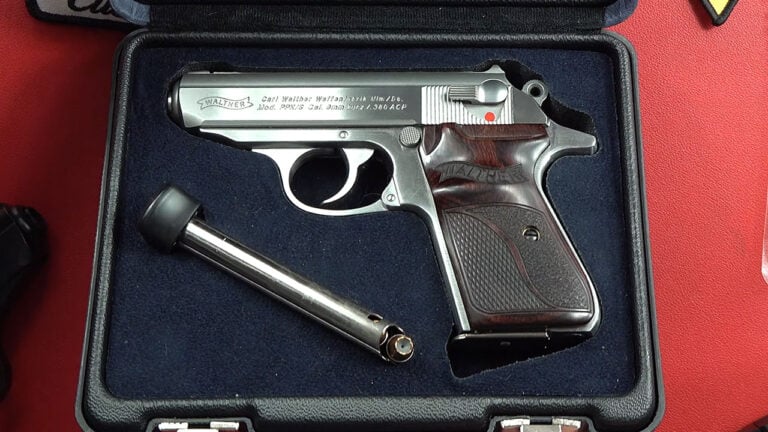
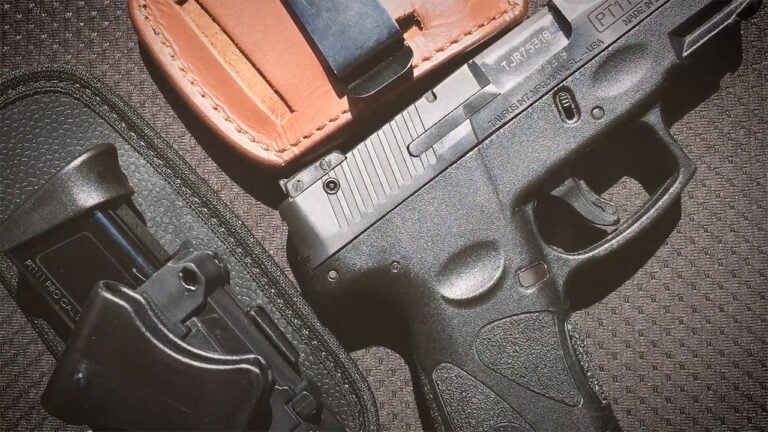
Photo credit: Bros Who Know Stuff/YouTube.com
Recoil springs are one of those parts nobody wants to think about until the gun starts acting weird. They’re cheap, they’re not exciting, and on most guns they’re buried under the slide or inside the action where you’re not staring at them. But a tired recoil spring can turn a perfectly good pistol into a jam factory, and it can do it gradually enough that you start blaming everything else first—ammo, mags, extractor, limp-wristing, “break-in,” even the gun model itself. The problem is recoil springs don’t usually fail in a dramatic way. They get weak, they lose control of slide speed, and the gun starts showing little issues that get worse over time.
The reason this matters for buying used is simple: spring life is invisible unless you check for it. Sellers love to talk round count, and even if they’re being honest, they usually have no idea how many rounds are on the recoil spring specifically. Springs get swapped, springs get ignored, and sometimes springs get “upgraded” with the wrong weight. If you’re evaluating a used semi-auto—especially a carry gun—being able to sniff out a tired recoil spring quickly can save you from buying someone else’s reliability problem. The good news is you can catch a lot in about ten seconds with the gun in your hands.
The quick test: slide feel and return to battery
With the gun cleared and safe, rack the slide like you mean it, then let it go forward under spring tension. Don’t ride it. Let it snap into battery the way it does when it actually cycles. A healthy recoil spring returns the slide with authority. A tired one often feels soft, sluggish, or “mushy” on the way forward. On some guns you’ll hear a slightly different sound—less of a solid “clunk” into battery and more of a gentle settle. That’s not a scientific measurement, but your hands are good at noticing when something doesn’t feel right, especially if you’ve handled the same model before.
Then do it again and pay attention to consistency. A spring that’s on its last legs can feel inconsistent—one rack feels okay, the next feels weak. Sometimes it’s because the spring is kinked, sometimes because the guide rod assembly is worn, sometimes because the spring weight is wrong. Either way, inconsistency is a red flag. You’re not trying to diagnose the exact issue in that moment; you’re trying to decide whether the gun is likely to run reliably without you immediately ordering parts the second you get home.
The “out-of-battery” clue people miss
Here’s a simple thing that catches a lot of tired recoil springs: with the slide forward, press lightly on the back of the slide with your thumb and see if it moves out of battery more than it should. Don’t force it, and don’t do anything unsafe—this is just a gentle pressure check. On many pistols, a worn recoil spring will allow a little more movement than normal, and the slide can feel like it’s not locking up with the same firmness. Again, it’s subtle, but if the lockup feels sloppy, that’s not something you ignore on a defensive gun.
Now, some designs will always have a touch of movement and that’s normal. The point is to compare the feel to what you expect from that platform. If you can move the slide noticeably with light pressure, or it feels like it’s not fully seating the same way every time, you should assume you’re looking at maintenance that hasn’t been kept up. That doesn’t always mean you walk away, but it means you don’t pay “barely shot, like new” money.
Ejection pattern and brass condition if you can test-fire
If you have the option to shoot the gun (range meet-up, shop with a range, buying from a buddy), pay attention to ejection. A recoil spring that’s too weak can let the slide run too fast, which can change ejection pattern and beat the gun up. You might see brass launching harder than expected, or brass landing in weird places from shot to shot. You can also see the gun start to batter the frame or show unusual wear around the guide rod area over time. On some pistols, weak springs can contribute to failures to return to battery or failures to feed, especially with lighter loads or when the gun gets dirty.
On the flip side, an overly heavy recoil spring—sometimes installed by someone who thought they were “upgrading”—can cause short-stroking, failures to lock back, and sluggish cycling. That’s why spring weight matters. People focus on “weak spring” and forget “wrong spring.” A used gun that has been tinkered with can have the wrong recoil spring weight, and that can cause just as many headaches as a worn one.
Visual checks that take seconds
You can’t always see the recoil spring well without field stripping, but if you can field strip, look at the spring for obvious uneven spacing, kinks, rust, or sections that look flattened. A spring that has taken a set may look shorter than it should, and it can feel “loose” when it’s off the gun. Some recoil assemblies will rattle more than normal. Check the guide rod for abnormal wear or bending. If the gun looks like it’s been run dry and dirty, assume springs weren’t a priority either.
If you can’t field strip, you can still look for clues around the muzzle end of the slide and the recoil assembly area. Excessive peening, shiny battering marks, or weird wear patterns can suggest the gun has been cycling harshly. That’s not always recoil spring alone, but it often goes hand-in-hand with a spring that’s overdue.
The practical truth: springs are cheap, but reliability problems aren’t
If everything else about the gun is solid, a tired recoil spring isn’t necessarily a dealbreaker because it’s easy to replace. The dealbreaker is when the seller wants top dollar while the gun shows signs of neglected maintenance. That tells you how the gun was treated overall. If the recoil spring feels tired, what about magazine springs? Extractor tension? Firing pin channel cleanliness? A carry gun that hasn’t had basic spring maintenance is a gun that’s been carried more than it’s been cared for, and that should change how you evaluate the purchase.
The smartest way to handle this is simple: if you suspect a spring issue, factor the cost and effort into the deal immediately. Don’t buy it thinking “I’ll probably replace the spring later.” Replace it before you trust the gun, and price the gun like you’re buying a project. If a seller doesn’t like that, that’s fine. There will always be another used gun.
Like The Avid Outdoorsman’s content? Subscribe to our newsletter so you never miss an article.
Here’s more from us: