
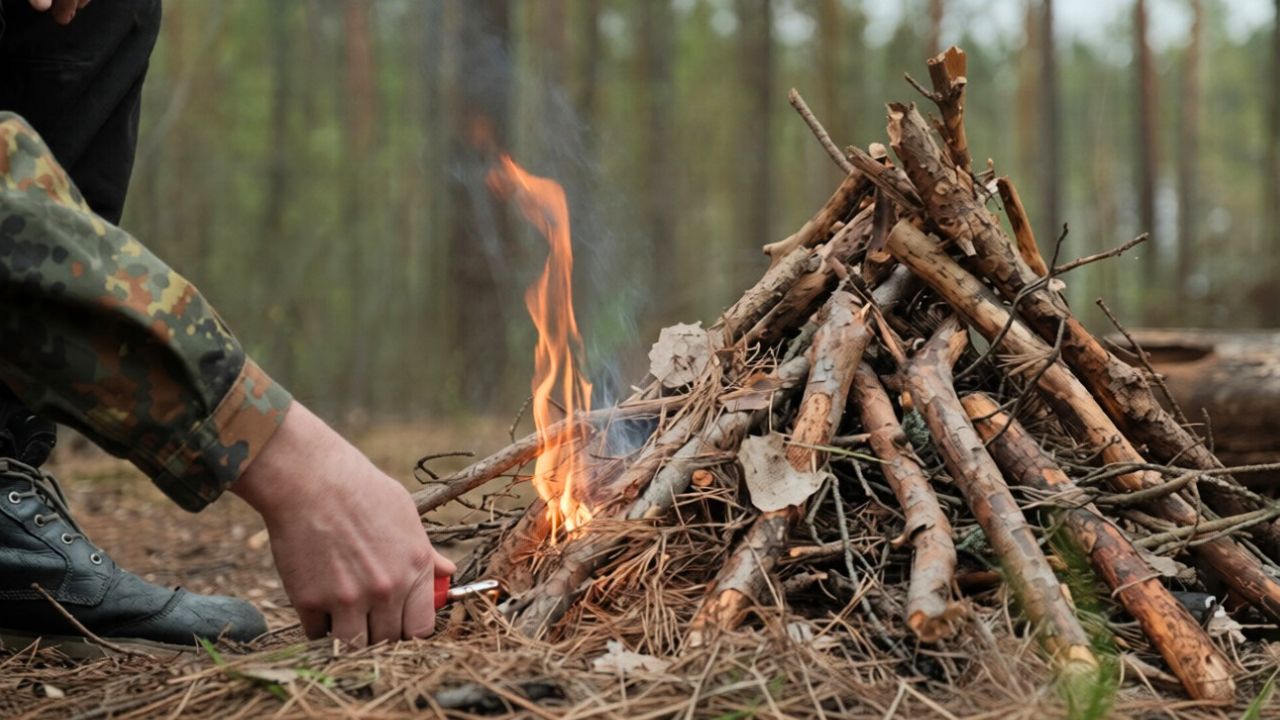
Photo credit: VALUA VITALY/Shutterstock.com
If your fire plan depends on perfect weather and calm hands, you don’t have a fire plan. You’ve got a campfire routine. Real survival fire isn’t the cute version where you strike a spark, toss in a little fluff, and the whole thing lights like a commercial. The version that matters is when it’s raining sideways, the wood is wet all the way through, and you’re already cold enough that you’re making dumb decisions. That’s when most “fire kits” fail, because they’re packed by people who haven’t tried to light anything when it’s miserable.
I’m a simple guy on this: you don’t need 12 gadgets and a pouch full of gimmicks. You need three things that work together, every time, and you need to practice with them. If your kit is complicated, it won’t happen when you’re tired. If it’s fragile, it won’t survive the pack. And if it’s built around “sparks” instead of “flame,” you’re going to burn daylight and energy you don’t have. Here’s the 3-piece setup I trust because it’s boring, reliable, and it still works when everything is soaked.
Piece 1 is a lighter that you actually protect
A lighter is still king because it gives you immediate flame. That matters more than people want to admit. Spark-based fire is fine when you’re comfortable and patient. When you’re cold and wet, you want flame now. The mistake people make is carrying one cheap lighter loose in a pocket and calling it good. That’s how you end up with a lighter full of lint, wet fuel, or a cracked body after it gets crushed. Put your lighter in a small waterproof bag, keep it in the same spot every time, and treat it like a tool you’ll bet your night on.
And don’t stop at one. The smart move is having a primary lighter and a backup lighter stored separately, because losing one is more common than people think. Survival isn’t about having one perfect tool. It’s about having a simple system that still works when you fumble something in the dark.
Piece 2 is waterproof matches for when the lighter quits
Lighters fail. They get wet. They get lost. They can break. That’s why your second piece is waterproof matches stored like they matter. People throw matches into a kit like an afterthought, and then they find out the hard way that a damp match is just a sad stick. Your matches need to be stored in a container that keeps them dry, with a striker that stays usable, and you need enough of them that you’re not “saving” them when you should be using them.
Here’s the mindset shift: matches aren’t a backup to the backup. They’re a separate ignition method that still gives you flame without fiddling around. If you’ve never tried lighting a match in wind while your hands are shaking, go do it once. You’ll stop treating matches like a throw-in item and start treating them like insurance you’re glad you had.
Piece 3 is tinder that lights fast even when the world is damp
This is where most people mess up. They pack “tinder” that looks good on the internet but doesn’t light reliably in the field. Or they assume they’ll “find dry stuff” when everything around them is wet. In soaked conditions, your tinder needs to be something you can trust to catch quickly and burn long enough to dry the next stage. That means you need a tinder option that’s protected from moisture and doesn’t require perfect technique.
The key is fast ignition and sustained burn. You’re not trying to build a fire in one step. You’re trying to create a chain reaction: tinder catches, kindling dries, small sticks catch, then you graduate to fuel. Your tinder has to burn long enough to get that chain moving. If it flames out in ten seconds, you’re back to square one, and in bad conditions, square one gets expensive.
The part people ignore is staging and wood choice
Even with the best kit, you can still fail if you don’t stage your fire and choose wood like you mean it. In wet conditions, you’re looking for wood that’s protected from the rain. Dead standing wood often beats sticks off the ground. The underside of logs can be better than the top. If you can split or break something to get to dry inner material, that’s usually where your success comes from. People keep trying to light wet outer bark and wonder why it’s not working. You’re trying to reach dry fibers and build from there.
Staging matters too. Have your kindling and small fuel ready before you light your tinder. Don’t light the tinder and then start hunting for sticks while your flame dies. That’s the kind of mistake people make when they’re cold and rushed. Prep first, light second. It sounds obvious, but under stress, folks do it backward.
Why this simple kit beats a “fancy” fire pouch
A three-piece kit works because it’s hard to screw up. Flame source, backup flame source, and reliable tinder. That’s it. Everything else is optional and should only be added if you actually use it. Spark rods are fine as a training tool and a backup-backup, but they shouldn’t be your main plan in ugly conditions unless you’re practiced and you know your tinder is ready. The more steps you add, the more likely you’ll fail when conditions are bad.
If you want a fire setup that holds up when you’re soaked and irritated, simplify it, protect it from moisture, and practice once or twice in crappy weather. That one little habit will teach you more than a dozen “survival hacks” ever will.
Like The Avid Outdoorsman’s content? Subscribe to our newsletter so you never miss an article.
Here’s more from us:


