Photo credit: Theavidoutdoorsman.com
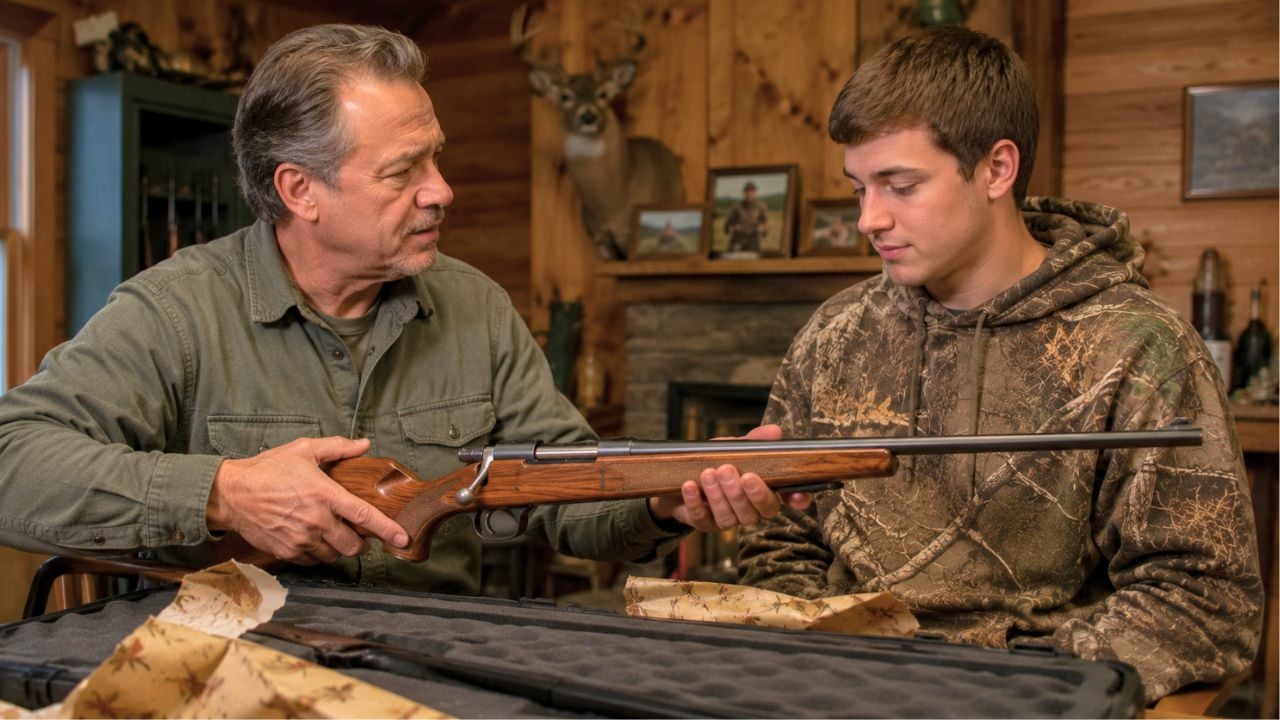
It started the way a lot of good hunting stories start: a dad wanting to put a real rifle in his son’s hands before the season opened. Nothing flashy. A practical bolt gun, a sensible caliber, and the kind of gift that’s supposed to turn into years of deer camp memories.
What he didn’t expect was a phone call months later that turned that feel-good purchase into a paperwork mess—one that involved an inspector, a nervous dealer, and a hard lesson about how “I’m paying for it” isn’t the same thing as “I’m the buyer.”
The gift rifle that turned into a form problem
The father walked into a local gun shop with his adult son, picked out a hunting rifle, and handled the purchase like most parents would. He paid, the store ran the background check, and the father filled out the federal form that comes with any dealer transfer.
But instead of treating it like a true gift—where the son is the actual buyer—the father wrote his own name down as the purchaser and took the rifle home with the plan to hand it over later. He wasn’t trying to get around a background check. He simply thought paying for it meant putting his own information on the form was the “clean” way to do it.
Why six months later became the worst timing
Half a year is long enough for a rifle to get scoped, sighted in, and carried through a season. It’s also long enough for a shop’s records to get reviewed, either through a routine compliance visit or a trace tied to a totally separate investigation.
In this case, the dealer got contacted about that specific transaction. When an inspector asked follow-up questions, the shop went back to the paperwork and started matching memories to signatures. Suddenly the details mattered: who selected the rifle, who intended to possess it, who actually walked out with it, and whether the form reflected what really happened.
The dealer’s concern wasn’t just the rifle itself. It was whether the store had accepted an answer on the form that didn’t match the real “actual buyer” situation. That’s the kind of detail that can bring heat down on a shop fast, even if everyone involved feels like it was an honest family purchase.
The “actual buyer” question trips up more folks than you’d think
Most hunters understand the simple rule: if you’re buying a firearm for yourself, you’re the buyer. If you’re buying a firearm as a legitimate gift, the recipient can be the buyer too—depending on how the transfer is done and what your state requires.
Where people get sideways is when money, intent, and possession don’t line up. If the son picked the rifle and the dad only served as the wallet, the form needs to match that reality. And if the son couldn’t pass a background check and the dad stepped in to “just buy it,” that’s the kind of thing that can be treated as a straw purchase.
Even when nobody is trying to pull a fast one, the paperwork doesn’t care about your good intentions. The form is asking who the gun is really for at the moment it’s transferred from the dealer. That’s the line that matters.
The dealer’s side of this is stressful for a reason
Folks like to act like gun shops are being dramatic when they get picky. They’re not. A dealer’s license and livelihood can hang on whether the store followed the rules to the letter and caught problems at the counter.
Once an inspector is asking about a specific transaction, the shop is thinking about documentation: the form, the 4473 responses, the bound book entries, the date, the serial number, and what the employees remember. If the father later said something like “yeah it was really for my son,” the dealer now has a mismatch between the story and the form. That’s when the shop gets nervous.
That’s also why many stores have tightened up on “two people at the counter” purchases. If one person is pointing, choosing, and talking specs, and another person steps in to do the paperwork, a good clerk will slow the whole thing down and ask direct questions. It’s not being rude. It’s protecting the shop.
How it usually unravels when the inspector starts asking questions
When this kind of scenario surfaces, the first wave is often a request for clarification. The dealer gets asked to confirm the buyer, confirm the transfer date, and confirm that the form was properly completed. If anything looks inconsistent, the inspector may ask the dealer to contact the buyer to clear up details.
That’s where a well-meaning dad can accidentally make things worse. If he explains it casually—“I bought it for my boy, figured I’d just put my name since I paid”—that statement can create the very problem he’s trying to solve. Not because gifting is wrong, but because the form is supposed to reflect who the buyer really was.
From there, outcomes can range widely. Sometimes it’s treated as a learning moment and ends with a warning for the shop to tighten procedure. Other times it turns into a more serious look, especially if other transactions show similar patterns.
What hunters and commenters zeroed in on: do it clean, do it once
Every time a story like this makes the rounds at the range or in hunting circles, the same points get hammered. First, if it’s truly a gift, handle it like a gift in a way that matches your state law and the dealer’s policy. That might mean the son fills out the paperwork and the father pays, or it might mean buying a store gift card, putting money down, or doing the transfer through the proper channels later.
Second, don’t “help” someone buy a gun by putting your name on it when it’s really for them. Even if you trust your kid, even if you know he’s legal, even if you think you’re avoiding hassle—this is the kind of shortcut that becomes a headache later.
Third, keep the practical stuff tight: safe storage while the rifle is in the house, a basic bill of gift (even just a dated note kept with your records), and a clear understanding of who owns it and who has access to it. Most families aren’t thinking about documentation when they’re excited about opening day, but paperwork has a way of showing up when you least want it to.
At the end of the day, the father’s mistake wasn’t loving his kid enough to buy him a rifle. It was assuming the form was just another receipt. In the firearms world, forms are the story—and if the story doesn’t match what really happened, somebody’s going to have a long afternoon explaining it.