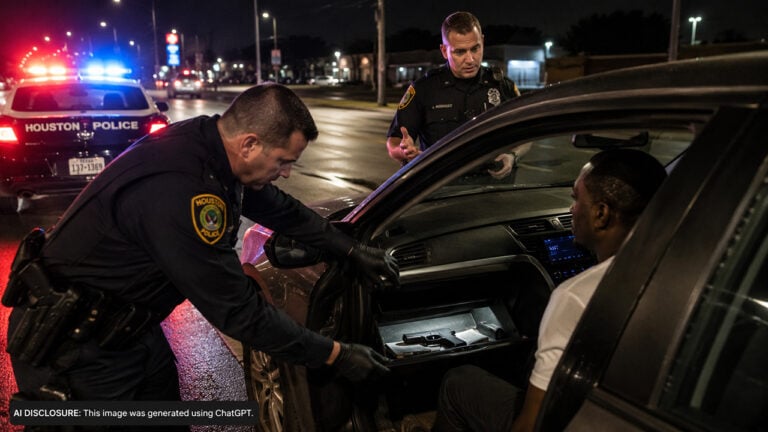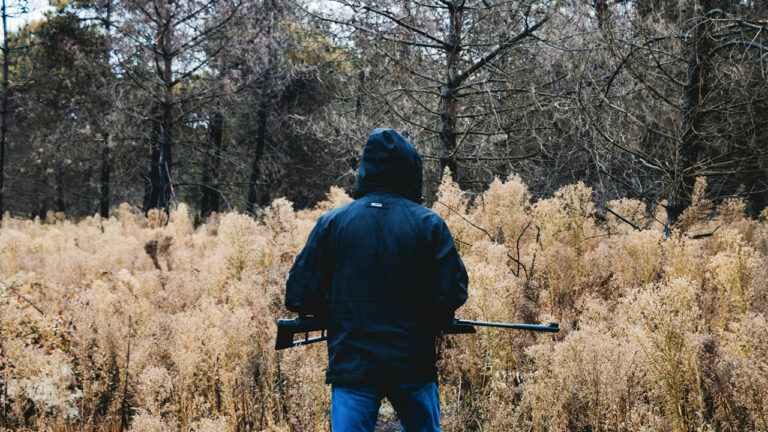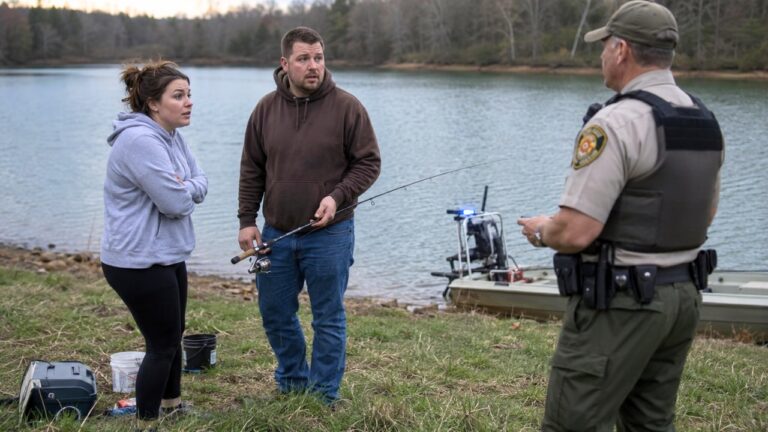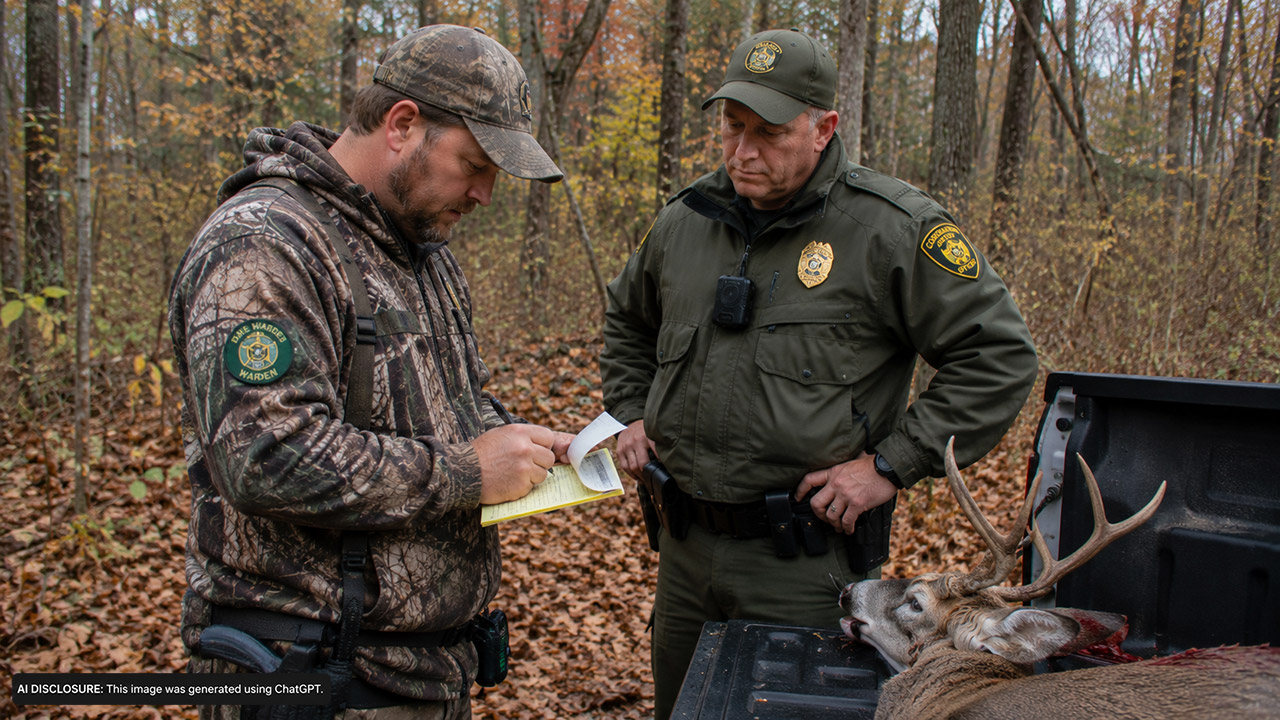
Photo credit: AI-generated image created using ChatGPT. Illustrative only
You buy a piece of Texas dirt, you post it, and you expect that to mean something—especially during hunting season. But the real trouble usually isn’t the sign on the fence. It’s the guy on the other side of it who thinks he has a workaround.
That’s the vibe behind the original post, where a landowner tried to get their arms around Texas trespass law and got hung up on one specific line: a provision that bumps certain trespass situations into a Class C misdemeanor when it happens on agricultural land “within 100 feet of the boundary of the land.” If you’ve ever had to run someone off a place, you already know why that kind of wording matters in the real world.
Posted land is simple until someone starts arguing the fine print
Most folks understand “posted” as a clear message: don’t come in here unless you’re invited. In the country, it’s not just about property rights—it’s about safety. When you find an armed hunter where you don’t expect one, the whole situation turns in a hurry, even if nobody’s trying to start a fight.
The problem is, trespass isn’t always treated the same way everywhere on the property. And it definitely isn’t treated the same way under every set of facts. That’s where landowners get frustrated, because they’re dealing with a person and a gun, while the law is dealing with categories and technical language.
The “100 feet from the boundary” language is what tripped the landowner up
The landowner’s question centered on one excerpt: trespass being a Class C misdemeanor if it’s committed on agricultural land and “within 100 feet of the boundary of the land.” That line raised an obvious, practical question: what if the trespasser is deeper than 100 feet onto the property? Does the law stop applying? Does the penalty change? Why would it be written that way?
When you’re thinking like an outdoorsman, that boundary language reads backwards. Most people assume being farther inside the property would be worse, not somehow less of an offense. But statutes sometimes carve out special circumstances—like edges, access points, and areas where confrontations are more likely—without making it obvious to regular people reading it cold.
Where “permission” gets messy: previous owner notes and handshake deals
The headline scenario—an armed hunter claiming written permission from the previous owner—is one of those real-world wrinkles that turns “simple trespass” into an argument on the tailgate. Even if you’ve got the deed and the fences are posted, somebody may still show up believing they’re in the clear because they’ve “always hunted here” or they’ve got an old note tucked in their wallet.
From a landowner’s standpoint, that’s not just annoying. It’s risky. You don’t know their intentions, you don’t know how safe they are with a rifle, and you don’t know whether they’re going to get defensive when challenged. The smartest move is usually to avoid escalating it in person. Document what you can, keep your distance, and let the folks with badges sort out the “permission” claim.
Why a law might focus on the boundary instead of the back pasture
The landowner’s confusion is fair: “within 100 feet of the boundary” sounds like the state is paying special attention to the edges. There are a few common-sense reasons lawmakers do that, even if the wording feels strange.
Property lines are where mistakes happen. Hunters cut a corner, follow a blood trail, slip through a gap, or park on the wrong side of a fence. Boundaries are also where conflicts happen—two groups coming in from different sides, someone stepping across to retrieve gear, somebody deciding a posted sign doesn’t apply to them because they’re “just right here.” By calling out boundary areas, the law can be trying to address the most frequent, most volatile trespass scenarios.
And sometimes, language like this is less about making deeper trespass “okay” and more about how an offense is categorized for a specific condition. Outdoor folks run into this all the time: a regulation that’s written for one common scenario, with other scenarios handled elsewhere in the same statute or in a different section entirely.
The practical landowner takeaway: don’t bet your safety on your interpretation
The biggest danger in any armed-trespass situation isn’t losing an argument about how a misdemeanor is labeled. It’s the moment you walk up on a stranger with a firearm and assume you can “talk it out” because you’re sure you’re right.
Even if you’re completely in the right, the field is not a courtroom. Adrenaline, pride, and misunderstandings all show up at once. If you’re dealing with a trespasser who claims permission, the better play is to keep things calm and create a paper trail—photos of posted signs, pictures of vehicle plates if you can do it safely, dates and times, and exactly where you found them. Then make the call and let law enforcement or a game warden decide what matters and what doesn’t.
And if you’ve recently bought land, it’s worth getting ahead of it. Talk to neighbors, make sure gates are marked, replace old faded signs, and consider sending written notice to the usual suspects who might still think the place is open to them. A lot of trespass problems start with “nobody told me,” even when the fence says otherwise.
The question underneath it all: what happens beyond that 100-foot line?
The landowner’s core question—what about outside that 100-foot boundary zone?—is exactly the kind of thing that makes folks nervous about enforcing their rights. If the only part you read is the “within 100 feet” phrase, it’s easy to think the law creates a weird safe zone farther into the property.
But in the real world, statutes often stack: one part describes a specific situation and its penalty level, while other parts cover the general rule. The important point for landowners and hunters is this: don’t assume one clipped excerpt tells the whole story, and don’t assume the trespasser on your place knows the law any better than you do. If he’s already comfortable crossing your posted line, he may also be comfortable telling you whatever he thinks will get him out of trouble.
At the end of the day, posted land should be respected, period. If you’ve got written permission, it ought to be from the current landowner, and it ought to match the property you’re standing on. Anything else is just a gamble—one that puts everybody’s safety and livelihoods at risk.
Like The Avid Outdoorsman’s content? Subscribe to our newsletter so you never miss an article.
Here’s more from us: