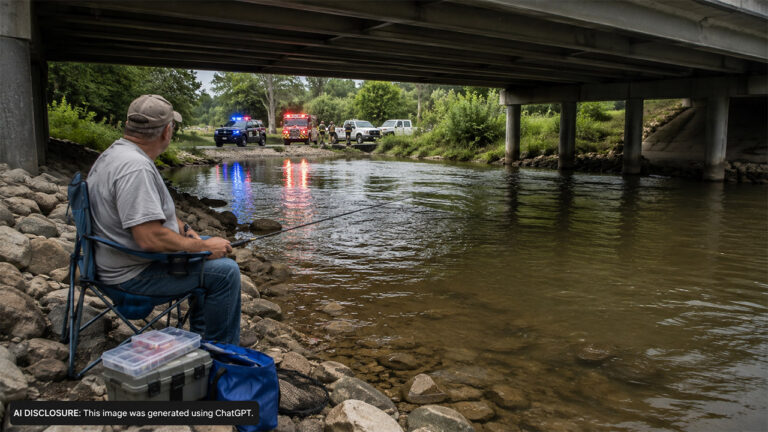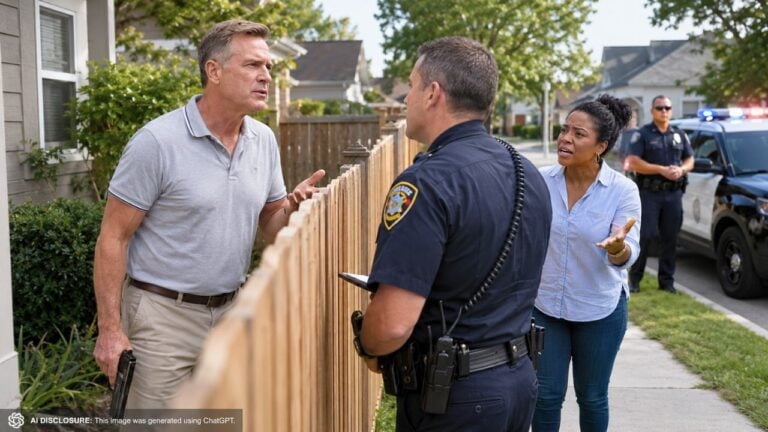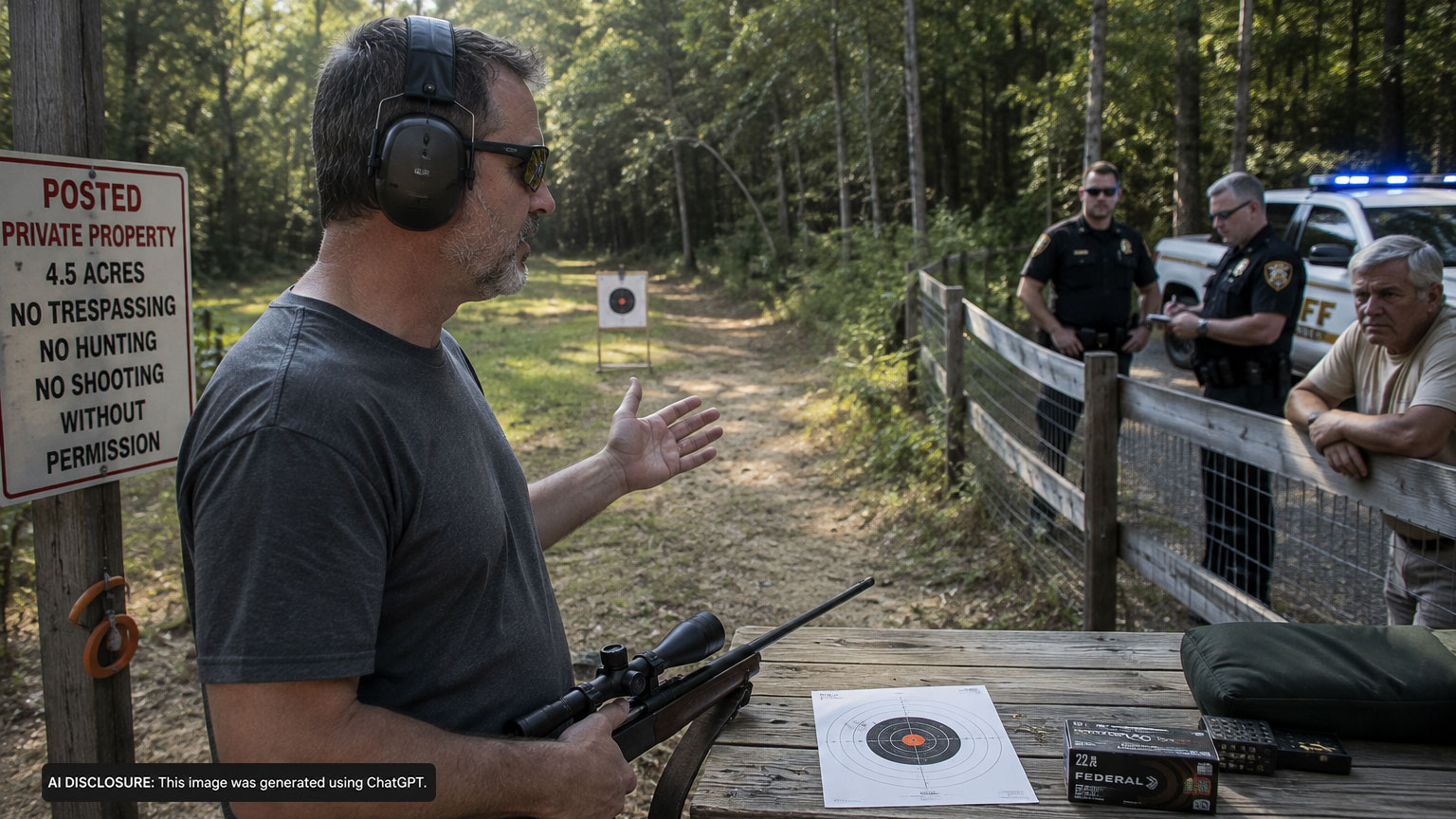
Photo credit: AI-generated image created using ChatGPT. Illustrative only
Target shooting on your own dirt ought to be one of the simpler parts of living a little farther out. But for one South Carolina landowner, it turned into two separate police visits—both sparked by a neighbor’s reports that officers quickly found didn’t match what was actually happening.
In the source post, the man says he lives in an incorporated county where shooting is allowed as long as it’s done safely and within reasonable hours. He owns 4.5 acres and uses a “large wooded hill” as a backstop. Even with that setup, a woman in the neighborhood—someone not directly next door—has called police twice with claims that he says were exaggerated or flat-out wrong.
The setup: legal shooting on 4.5 acres with a natural backstop
The shooter describes a pretty standard rural arrangement: a modest chunk of land, neighbors on smaller parcels, and a safe direction to shoot. He’s using targets at the base of a wooded hill, which is exactly the kind of natural backstop most folks look for when they’re trying to keep things safe and quiet.
He also says he’s not the guy out there mag-dumping all afternoon. His range time is usually short—around 30 minutes—and he tries to keep it to reasonable hours, typically around 6 p.m. In other words, the kind of schedule that usually avoids most neighbor friction.
The first call: “shooting at the church” and an ATV claim
The first complaint came in with a big accusation. The caller told police he was “riding an atv in the woods behind the church and shooting at the church.” The landowner says that’s a mash-up of two separate activities: he was shooting at targets at the base of the hill, and later he rode an ATV. He wasn’t doing both at the same time, and he says he was absolutely not shooting at a church.
When an officer pulled into his driveway, the interaction sounded calm and direct. The officer asked if he was shooting; the man said yes and showed him where. The officer then asked if he was “shooting at the church,” and the man answered, “of course not,” explaining he was shooting at targets behind his house. According to the landowner, the officer’s response was basically to close the loop with the caller: “I’ll call her back and let her know you’re safely and legally shooting.”
The second call escalated: three police cars and a “glass breaking” allegation
The next incident hit a little harder. The man says he was shooting at the same target setup at the base of the hill, and about an hour after he stopped, three police cars showed up. Two officers came to the door, and he again walked them through exactly where he had been shooting.
This time, the caller reportedly claimed he was being unsafe and that they heard glass breaking. Officers asked if he was shooting any glass; he said he wasn’t. After seeing the setup, the officers told him, “that doesn’t look unsafe to me,” and again said they’d call the complainant back and explain that he was shooting legally and safely.
That “glass breaking” detail matters because it changes the tone of the call. A noise complaint is one thing. A report suggesting unsafe behavior or property damage can push an officer’s mindset into something more serious before they ever roll up your driveway.
How he was shooting: quiet .22s, short sessions, and a little more noise than usual
The landowner notes he mostly shoots subsonic rounds and .22LR, and he even mentions using “calibri” .22LR rounds. Those details tell you he’s already thinking about noise and neighbor relations, not just what’s fun to shoot.
On the day of the second call, he says he was shooting .22 shorts from a mini-revolver, which were “a little louder than normal.” Anyone who’s spent time around rimfires knows that “little louder” can still sound like a lot to someone who isn’t used to gunfire—especially if they’re already keyed up and looking for a reason to report it.
He also points out a reality that frustrates a lot of rural folks: other nearby neighbors reportedly shoot regularly from 10 p.m. to 3 a.m. Meanwhile, he’s doing short sessions around dinner time and still getting police visits.
The real danger: not the legal shooting, but the repeated police response
The most serious part of this story isn’t the inconvenience. It’s the risk that comes with repeated “man with a gun” calls—especially when the caller is describing unsafe conduct that isn’t happening.
The landowner admits he’s “slightly nervous about the police coming and accidentally shooting” him. So far, he says officers have been understanding, and that likely lowers the risk. But any outdoorsman who’s dealt with a bad call knows you don’t get to control the tone of a complaint once it’s in the system. If the wrong details get repeated—“shooting at a church,” “unsafe,” “glass breaking”—it can prime everyone for the worst.
That’s also why the way he handled it matters. He didn’t argue on the porch. He didn’t try to make it a property-rights showdown. He stepped out, spoke plainly, and physically showed them the backstop and target area. That’s the kind of calm, cooperative approach that tends to de-escalate a bad situation fast.
What a landowner can do when a neighbor keeps making false reports
He says he doesn’t even know who the caller is. He and his wife have met most of the nearby neighbors, none have complained to them directly, and his immediate neighbors are men. That’s the tricky part: you can’t resolve a dispute face-to-face if you don’t know who’s escalating it behind the scenes.
From a practical outdoorsman standpoint, there are a few grounded moves that fit the situation he described. First, keep doing what he’s already doing: shoot into a known safe backstop, keep sessions short, and pick reasonable hours. Second, document your setup and your routine. Even a few dated photos of the target line and the hill backstop can help establish that this isn’t a reckless “backyard blasting” situation.
Third, if the same officer or deputy keeps responding, it can help to politely ask how these calls are being categorized and whether there’s a way to note in the record that the location has been checked and found safe. That’s not about “getting someone in trouble.” It’s about lowering the temperature on the next response so nobody walks up thinking they’re interrupting a crime in progress.
Finally, the one option that usually backfires is the temptation to “shoot more often to make a point.” The landowner asked if others had done that. In real life, that’s how you turn a nuisance caller into a full-time mission, and it’s also how you lose the goodwill of the neighbors who haven’t said a word.
He’s already doing most things the right way: safe backstop, modest calibers, reasonable timing, and a calm demeanor when law enforcement shows up. The hard part is that one dishonest call can still bring flashing lights into your driveway. When that starts happening repeatedly, staying consistent, staying documented, and keeping every interaction calm is often the best way to protect your rights—and everyone’s safety—without turning your own property into a constant standoff.
Like The Avid Outdoorsman’s content? Be sure to follow us.
Here’s more from us: