Photo credit: AI-generated image created using ChatGPT. Illustrative only
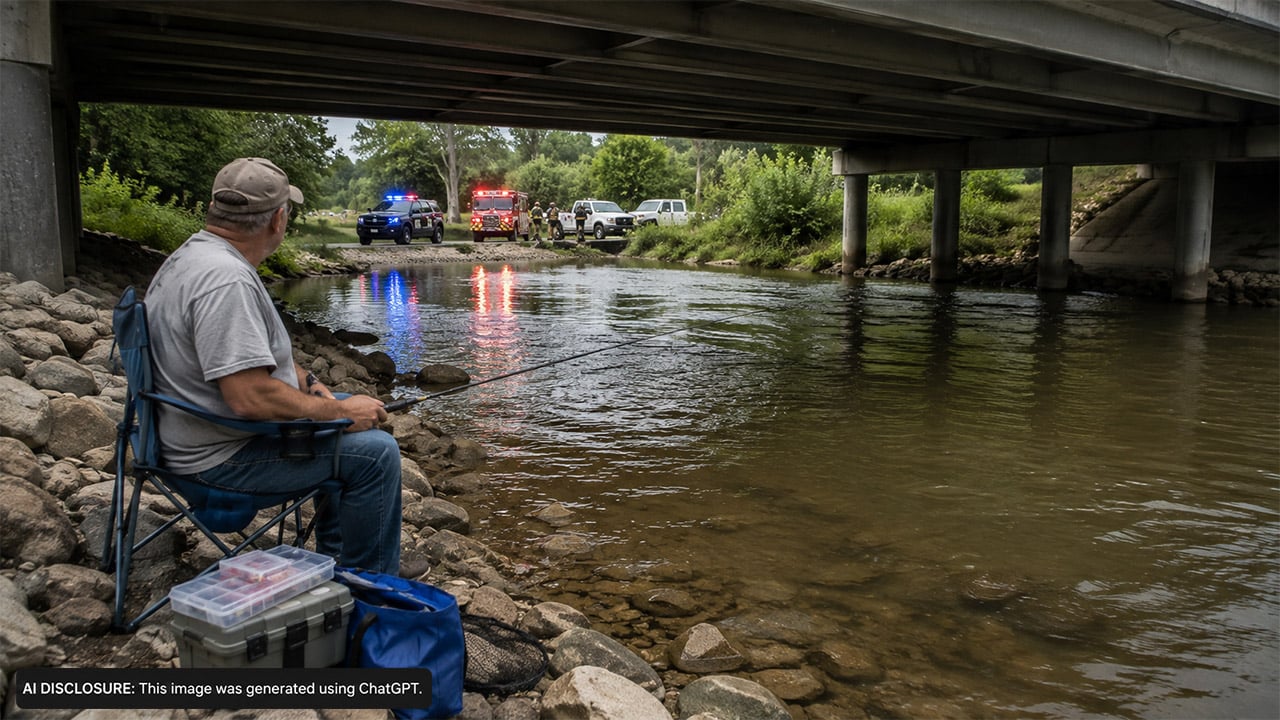
Most anglers know the feeling of finding a dependable little spot that’s always treated you right—easy access, a little cover, and just enough current to hold fish. That’s exactly what one Nebraska fisherman thought he was doing when he slid in under a public bridge outside Lincoln, Nebraska, set his gear down, and started casting.
Then the sirens started. Not one patrol car rolling by, either. He described fire trucks, ambulances, and multiple deputies arriving for what sounded like a serious wreck—based on the source post, the 911 call claimed a truck had driven into the creek and was “submerged.” The only problem was there wasn’t a truck in the creek at all.
The call that brought everybody in hot
According to the angler, he’d been fishing about 10 minutes when he heard sirens and assumed it was a normal intersection accident up above. A few minutes later he heard radio chatter too, which is when it started to feel like whatever was happening had something to do with the creek and the bridge—not the roadway.
When he walked up from under the bridge, he says he saw two fire trucks, ambulances, and sheriff’s deputies staged near his vehicle. Someone on scene reportedly told him the emergency call was for an accident. An EMT then explained the specific report: a truck had driven down into the creek and was underwater.
From his perspective, the report didn’t just sound wrong—it sounded impossible. He says his truck was parked roughly 20 feet back from a creek that was only about two feet deep and clogged with a log jam. In other words, there was no submerged vehicle to find, no driver to rescue, and no reason for that level of response other than a bad—or false—call.
How a “rescue” response turned into an enforcement stop
Once it was clear there was no crash scene, the mood shifted. The angler said he tried to keep things friendly and even turned on his GoPro when he realized the situation might go sideways. That’s a move a lot of outdoorsmen make now—not to antagonize anyone, but to have a clean record of what happened when memories get fuzzy later.
He approached and told responders he was just fishing. But instead of the scene winding down, he says a sheriff’s lieutenant in a bad mood started asking for identification and pressing him about where his wallet and keys were.
The angler described being nervous, digging through a messy truck full of fishing gear, and struggling to respond clearly. At one point, he says his keys were back in his bag where he’d been fishing, so he walked under the bridge with the deputy to retrieve them.
That walk under the bridge is also when the trespassing issue came up. The deputy allegedly told him he was trespassing under the bridge and demanded to know who gave him permission. The angler believed the area was public right-of-way tied to the public bridge and that he was on the far side away from railroad property.
Bridge access, railroad boundaries, and the “gray area” problem
If you spend enough time fishing creeks, you learn quick that “looks public” and “is public” aren’t always the same thing. Bridges, drainage easements, railroad right-of-way, and odd slivers of land can stack on top of each other like a bad map overlay.
The angler says other deputies on scene later corrected the lieutenant, indicating the spot he was standing was legal because it was public—but if he’d gone to the right, he would’ve been on BNSF property and that would be trespassing. Even with that clarification, he says the lieutenant called BNSF and had him “trespassed” anyway.
That’s a real-world issue for anglers and small-game hunters: the boundary line can be a few steps wide, and the consequence isn’t just being told to leave. It can be a formal trespass warning, a citation, or getting locked out of an area you’ve used for years. It also shows how a high-stress call—especially one that turns out to be unfounded—can leave officers in no mood to sort out property lines patiently.
When concealed carry becomes the next flash point
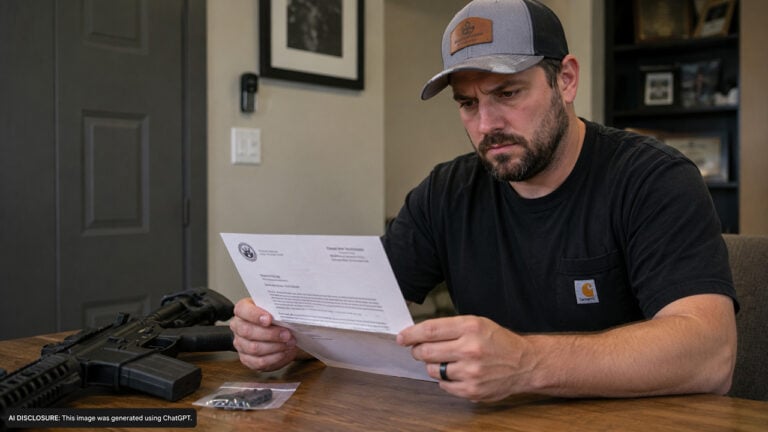
The angler also said he was carrying a pistol concealed on his abdomen, with the pistol not chambered but with a loaded magazine. He explained he carries under bridges for personal safety because he sometimes runs into homeless people or individuals acting unstable. That’s a pretty common calculation for folks who fish urban edges and underpasses, especially alone.
He said when the deputy asked if he had weapons, he told him yes. The deputy then removed the firearm “for his safety,” with the angler describing being told to put his hands up and lock his fingers. After that, the deputy questioned him about what he should have done first while carrying concealed—meaning disclose that he had a firearm.
The angler’s reasoning was simple: he didn’t want to walk out from under a dark bridge announcing he had a gun and accidentally escalate the situation. He also didn’t understand the encounter as a “traffic stop” or typical police contact where disclosure rules come up immediately. Still, the interaction reportedly ended with a citation for “carrying concealed no disclosure,” and the deputy considered taking the pistol as evidence before doing so.
This is where outdoors reality meets paperwork reality. A lot of good people carry for the right reasons and still get tripped up on disclosure expectations when the contact isn’t a clear-cut stop. Whether the law requires disclosure in that exact situation is something for local counsel and the court to sort out—but the practical lesson is that confusion in the moment can get expensive fast.
The heat, the nerves, and how fast things can pile up
The angler described being placed in the back of a sheriff’s vehicle for roughly 20 minutes in about 95-degree weather, sitting in direct sunlight, unsure if the air conditioning was running at first. He said he was shaking, struggled with anxiety, and couldn’t find his wallet right away even though he had no record and wasn’t trying to cause trouble.
Eventually, with help from a younger deputy, he located his stuff. That deputy reportedly acknowledged the property question can be a “gray area” and suggested a workaround: park at a gas station and walk over instead of parking near the bridge and the railroad boundary.
In the end, the angler said he was cited for trespassing and for the concealed-carry disclosure issue, and he noted he was told the citations were misdemeanors. From his point of view, the whole thing got blown out of proportion because the initial emergency call described an accident that never happened.
And that’s the piece outdoorsmen should pay attention to: a false or mistaken 911 report doesn’t just waste responders’ time. It can put innocent people under a microscope, create a tense law-enforcement contact where there didn’t need to be one, and turn a normal afternoon of fishing into citations, confiscated property, and a formal trespass notice—especially in places where public access butts right up against railroad ground.
If there’s a grounded takeaway here, it’s this: if you fish under bridges or near tracks, assume boundaries are tighter than they look, park in the cleanest “no doubt” spot you can find, and have your ID and carry documentation easy to reach. Because once sirens show up for something that never happened, you may not get the calm conversation you were hoping for.
Like The Avid Outdoorsman’s content? Subscribe to our newsletter so you never miss an article.
Here’s more from us: