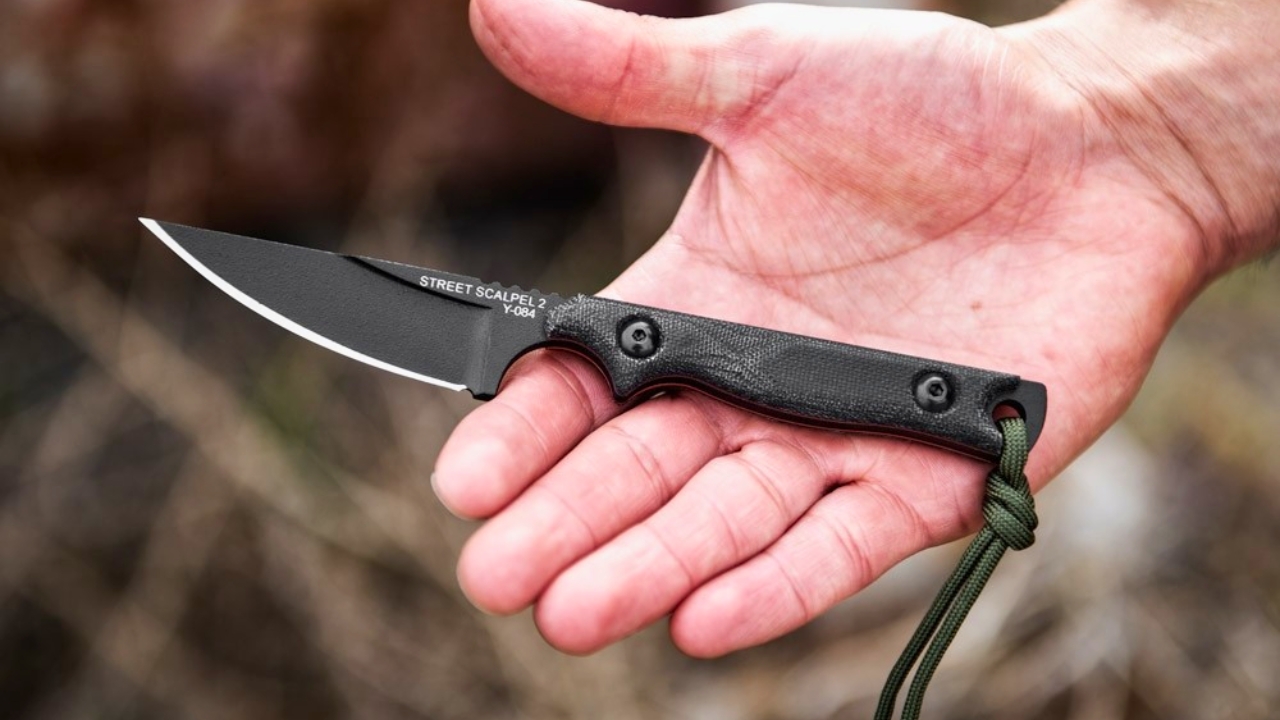
Photo credit: TOPS Knives
Arkansas has just rewritten the rules for how knives are regulated, shifting power from city halls to the Capitol and wiping out a patchwork of local restrictions. If you carry a pocketknife for work, keep a hunting blade in your truck, or sell cutlery for a living, you now face a very different legal landscape than you did a year ago.
The new statewide knife preemption statute folds knives into the same kind of uniform framework that already covers firearms, limiting what counties and cities can do on their own. To understand what that means for you, you need to look at how the law works, which local rules it overrides, and what remains off limits even under a friendlier statewide standard.
How Arkansas got to knife preemption in the first place
For years, you had to navigate Arkansas knife rules city by city, because the state had no overarching rule that stopped local governments from layering on their own restrictions. Earlier guidance on Arkansas blades even listed “Statewide Preemption: None” in its Quick Legal Facts, a reminder that local ordinances could go further than state law. That meant a knife that was perfectly lawful under state code could still get you cited if a city council had decided to crack down.
That patchwork became harder to defend once lawmakers began tightening control over local firearms rules and some legislators pushed to treat knives the same way. A proposal to curb tougher city gun ordinances prompted Arkansas legislators to call explicitly for knives to be included, arguing that a worker with a folding knife in an employers’ parking lot should not face a different rule in Little Rock than in Jonesboro. That political momentum set the stage for a dedicated knife preemption bill that would finally make the state the last word on blade regulations.
What “preemption” actually means for knife laws
Knife preemption is not a slogan, it is a specific legal structure that decides who gets the final say. Under the concept of Preemption (statewide application and uniformity), the legislature declares that it alone controls the rules for owning, carrying, and transporting knives. When the state speaks that clearly, cities, counties, and other local entities are barred from adopting knife ordinances that are stricter than the statewide standard, even if they believe local conditions justify tougher rules.
Supporters frame this as a basic fairness issue for anyone who carries a blade as a tool, not a weapon. The American Knife & Tool Institute Supports Knife Preemption Laws to Protect Law Abiding Citizens, arguing that Some cities and municipalities have used local codes to criminalize ordinary pocketknives that state law treats as lawful. By shifting all meaningful authority to the Capitol, Arkansas is promising you a single, uniform set of knife rules that follow you from your driveway to your job site, instead of changing every time you cross a city limit sign.
Inside HB 1418, the bill that changed everything
The vehicle for this shift is House Bill 1418, a measure that moved through the Arkansas legislature during the current Introduced Session. The bill’s summary explains that it amends two sections of state law to prohibit local governments from regulating knives, folding blades, and similar tools in ways that conflict with state standards. In practical terms, you are no longer subject to a second layer of criminal exposure just because a city council chose to treat a pocketknife as contraband.
According to the detailed Bill Summary, HB 1418 explicitly bars cities and counties from adopting or enforcing ordinances that restrict knife ownership, carry, or possession across the state. A companion description notes that This bill amends two sections of Arkansas code so that knives are treated alongside firearms in the preemption framework. For you, that means the same statute that already limits local gun rules now also shields your blades from city by city experimentation.
How the bill moved, and who pushed it over the finish line
Knife preemption did not appear overnight, it was the product of a coordinated campaign that finally found its moment. Advocates describe After a many years of behind the scenes work by Knife Rights, including efforts by its Director of Legislative Affairs, Todd Rathner, and support from partners such as Sig Sauer and Hogue Knives. That long runway meant that when lawmakers were ready to fold knives into the state’s broader weapons preemption framework, draft language and political backing were already in place.
Once HB 1418 cleared the House, it moved to the upper chamber, where The Arkansas Senate passed HB 1418 and sent it To Gov for signature. The measure was framed as Arkansas Knife Law Preemption Passes, a culmination of work that had been underway since at least 2010 to roll back local bans in cities and towns. Governor Sarah Huckabee Sanders then signed the Arkansas Knife Law Preemption Bill, an event highlighted in an Arkansas Knife Law Preemption Bill Signed report that underscored her role as Governor Sarah Huckabee Sanders in locking the policy into law.
When the new rules actually take effect
Even with the governor’s signature, the legal landscape does not flip instantly, so you need to pay attention to timing. Advocates tracking the measure note that the new law is effective 91 days after the legislative session ends, a detail that matters if you live or work in a city that still has knife ordinances on its books. The current session is scheduled to adjourn in April, but it can be extended, which would push back the date when preemption fully kicks in and local rules are formally displaced.
The group that championed the bill explained that the new law is effective 91 days after the session ends, and that detail is not just procedural trivia. Until that clock runs out, city and county ordinances remain enforceable, so you should not assume that a restrictive local rule has vanished simply because the governor held a signing ceremony. Once the effective date arrives, however, those local provisions will be unenforceable to the extent they conflict with the statewide standard, and you will finally have the Future for all Americans™ uniformity that advocates promised.
What Arkansas law already said about knives before preemption
To understand what is changing, you need to start with what state law already allowed. Arkansas has, for several years, been relatively permissive about blade types, with guidance explaining that there are no general restrictions on common designs for people who do not intend to use a knife unlawfully. One summary notes that There is no general restriction applicable to those who do not have a purpose (intent) to unlawfully employ a knife as a weapon, and that Concealed Carry rules treat Concealment as irrelevant compared with unlawful intent.
At the same time, the state did maintain a list of forbidden knives under Arkansas law, even while it declined to impose a blanket blade length limit. Those Restricted knives categories focused on specific designs and contexts, and earlier Quick Legal Facts made clear that Statewide Preemption was listed as None. That combination created a floor but not a ceiling, leaving room for cities to add their own bans on certain knives in public buildings, parks, or downtown districts, which is exactly what the new preemption statute is designed to stop.
Which local knife bans and rules are now wiped out
The most immediate impact of preemption is on local ordinances that tried to go further than state law on what you can carry and where. Because HB 1418 folds knives into the same preemption framework that already covers firearms, any city rule that flatly banned common pocketknives, set its own blade length cap, or criminalized carry in public spaces beyond state restrictions is now on borrowed time. Once the effective date arrives, those provisions will be unenforceable to the extent they conflict with the statewide standard that treats everyday knives as lawful tools.
To see what that looks like in practice, you can look at other states where the legislature has already taken this step. In one example, a statewide overview notes that There the state has preempted all local knife laws and imposed no blade length laws, with Balisongs, Bowie knives, pocket knives, and switchblades all treated as legal. Arkansas is now moving into that same category, wiping out city specific bans on Balisongs or Bowie style blades that went beyond what state code prohibited, and giving you a single rule set whether you are in Fayetteville, Pine Bluff, or a rural county.
What knives are clearly legal statewide after preemption
Preemption does not just erase local bans, it also clarifies what is unquestionably allowed under state law. Arkansas already permitted a wide range of designs, and guidance on What Legal Knives Under Arkansas Knife Law spells that out in plain language. According to that overview, What Legal Knives Under Arkansas Knife Law includes Balisongs, Switchblades, automatic knives, gravity knives, and similar designs, all of which are legal to own and carry under state code.
Because HB 1418 blocks local governments from second guessing those statewide permissions, you can now treat that list as a true baseline across Arkansas. If Balisongs and Switchblades are lawful under state law, a city council can no longer single them out for prohibition in public parks or downtown zones. That does not mean every possible knife is legal in every context, but it does mean that the state’s relatively broad definition of acceptable blades now follows you wherever you travel inside Arkansas, without being narrowed by local experiments.
How Arkansas fits into the national knife preemption trend
Arkansas is not acting in isolation, it is joining a broader movement to standardize knife laws at the state level. Advocacy groups that pushed HB 1418 have also logged wins elsewhere, noting in their list of Legislative & Litigation Accomplishments that 2025 saw the Ohio Governor Signs Enhancement to a Knife Law Preemption Statute and that a Hawaii Draconian Knife Ban Bill Stopped before it could become law. In that same rundown, Arkansas Knif preemption is highlighted alongside those national developments, signaling that the state is now part of a coordinated campaign to roll back restrictive local ordinances.
The strategy in Arkansas mirrored that national playbook. Earlier in the year, advocates announced that the bill adds “Knives” and similar tools to the state’s existing weapons preemption law, which had already limited how cities and towns could regulate firearms since 2010. That approach, treating knives as part of the same legal family as guns for preemption purposes, is now being replicated in multiple states, and Arkansas has become one of the latest jurisdictions where you can expect a single, statewide rulebook for blades instead of a confusing local patchwork.
Like The Avid Outdoorsman’s content? Be sure to follow us.
Here’s more from us: