
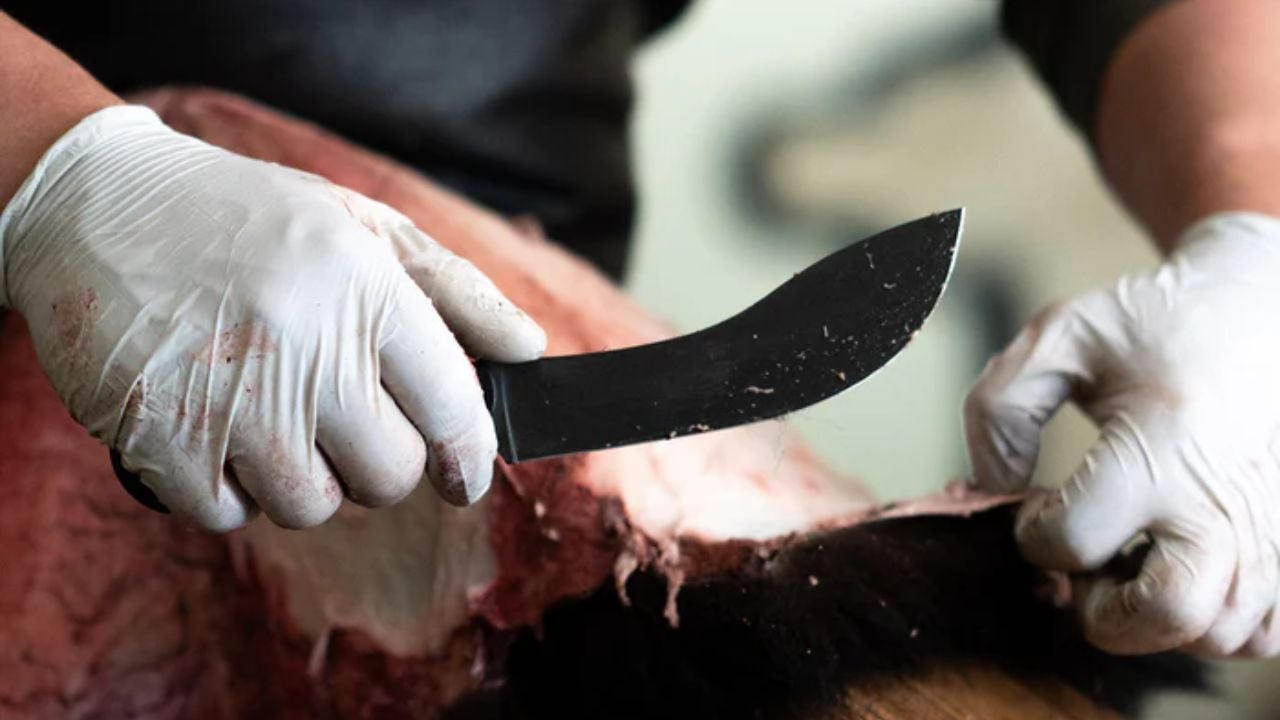
Photo credit: Montana Knife Company
The Avid Outdoorsman is reader-supported. If you buy through links in this article, we may earn a small commission at no extra cost to you.
The best deer skinning knife for most hunters is a short one — three and a half inches or less, with belly to the edge and a handle you can hold when your hands are slick. Our pick for most of our readers is the Outdoor Edge Razor-Lite at about $45, because a fresh razor edge beats a good edge you dulled on the second hindquarter. If you’d rather own one knife and sharpen it for twenty seasons, the Benchmade Steep Country at right around $175 is the one.
These picks are based on manufacturer specs, retail availability and owner feedback, not hands-on testing by us. We checked every price and stock status on 21 October 2026, and cut five knives that had been discontinued or backordered since last fall.
Here’s what most roundups skip. Skinning, gutting and caping are three different cuts wanting three different blade shapes. Buying one knife for all three is why people end up sawing at a hide with a dull clip point at ten at night.
Quick Picks
| Knife | Best For | Blade | Approx. Price |
|---|---|---|---|
| Outdoor Edge Razor-Lite | Best overall skinner | 3.5” replaceable, 420J2 | About $45 |
| Outdoor Edge 3.0 Razor-Cape | Caping, detail work | Replaceable, 3 profiles | About $44 |
| Havalon Piranta-Bolt | Lightest and sharpest | 2.25” replaceable | About $50 |
| Outdoor Edge SwingBlaze | Gutting, no gut hook | 3.6” skinner / 3.2” gutter, AUS-9 | About $65 |
| Buck 110 Folding Hunter | Traditional folder | 3.75” 420HC | About $90 |
| Knives of Alaska Cub Bear | Caping, sharpenable | 2.75” D2 | About $100 |
| Benchmade Steep Country | Buy-it-once fixed blade | 3.54” CPM-S30V | About $175 |
Blade Shape Is Most of the Argument
Drop point is the default. The spine curves down to meet the tip, so the point sits low relative to the edge — which matters when you’re opening a body cavity and the paunch is right there. It’s the most forgiving shape for an occasional hunter.
Trailing point, sold as a “true skinner,” sweeps the tip up above the spine line. All that curve is belly, and belly is what separates hide from meat. Pull it along the seam and it peels. The tradeoff: that tip is bad at gutting.
Short beats long, too. Skinning is a shallow sweeping cut made with the middle of the edge; a five-inch blade just gets in the way inside a rib cage.
The gut hook question
Gut hooks look like the answer and often aren’t. Hair and fat pack the hook solid about eight inches in, and a packed hook tears instead of cutting. A hook also needs a round file to sharpen, so most never do.
Plenty of experienced hunters have quietly given up on them. A fresh replaceable blade opens hide cleanly with the tip, and a dedicated gutting blade — like the SwingBlaze’s — does the job without the maintenance.
Replaceable Blades vs. Steel You Sharpen
This is the real fork in the road.
Replaceable-blade knives — Havalon, Outdoor Edge — put a surgical blade in a sturdy handle. You get an edge no one produces on a stone, and swapping takes ten seconds. For a hunter who has never enjoyed sharpening, that’s the honest answer.
The costs are real. Those blades are thin and hard, which means brittle. Twist one in a joint and it snaps. They are not bone knives. And the blade change is the dangerous step — most cuts from these knives happen while swapping with cold, wet hands in bad light. Use the removal tool, swap before you start rather than halfway through, and carry something to put used blades in.
Traditional blades hold a thicker, tougher edge. You can lean on them, work a joint, pry a little. They don’t fail suddenly; they get dull, which is slow, obvious and fixable with a ceramic rod. The cost is learning to sharpen, and doing it.
Our take: carry both. A replaceable-blade knife for hide and fine work, one traditional fixed blade for anything needing force.
Steel, in Plain English
- 420HC (Buck’s workhorse): sharpens on almost anything, doesn’t hold an edge long. Buck’s heat treat makes it better than the number suggests.
- AUS-8 / AUS-9: a step up in edge retention, still easy to bring back. A good middle.
- D2: a tool steel. Long edge life, more effort to sharpen, semi-stainless — it spots if left wet.
- CPM-S30V: premium powder steel. Long edge life, genuinely stainless, slow going on a stone if fully dulled.
- 1095 carbon: cheap, tough, takes a screaming edge, rusts if you look at it wrong. Needs oiling after every use.
Now the part nobody selling knives says out loud. If you take one or two deer a year, premium steel buys you very little. A whitetail is maybe twenty minutes of cutting, and any of these will go through one without a touch-up. A 420HC blade you know how to sharpen will out-cut an S30V blade you’ve never touched. Premium steel earns its money for guides; everyone else should spend it on the handle.
If your budget is tighter, we covered the cheap end separately.
Read next: Best Hunting Knife Under 50
The Handle Is the Part That Fails You
This is the most underrated factor here.
A handle that feels great in the store — polished wood, smooth micarta, bare stainless — turns into a bar of soap once coated in fat. Fat is the worst of it — blood rinses, grease stays.
What works is rubber with texture: Kraton, Santoprene, rubberized synthetics with molded ridges. So does a real finger guard or deep forward choil, because the failure you care about is your hand sliding onto the edge. That cut goes deep and across tendons. Bright handles aren’t a gimmick either — black next to a gut pile at dusk is gone.
The Seven Knives
1. Outdoor Edge Razor-Lite — Best Overall Deer Skinning Knife
Bass Pro lists a 3.5” replaceable 420J2 blade, a rubberized Kraton handle in blaze orange, six blades and a nylon sheath (RB-20C). It runs a thicker blade than a scalpel-style knife, so it’s less fragile, and it locks in with a push button. The knife we’d hand most hunters.
Pros: Sturdier blade than scalpel-style knives; excellent wet grip; easy blade change. Cons: No prying or bone work. 420J2 is soft if you sharpen it. Sheath carry only.
Check the current price of the Outdoor Edge Razor-Lite Replaceable Blade Knife at Bass Pro Shops
2. Outdoor Edge 3.0 Razor-Cape — Best for Caping and Detail Work
Bass Pro lists replaceable 420J2 blades in three profiles in one lockback folder: caping blade for head and neck, drop point for hide, gutting blade for the cavity.
Pros: Covers all three jobs; folds for pocket carry; cheapest dedicated caping edge. Cons: Blade changes mid-animal are where people cut themselves. Folding handles trap tissue. Small for gloved hands.
3. Havalon Piranta-Bolt — Sharpest Thing in the Pack
Bass Pro lists a 2.25” replaceable stainless blade with six spares. The Bolt is the beefed-up Piranta-Edge, with a stouter lockback, and it weighs almost nothing — which matters if you’re packing in.
Pros: Surgical sharpness out of the package; very light; six spare blades. Cons: The most brittle blade here. Short blade makes long sweeps slow. Blade changes need real attention.
4. Outdoor Edge SwingBlaze — The Gut Hook Alternative
Outdoor Edge lists a 3.6” drop point skinning blade and a 3.2” gutting blade on a rotating mechanism, Aichi AUS-9 stainless, Kraton handle, 8.3” overall, nylon belt sheath. Push a button and the skinner rotates away as the gutting blade comes up — the gut hook idea done properly.
Pros: Gutting and skinning in one tool; no hook to maintain; grippy Kraton; sharpenable steel. Cons: The mechanism gums up with dried blood and is more to clean. Heavy. Costs more than two single-purpose knives.
5. Buck 110 Folding Hunter — The Traditional Pick
Bass Pro lists a 3.75” 420HC clip point. A classic for a reason: heavy, brass and wood, and it will skin a deer if you keep it sharp. Note this is the full-size original, not the lighter 110 Slim Select from our budget guide.
Pros: Sharpens on any stone; essentially unbreakable; American made. Cons: Heavy, and smooth wood-and-brass is the slipperiest grip here once fat gets on it. A clip point lacks belly.
Check the current price of the Buck 110 Folding Hunter Knife at Bass Pro Shops
6. Knives of Alaska Cub Bear — Caping With Real Steel
Knives of Alaska lists a 2.75” D2 blade with a double-draw and cryogenic treatment, a Suregrip rubberized handle and double finger choils. If you’re caping a mount and don’t want a disposable blade near that hide, this is it. The fine point gets into eye and nose detail.
Pros: Fine point with real control; D2 holds its edge; one of the best wet grips here. Cons: Semi-stainless, so it spots if stored damp. Wants diamond to sharpen. A lot for a knife that only capes.
Check the current price of the Knives of Alaska Cub Bear Caping Knife at Bass Pro Shops
7. Benchmade Steep Country — Buy It Once
Benchmade lists a 3.54” CPM-S30V drop point, a nonslip Santoprene handle and a blaze orange Boltaron sheath. The best single fixed blade here: right size, right shape, a handle that holds in blood, and S30V that gets you through several deer without a stone. Boltaron doesn’t absorb moisture like leather, so you can rinse the whole rig and hang it.
Pros: Ideal size and shape; excellent wet grip; long edge life; washable sheath. Cons: Most expensive here by a wide margin. Slow to re-profile. More knife than a once-a-year hunter needs.
Check the current price of the Benchmade Steep Country Fixed-Blade Knife at Bass Pro Shops
Caping for a Mount: Use a Different Knife
If there’s any chance the buck is going on the wall, change knives before you touch the cape.
Caping is detail work around the eyes, nose, ears and lips, where the hide is thin. A 3.5” skinner can’t make those cuts without going through — too long to control, tip too broad. A taxidermist can repair a small slip. A hole through an eyelid is a different conversation.
Don’t use the knife you just gutted with, either. Cut well back, down past the front shoulders and behind the brisket. Nobody has ever been unhappy about too much cape.
Field Care: Where Good Knives Die
Clean it before you drive home. Blood is mildly corrosive and dries like glue in a pivot. Hot water and dish soap, a toothbrush in the hinge if it’s a folder, then dry it completely.
Never put a wet knife back in a leather sheath. Leather is tanned with salts, holds moisture against steel, and a damp blade comes out spotted or pitted. That’s how most hunting knives are ruined, over a winter in a closet, not in the field. Dry both separately, and store the knife out of the sheath until next season. Nylon and Boltaron are more forgiving.
Carbon steel needs a wipe of oil after every cleaning. And put a small ceramic rod in your pack — it’s the difference between finishing an animal and fighting it.
Read next: Deer Hunting Gear Checklist
Knife carry rules vary by state and sometimes by city, and big game regulations vary more. Check your state’s current regulations rather than relying on what somebody said at camp.
Frequently Asked Questions
What size blade is best for skinning a deer?
Three to three and a half inches. Long enough for a full sweeping cut along a hide seam, short enough to control inside a body cavity. Blades over four inches get awkward fast on a whitetail.
Do I really need a gut hook?
No, and most experienced hunters have stopped using them. They clog with hair and fat partway through the job, and they’re hard enough to sharpen that most never get sharpened again. A fresh replaceable blade does the same work without the headache.
Are Havalon and Outdoor Edge knives worth it, or is it a gimmick?
Worth it for most hunters. A surgical edge is sharper than anything you’ll get on a stone, and swapping takes ten seconds. Just know those blades are thin and snap if you twist or pry. Carry a sturdier knife for joints and bone.
What steel should I look for in a deer skinning knife?
For one or two deer a year, almost any of them. 420HC is easy to sharpen and plenty good. D2 and S30V hold an edge longer but take more effort to bring back. Spend on a grippy handle before premium steel.
Can I use my skinning knife to cape a deer for a mount?
You shouldn’t. Caping needs a smaller blade with a fine point for the thin hide around the eyes, nose and lips, and a full-size skinner will cut through it. And don’t put a knife that’s been in the body cavity on a cape headed to a taxidermist.
What to Put in Your Pack This Weekend
If you’re buying one knife and want to stop thinking about it, get the Outdoor Edge Razor-Lite at about $45 and keep the spare blades in your pack. That setup handles a whitetail better than most hunters’ kits.
If you’d rather own a knife than consume one, the Benchmade Steep Country at around $175 is the buy-it-once answer, and the Buck 110 at about $90 is the traditional route.
And if there’s a wall-hanger in your plans, add a small caping blade before you tag out, not after. The Razor-Cape at about $44 or the Cub Bear at about $100 will save you a conversation with your taxidermist.
Stock moves fast in October. Confirm before you order.
Read next: 10 Essential Pieces Of Gear For A Successful Deer Hunt 2


