
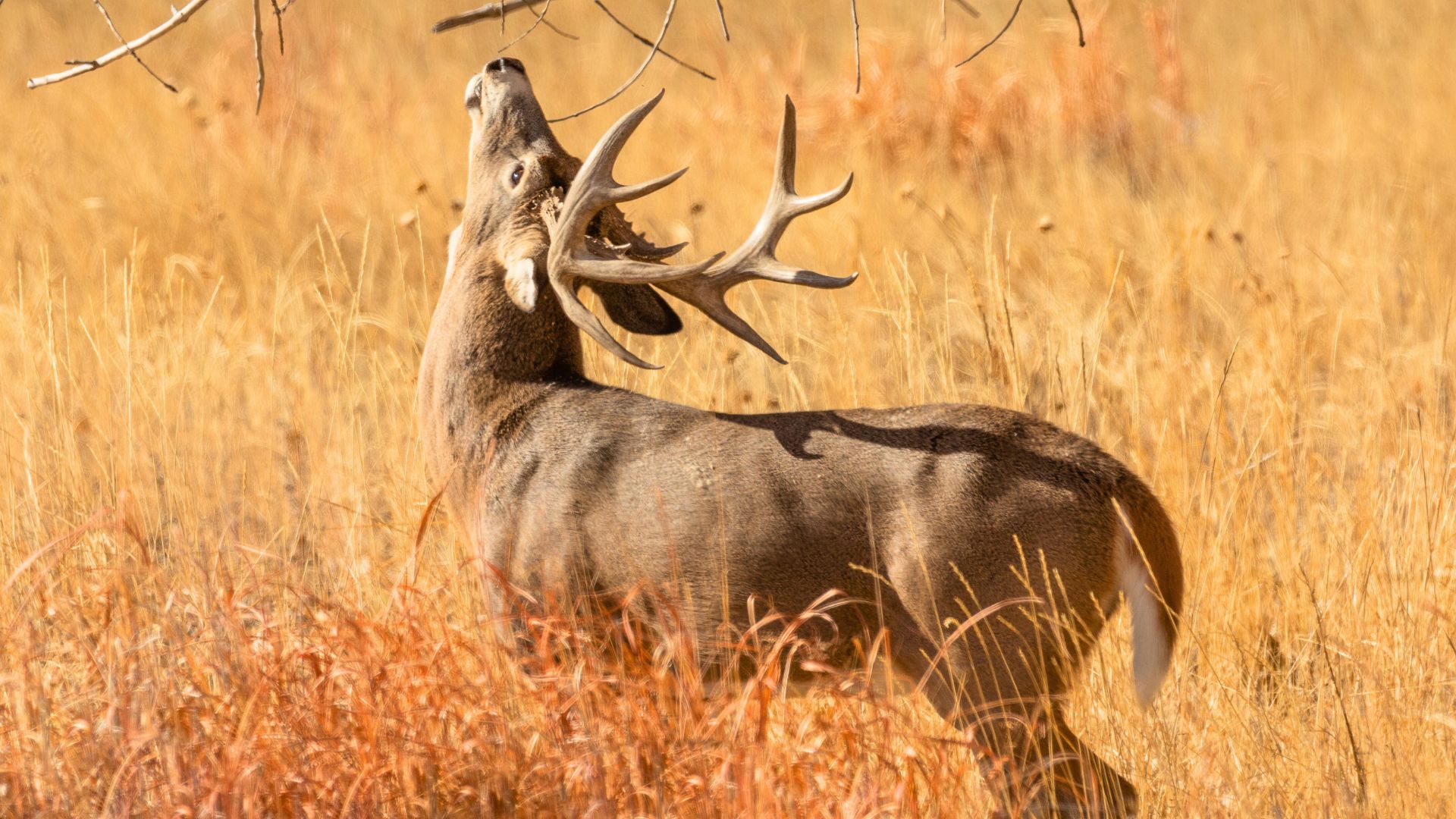
Photo credit: Tom Tietz/Shutterstock.com
When you’ve hunted long enough, you start realizing most blown opportunities didn’t come from bad shooting—they came from bad interpretation. Bucks rarely do what you expect, and they almost never behave the way camp stories describe. A lot of what hunters label as “random,” “spooked,” or “locked down” behavior actually follows patterns that get misunderstood year after year.
These misreads lead to bad sits, wrong stand choices, and timing mistakes that cost encounters. The truth is, mature bucks are consistent, but subtle. They show intent in ways that don’t always look aggressive, social, or predictable. Once you learn what those behaviors actually mean, you stop chasing myths and start hunting movement with purpose. These are buck behaviors most hunters misread—and correcting them can change how you hunt forever.
A buck cruising mid‑day isn’t necessarily rutting hard
When you see a buck on his feet late morning or early afternoon, it’s easy to assume the rut has flipped a switch. In reality, mid‑day movement usually has less to do with chasing and more to do with repositioning. Mature bucks often shift bedding based on wind changes, pressure, or sun angle, especially once the woods fill up with hunters.
That movement can look purposeful but isn’t reckless. He’s likely traveling between secure cover, checking specific downwind routes, or adjusting to human activity. Hunters who mistake this for “hot rut” behavior often overhunt the area or assume movement will repeat daily.
The key is understanding that mid‑day movement is often a one‑time adjustment, not a pattern. If you see it, treat it like a bonus encounter, not a sign to camp out there all week. Mature bucks rarely expose themselves without a reason, and that reason usually ends once conditions stabilize.
A buck avoiding scrapes doesn’t mean he’s gone nocturnal
When scrapes suddenly go cold, many hunters assume the buck has shifted entirely to night movement. More often, he’s simply stopped using obvious community scrapes because pressure has increased. Scrapes are social hubs early, but once human scent builds up, older bucks pull back and switch to secondary sign.
Those secondary scrapes may be tucked inside cover, placed along parallel trails, or located just off primary travel routes. They’re easy to miss because they aren’t dramatic and don’t sit under overhanging limbs. Hunters who rely on trail cameras over big scrapes miss this shift entirely.
Instead of abandoning the area, backtrack and look for subtle sign closer to bedding. That’s usually where the buck still operates. He hasn’t disappeared—he’s just stopped advertising his presence in places hunters expect him to be.
A buck trailing does doesn’t mean he’s ready to chase
Seeing a buck follow does often gets interpreted as full‑on rut behavior, but most of the time it’s reconnaissance, not pursuit. He’s checking status, scent, and timing—not burning energy. Mature bucks conserve effort until the odds are right.
This trailing behavior is often slow, indirect, and cautious. The buck may hang back, circle downwind, or pause frequently. Hunters misread this as indecision or lack of interest, when it’s actually patience.
The mistake comes when hunters push closer or assume the buck will close distance quickly. He won’t. If anything, pressure at this moment makes him disengage. Understanding that trailing is information‑gathering—not chasing—helps you stay put, trust your setup, and let the encounter play out naturally.
A buck feeding early doesn’t mean he’s relaxed
Watching a buck feed in daylight feels like a green light, but feeding behavior during legal hours often signals tension, not comfort. Mature bucks feed quickly, selectively, and with constant awareness. They aren’t lingering—they’re refueling while conditions allow.
Hunters often misread this as a buck settling into a pattern and assume repeated daylight appearances. In reality, that feeding window may close fast once pressure, wind, or disturbance changes.
If you witness this, it’s usually a narrow opportunity. Adjusting entry routes, stand access, or sit timing matters more than hoping he repeats the behavior. Feeding in daylight doesn’t mean complacency—it means calculated risk. Treat it like a limited window, not a routine.
A buck circling downwind isn’t trying to escape
When a buck angles away or hooks downwind, many hunters think they’ve been busted. Often, the buck is simply confirming safety before committing. This behavior is intentional and habitual, especially around bedding edges and funnels.
Misreading this causes hunters to overreact—standing up, shifting position, or assuming the encounter is over. In reality, the buck may still be coming, just on his terms.
This is why wind discipline matters more than exact stand location. If your setup allows a buck to scent‑check without crossing your stream, you stay in the game. Recognizing that downwind movement is part of the approach—not an exit—keeps you calm and ready.
A buck locking down with a doe isn’t gone for good
When a buck disappears during peak breeding, many hunters write him off entirely. But lockdown periods are usually short, and bucks often resume familiar movement immediately afterward. They don’t abandon home ranges just because breeding occurs.
The mistake is abandoning proven areas too quickly. Bucks tend to return to secure cover, preferred travel routes, and known food sources once breeding concludes.
Patience matters here. If sign remains and pressure stays low, odds are the buck will reappear. Lockdown doesn’t erase patterns—it pauses them. Hunters who understand that stay in the right places longer and capitalize when movement resumes.
A buck avoiding open terrain isn’t scared—it’s efficient
Mature bucks don’t cross open areas unless there’s a clear advantage. Avoiding fields, clear‑cuts, or wide logging roads isn’t fear—it’s efficiency. Exposure costs energy and increases risk.
Hunters often misread avoidance as nighttime movement or pressure response, but it’s simply smart travel. Bucks prefer edges, cover lines, and terrain features that break sightlines.
Instead of forcing setups over open ground, hunt transitions. The buck isn’t gone; he’s just moving where he can stay unseen. Learning to read these choices helps you intercept movement instead of waiting where it won’t happen.
A buck moving after a cold front isn’t chasing weather
Cold fronts don’t magically trigger movement—they change comfort and efficiency. Bucks move more because they can travel without overheating and conserve energy. Hunters often overcredit the weather and undercredit terrain.
Movement after fronts typically follows existing routes, not random wandering. Bucks don’t explore—they capitalize.
If you’ve scouted well, cold fronts simply make predictable movement visible. Misreading this leads hunters to bounce locations instead of sitting proven spots. Weather reveals patterns—it doesn’t create them.
A buck standing still isn’t confused
When a buck freezes, many hunters assume indecision or hesitation. More often, he’s listening, scenting, and evaluating. Stillness is information gathering, not uncertainty.
Moving during this moment is the fastest way to lose the encounter. Mature bucks trust their senses, not urgency. They wait for confirmation before acting.
Understanding this helps you remain patient and motionless. Silence and stillness win these moments. A buck standing still is still engaged—you haven’t lost him yet.
A buck bedding early doesn’t mean daylight movement is over
Early bedding during warm spells or pressure shifts doesn’t eliminate movement—it compresses it. Bucks still travel, but timing tightens. Hunters misread this as full nocturnal behavior and quit too early.
Movement may happen fast and close to cover, often earlier than expected. This rewards disciplined access and shorter sits near bedding edges.
If you adjust timing instead of abandoning the area, opportunities remain. Early bedding changes how you hunt—not whether you should hunt.
A buck ignoring calls isn’t call‑shy
Silence isn’t rejection. Bucks often hear calls and choose not to respond vocally or visibly. They may approach quietly or simply mark the sound for later investigation.
Hunters misread no response as failure and escalate calling, which often pushes bucks away. Less is usually more.
Calls work best as subtle suggestions, not demands. Understanding that response doesn’t always look dramatic keeps you from overcalling and ruining setups.
A buck leaving the area after pressure isn’t abandoning it
When pressure spikes, bucks don’t relocate miles away—they tighten up. They shift bedding slightly, move less, and rely more on cover. Hunters assume the buck is gone when he’s often closer than before.
Backing out and letting the area cool is more effective than chasing fresh sign elsewhere. Mature bucks survive by waiting pressure out.
Knowing when to pause instead of push is one of the hardest lessons in deer hunting. But it’s also one of the most rewarding when patience pays off.
Like The Avid Outdoorsman’s content? Subscribe to our newsletter so you never miss an article.
Here’s more from us:


