Photo credit: WildMedia/Shutterstock.com
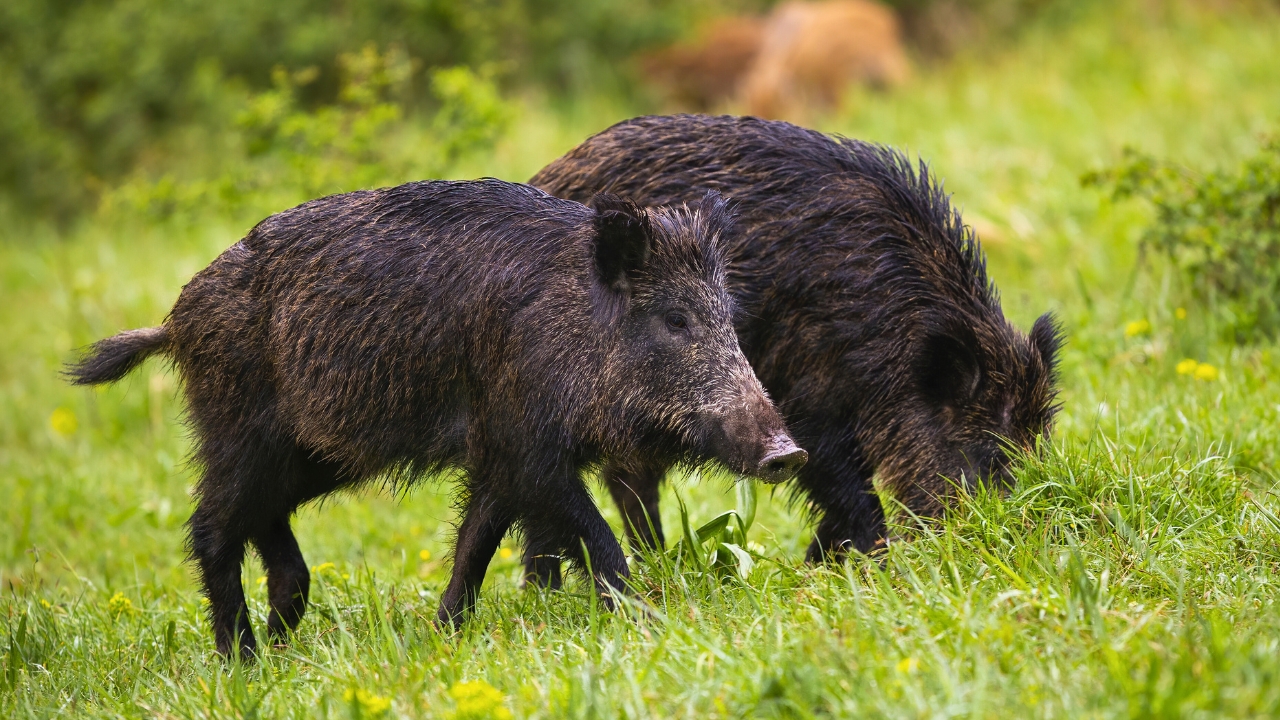
Hog hunting is one of the fastest ways to learn that “hits hard” and “punishes you” don’t have to be the same thing. A lot of guys start out thinking they need the biggest thumper they can handle, then they spend a season flinching, shooting slow follow-ups, and dreading practice because the rifle is miserable off sticks at night. The better path is a cartridge that gives you reliable penetration and good bullet behavior on ugly angles, but still lets you run the gun fast when the sounder starts scattering. That means moderate recoil, manageable muzzle rise, and enough performance that a shoulder hit at 60–120 yards still reaches the chest. You’re not trying to win a ballistic chart; you’re trying to put pigs down efficiently, often in bad light, from improvised rests, with follow-up shots that matter more than your first one.
Most of the “beat you up” feeling comes from the whole package, not just the cartridge. A seven-pound rifle in a hard-recoiling caliber is going to feel sharper than a nine-pound rifle in the same caliber, and a poorly fitted stock or a slick buttpad will make moderate recoil feel nasty. Suppressors help a lot by adding weight and taking the edge off blast, but they also change balance and how you drive the gun. The point is that the best hog rounds for comfort are the ones that let you shoot a lot, shoot confidently, and still get deep, consistent performance with controlled-expansion bullets. That’s why the sweet spot tends to be “mid-bore, efficient, practical” rather than “big and loud.”
The real standard: enough penetration with bullets that behave on bone
Hogs don’t require elephant cartridges, but they do punish shallow bullets. That shield on a mature boar, plus heavy shoulder structure, is exactly where fragile bullets fail. The goal is a cartridge that can push a bullet designed to hold together—bonded soft points, partition-style bullets, or monolithic copper—without needing punishing recoil to get there. If your bullet holds its weight and tracks straight, you can do more with less cartridge. If your bullet is fragile and blows up on the shoulder, you’ll keep feeling like you need “more gun,” when you actually needed a better projectile.
In practical terms, this is why you see experienced hog hunters settle into rounds that let them shoot fast and accurately. They want something that anchors pigs when the shot is a little forward, but they also want to run a quick second or third shot when the first pig drops and the rest start moving. Comfort matters because comfort produces practice, and practice produces clean kills.
6.5 class performance when you prioritize accuracy and low recoil
A 6.5-ish cartridge with a tough hunting bullet is one of the easiest ways to get “hits hard enough” without recoil drama, especially if you’re shooting from field positions and you care about fast, repeatable hits. The recoil impulse is usually smooth, and in an 8–9 pound rifle it’s very manageable even for long strings on pigs. Where it shines is when your hog hunting includes shots that stretch—150 to 250 yards across a field edge or powerline—because you get good wind behavior and accuracy without needing a magnum. The key is bullet choice: you don’t want a fragile match-style bullet; you want controlled expansion that still penetrates when you hit shoulder or you’re shooting quartering away and need to reach the far lung.
Mechanically, this setup tends to keep you honest. You can watch impacts better, your scope stays on target, and your follow-up speed goes up because you’re not fighting the gun. If you’re hunting mixed terrain and you want one rifle that can handle a pig at 40 yards in brush or a pig at 220 across a lane, this category is comfortable and effective as long as you respect shot angles and run a bullet that stays together.
6.8 / mid-bore efficiency for short barrels and night rigs
If your hog hunting is mostly inside 150 yards—especially at night with a thermal—mid-bore efficiency is hard to beat. This is where a lot of hunters “quietly switch” because they want better straight-line penetration than the small bores but don’t want the recoil and blast of bigger .30-caliber setups. In practical use, a mid-bore that throws a heavier bullet at moderate speed tends to hit pigs with authority, especially on shoulder impacts, while still keeping recoil in the “you can run it fast” zone. It’s also friendly to shorter barrels, which matters for night hunting rigs where you’ve got a thermal, a suppressor, and you’re maneuvering around vehicles and brush.
The mechanism is simple: more bullet mass and frontal area gives you more momentum and often better performance through resistance, and you can get that without going to a cartridge that punishes you. With the right bullet, you’re more likely to get exits, and exits mean blood trails when you need them. The biggest advantage is that it’s a “real world” hog cartridge—built around the distances most pigs are actually shot—without forcing you to accept a flinch.
.30-class without the punishment: the “boring but effective” approach
A moderate .30-caliber cartridge is still one of the best answers when you want predictable hog performance without stepping into hard-recoiling territory. The reason it works is not mystique—it’s that you can run heavier bullets with controlled expansion and still keep recoil manageable in a properly weighted rifle. When you’re dealing with big boars or you regularly end up taking quartering shots where you need the bullet to keep driving, .30-caliber controlled-expansion bullets tend to do honest work. You also get a wide range of factory loads, which makes it easier to find something your rifle likes and stick with it.
The comfort trick here is rifle setup. If you’re shooting a lightweight hunting rifle, recoil can feel sharp. If you’re shooting a heavier rig—especially with a suppressor—you can keep this category very shootable, even during fast strings. This is where a lot of hunters land when they want “I don’t have to think about it” performance on hogs, but still want a rifle they can shoot all night without getting sore or developing a flinch.
The “low recoil thumper” concept: heavy bullets at moderate velocity
One of the most reliable ways to hit hogs hard without harsh recoil is to prioritize bullet weight and construction over raw speed. Heavy bullets at moderate velocity tend to penetrate straight, resist deflection, and stay together through shield and shoulder. This is especially useful for close-range hog hunting where you’re not worried about a flat trajectory out to 300, but you do care about bone and angles inside 100. The felt recoil can still be manageable because you’re not chasing high-pressure, high-velocity performance; you’re using momentum and controlled expansion to do the work.
This approach also tends to play nicely with suppressors and night rigs, because you’re often running shorter barrels and you want consistent performance without obnoxious blast. The big caveat is trajectory: you need to know your holds if your shots stretch, and you need to verify point of impact with your hunting load, not just plinking ammo. But if your hog hunting is in the thick stuff, this category can be surprisingly comfortable and very effective.
What “doesn’t beat you up” actually means in the field
The best way to judge a “comfortable hog round” isn’t recoil energy charts—it’s whether you can put fast, accurate hits on demand from field positions. Can you keep the reticle on the pig through recoil? Can you shoot a controlled pair at 60 yards without your second shot turning into a guess? Can you do it after walking a half-mile with a pack and your heart rate up? That’s the test that matters because hog hunting often turns into rapid shooting at moving targets, and the winner is the guy who stays on the gun, not the guy who bought the biggest number.
If you want to make any of these feel even easier, your cheapest improvement is usually setup, not caliber. Add weight where it makes sense, run a good pad, and make sure the stock fits you so recoil comes straight back instead of slapping you in the cheek. A quality cleaning routine matters too because dirty guns and sticky chambers show up at night when you’re shooting fast, and nothing “beats you up” like a rifle that starts short-stroking or failing to extract once carbon builds and lubrication gets thin. Keep your mags clean, keep your springs healthy, and keep your lubrication appropriate for the temperature so the gun runs the same at the end of the night as it did at the start.
If you tell me your typical hog distances (inside 100 vs 200+), whether you’re shooting suppressed, and what rifle weight you’re working with, I’ll point you to the best “comfortable power” lane and the bullet types that keep penetration predictable without adding recoil for no reason.
Like The Avid Outdoorsman’s content? Subscribe to our newsletter so you never miss an article.
Here’s more from us: