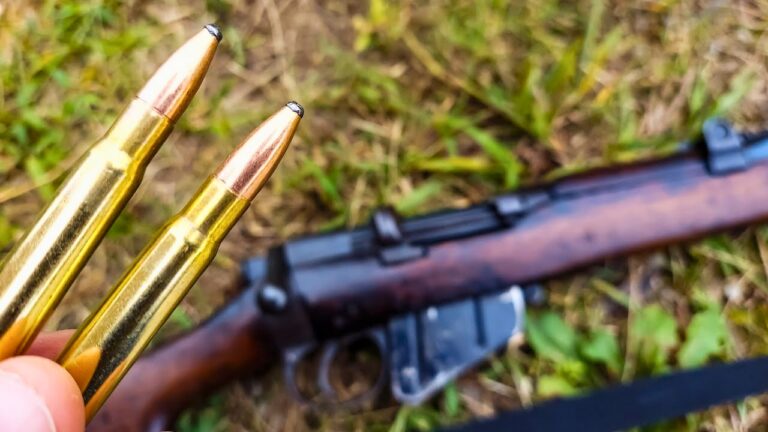
You’ll hear the ballistic charts sing about velocity, energy, and flat trajectories, and it’s tempting to believe those numbers mean clean, humane kills. They don’t. Some cartridges perform beautifully on paper and in gel blocks, then shred meat and leave you chasing blood when the bullet meets real anatomy. The problem isn’t always the cartridge alone — bullet choice, range, and shot angle matter — but certain calibers are notorious for turning prime cuts into salvage. Below I’m calling out calibers that commonly cause more tissue destruction than decisive terminal performance, what usually goes wrong, and how to avoid the worst of it if you ever choose to use one. Read this with the idea that careful bullet selection and realistic expectations beat hype every time.
.257 Weatherby Magnum

The .257 Weatherby Magnum is a velocity freak: high speed, flat trajectory, and long-range capability. What it buys you in trajectory, it often costs in terminal behavior on medium and large game. Those light, fast 100–115 grain bullets can fragment spectacularly against bone or heavy shoulder meat, blowing out large wounds but failing to reach vitals reliably at awkward angles. The result is shredded meat around the entry area and a wounded animal that keeps moving.
If you want to hunt with a cartridge like this, pick controlled-expansion, heavier-for-caliber bullets and keep shots at ranges where the bullet retains constructive velocity. Even then, a lot of hunters move away from the .257 for anything but open-country pronghorn or clean broadside shots — it’s a caliber that rewards precision and punishes error, and it can ruin meat in a hurry when it doesn’t behave.
.264 Winchester Magnum

The .264 Win Mag promises fast, flat shooting, but its overbore nature tends to encourage thin-jacketed, high-velocity projectiles that can break up on impact. When a bullet fragments, you get a big mess of surface damage and little deep penetration — exactly the opposite of what you want when you’re trying to recover prime meat and stop an animal cleanly. At close ranges, the hydrostatic shock and jacket failure make for enormous exit wounds and shredded shoulder meat.
Experienced hunters who use this cartridge recommend heavier bullets seated for deeper penetration and conservative ranges. That helps, but there’s a reason many people who try the .264 for deer or elk end up switching to a slower, heavier option: when it tears up meat, you feel it at the dressing table.
.25-06 Remington

The .25-06 is a terrific long-range varmint and deer cartridge on paper—fast, accurate, and light on recoil. In practice, a lot of factory varmint-style loads fragment on thick bone or heavy muscle, turning a clean broadside into a messy recovery. The high-velocity .25s often explode on contact, depositing energy superficially and leaving questionable blood trails if you clip ribs or shoulder.
If you insist on using a .25-06 for deer, select well-constructed, controlled-expansion bullets in heavier weights and keep shots within ranges where the bullet won’t over-volatilize. Still, many hunters consider the trade-off not worth it: flat-shooting brilliance at the cost of a butcher’s headache when shots aren’t textbook.
.220 Swift

The .220 Swift was legendary for speed and extreme flatness, and that velocity makes it a varmint superstar. It’s also the poster child for meat destruction when misapplied on larger game. Its tiny, fragile bullets often disintegrate on impact with bone or dense muscle, leaving little penetration and massive wound cavities close to the entry. In short, it’s ideal for coyotes and groundhogs and terrible for deer-sized animals if you care about recoverability and usable meat.
Don’t assume because a cartridge can punch a deer on paper it’s humane or practical in real-life field conditions. The Swift does what it was designed for—varmints—but used outside that lane it’ll shred what you meant to salvage.
.22-250 Remington

The .22-250 is another high-velocity varmint round that looks great on a ballistics sheet but behaves poorly on medium game. When used on deer or hogs, the lightweight .224 bullets frequently fragment and produce shallow wound channels. If those fragments scatter through good tissue, you lose edible meat and may not achieve quick incapacitation unless placement is perfect. That’s why most ethical hunters keep the .22-250 for predators and small game only.
If you ever try it on larger game, understand you’re betting on an ideal shot. For most hunters who value a clean dressing and short tracking job, it’s simply the wrong tool — speed without sufficient mass or proper construction will cost you at the grinder.
.300 Winchester Magnum (hot, thin-jacket loads)

The .300 Win Mag isn’t inherently meat-ruining — it’s a proven big-game cartridge — but certain hot, thin-jacketed factory loads can turn it into a butcher’s nightmare. At close ranges, over-velocity combined with fragile bullet construction can lead to massive fragmentation and cavitation that destroys surrounding muscle instead of making a clean, deep wound channel. That’s especially true with soft-point loads designed for expansion at speed.
If you hunt with a .300, pick core-locking, heavy-for-caliber bullets built for controlled expansion. Handloaders and careful bullet-selection mitigate the worst outcomes. The cartridge’s potential to ruin meat is real but avoidable — treat bullet choice like mission-critical gear, not an afterthought.
6mm Creedmoor (match-style bullets on game)

The 6mm Creedmoor rose as a precision round, and its match-grade, thin-jacketed bullets shine on paper and steel. Those same bullets, however, can fragment on game and create sloppy wound channels not suited for meat retention. The light-for-caliber projectiles expand rapidly and can lose core mass when they contact ribs or thick muscle, leaving you with an animal that’s bled out in patches rather than cleanly.
If you use a 6mm for hunting, avoid pure match bullets and reach for hunting-specific designs that keep weight and sectional density in mind. Even then, many hunters prefer slightly larger calibers when they want predictability and less meat loss.
.30-378 Weatherby Magnum

The .30-378 Weatherby is an all-out velocity monster that will humiliate distance and trajectory charts — and will also vaporize meat at close ranges when paired with brittle projectiles. At hypervelocity, many bullets fragment on heavy tissue contact, creating enormous exit wounds and reducing usable meat to ribbons. It’s an extreme example of “too much speed,” where the trade-off is unacceptable damage in the chest cavity.
This round is for very specific long-range applications and wild-country scenarios, not general hunting. If you ever shoulder one, choose heavy, tough-for-caliber bullets and respect limits: the moment you trade controlled penetration for raw speed, you risk ruining an animal you planned to eat.
.223 Remington / 5.56 NATO

The .223/5.56 is ubiquitous and effective for certain game at close range, but it has a reputation among hunters for causing fragmentation and shallow wound channels on deer-class animals when fired with varmint-style bullets. Lightweight, rapidly expanding projectiles can blow apart on bone and destroy meat around the entry while failing to reach vitals in less-than-perfect hits. That’s why so many big-game hunters avoid it for deer, despite its ubiquity.
If you’re committed to using a .223 for deer, stick to well-designed hunting bullets with good sectional density and limit shots to close, clear opportunities. Most hunters simply move up a caliber to avoid the risk of unnecessary meat damage and extended tracking.
.338 Lapua Magnum

The .338 Lapua Magnum is a specialist’s round: huge energy and long-range authority. Treat it like a battlefield or anti-materiel cartridge and you’re fine; treat it like a kitchen-friendly hunting caliber and you’ll regret it. At close to moderate ranges, heavy, fast bullets can create massive cavitation and tissue disruption that ruins meat and makes field dressing unnecessarily hard.
That said, the Lapua can be used humanely on large dangerous game with the correct bullet selection and range discipline. The key is recognizing its destructive potential: it’s a tool for extreme ranges or oversized targets, not routine deer fields where flesh preservation matters.
.50 BMG (when misapplied)

The .50 BMG isn’t a hunting caliber for most people, but when it’s misapplied in a hunting context it obliterates everything in its path. The round’s enormous energy and fragmentation tendencies at conventional hunting distances leave nothing useful to salvage. Skin, muscle, and bone are pulverized near the impact area, and you’re left with a scene that’s impractical to process or eat.
It has legitimate uses in long-range specialist shooting and anti-materiel roles, but if you expect to recover edible meat, don’t use a .50. There’s no ethical or practical justification for employing such a round on typical game where meat recovery is the goal.
*This article was developed with AI-powered tools and has been carefully reviewed by our editors.