Photo credit: AI-generated image created using ChatGPT. Illustrative only
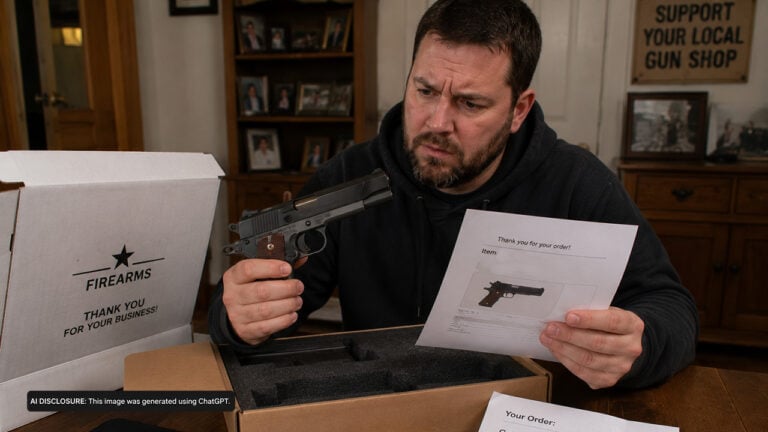
It didn’t start with a knock from a deputy or a letter taped to a door. It started with a cardboard box on a porch—one of those ammo shipments that comes marked the way federal rules require. In a rented room in a four-bedroom house in the Bay Area, that little “ORM-D Cartridges, Small Arms” label was enough to set off the landlord and kick off a fast-moving standoff over a legal rifle and lawful storage.
A package label tipped the landlord off
The tenant said he came home from work to a heated verbal confrontation. The landlord had noticed the blue ORM-D sticker on packages delivered that day and told him she didn’t want guns in her house. According to the tenant, she then demanded he leave within 30 days—and said she’d prefer he go sooner.
What made it stranger is that this wasn’t the first delivery. The tenant said he’d ordered ammunition to that address six or seven times before, with similar labels, and the landlord had never mentioned it. This time, the label apparently flipped a switch.
He wasn’t careless—his storage sounded like what most folks would call responsible
The tenant described a setup that a lot of gun owners would recognize: one locked bedroom, separate from the rest of the house, with adults living on the property and no kids around. He said his firearms stayed locked during storage and transport, and were only uncased and unlocked at the range.
His ammunition was stored in Plano boxes in his walk-in closet, which he said was exclusively his. In other words, this wasn’t a case of loaded rifles leaning in a corner next to the broom. It sounded like a guy trying to do it by the book in a shared living situation.
The lease had expired—so the real fight was about rules that actually existed
The timing mattered. The tenant said he’d been there just over a year and that his lease had expired about a month earlier. He believed he was now month-to-month, and he said there wasn’t a new agreement in place.
Most importantly, he said the previous lease had no language that specifically prohibited firearm ownership or storage on the premises. That’s a big deal in real life, because plenty of landlords try to rely on “house rules” that were never agreed to in writing, or clauses that sound tough but don’t hold water when you finally put them under a bright light.
What people keyed in on: you can’t be “evicted” with a lecture
In situations like this, one of the first practical points folks tend to focus on is the difference between a landlord being mad and a landlord completing a legal eviction. A verbal demand to “be out in 30 days” isn’t the same thing as proper notice served the way California requires.
Even when a rental is month-to-month, there’s still a process for ending a tenancy. The tenant said he hadn’t been served an official eviction notice—just an angry confrontation. That distinction is where many renters buy time to get advice, decide whether to move, and avoid getting bullied into an unnecessary scramble.
Why “no-gun” clauses can be shakier than landlords think
Here’s the part that should make gun owners pay attention: even if a landlord claims there’s a “no guns” rule, that doesn’t automatically make it enforceable. A clause can be missing, vague, contradicted by other terms, or run into state protections and basic landlord-tenant limits.
The tenant’s own facts point to a common scenario: nothing in the original lease banned firearms, and the tenancy rolled into month-to-month. If the landlord later tried to invent a firearms prohibition after the fact, that’s not the same as a mutually agreed lease term. And if an attorney looked at any claimed “no-gun clause” and determined it was never valid in the first place, that would explain how a threatened eviction could lose steam fast once someone with legal experience reviewed the paperwork and the notice requirements.
If you want to read the tenant’s description of the incident and living setup in his own words, you can find it in the original post.
What this means for gun owners renting a room or house in California
If you rent—especially in a house-share arrangement—this story is a reminder to get serious about two things: paperwork and professionalism. First, keep copies of your lease, any renewals, and anything that looks like a rule change. Second, don’t argue in the doorway. When a landlord gets emotional, the smartest move is usually to slow everything down and require everything in writing.
It also helps to stay square on safe storage. The tenant here described locked guns, locked space, and ammo stored properly. That doesn’t just keep you safe—it keeps you credible when someone tries to paint you as reckless. And if the situation turns into a formal dispute, credibility matters.
At the end of the day, if a landlord truly wants a tenant out, they may still be able to terminate a month-to-month tenancy with proper notice, depending on the exact type of housing and local rules. But “I saw an ammo label and I don’t like it” isn’t a magic eviction wand. When you’re doing things legally and safely, the smartest play is to stay calm, document everything, and let actual lease terms—and actual law—do the talking.
Like The Avid Outdoorsman’s content? Subscribe to our newsletter so you never miss an article.
Here’s more from us: