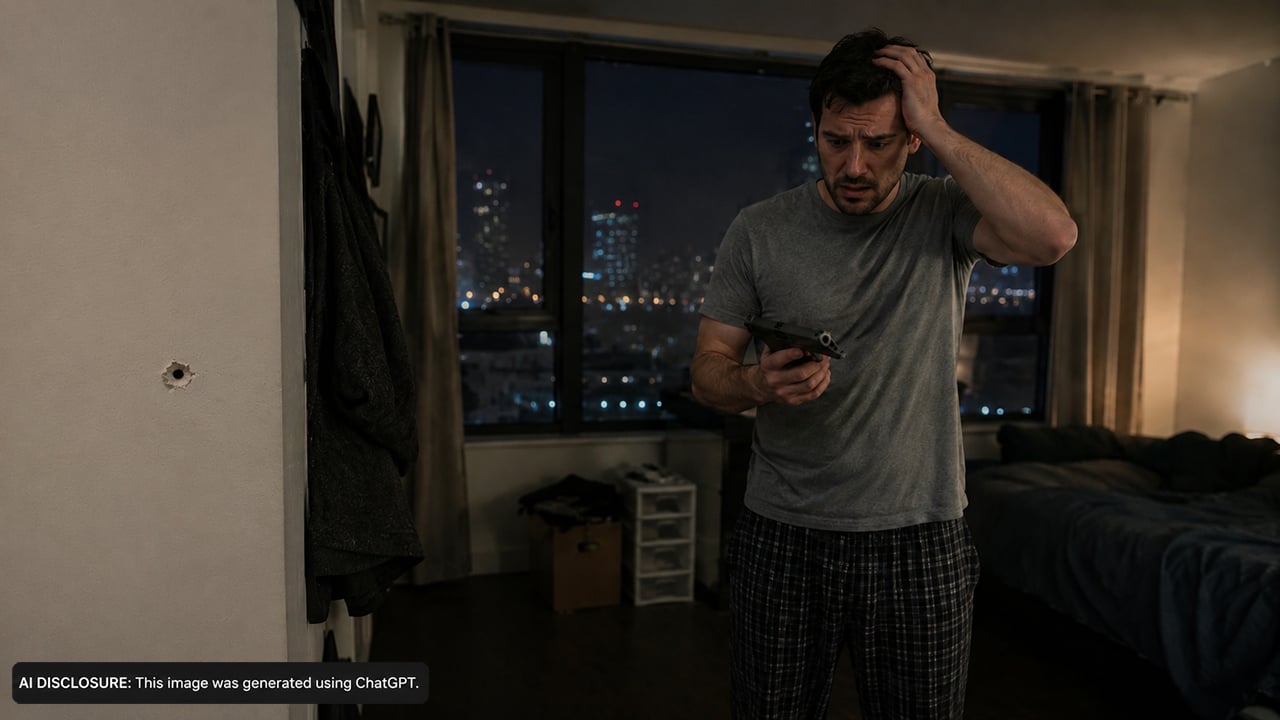
Photo credit: AI-generated image created using ChatGPT. Illustrative only
There’s a special kind of sick feeling that hits when you hear a gun go off and you know, instantly, it wasn’t supposed to. No bad guy. No target. No range. Just you, four walls, and a mistake that can’t be taken back.
That’s exactly where one concealed carrier found himself late at night inside his apartment after a negligent discharge. Nobody was hurt, the damage was minor, but the moment quickly turned into a different kind of problem: do you call the police and own it, or do you call a lawyer and hope it goes away?
How a dry-fire habit turned into a loaded-gun problem
In the original post, the gun owner explained that he had a routine: unload the pistol, check it multiple times, and dry-fire to work on trigger control. That’s common enough, and done right it can be solid practice.
The trouble started when he finished his session, reloaded the pistol, and set it on the table next to him. Five minutes later, while watching a movie on his laptop, he decided to “practice some more” and picked the gun back up—without removing the magazine and without realizing it was back in a ready-to-fire condition.
The shot, the wall, and the immediate scramble
He aimed at a plastic food scoop sitting on top of a dog-food container in his bedroom and squeezed the grip to activate his Crimson Trace laser grip. Then he pressed the trigger.
The report inside the apartment was immediate chaos: ringing ears, a panicked dog, plastic fragments, and a rush of adrenaline that sent him next door to make sure nobody had been hit. The bullet went through an air mattress, into the wall, struck a stud, and deflected back out into his bedroom. That’s a detail worth sitting with—one round in a home doesn’t just “go into the wall.” It does unpredictable things after it hits wood, drywall, and framing.
Call the police or call a lawyer: the choice he made
After making sure nobody was hurt, he made the call a lot of folks freeze up over: he dialed 911 and reported the discharge himself. His reasoning was simple and practical—better they hear it from him than from a neighbor who only heard a gunshot.
When officers arrived, they checked the firearm and the holes in the wall, collected the casing and projectile, and took the pistol, magazine, and remaining ammunition into custody. He was told the gun would stay there for about a week for “safe keeping,” which he assumed was tied to completing the report and verifying the gun wasn’t stolen or illegal.
He wasn’t cited on the spot for firing within city limits, but an officer reportedly warned that supervisors might review the report and push for charges later. That’s the tightrope with these situations: even when nobody is hurt, a single shot inside an apartment can still become a criminal or civil headache depending on local law and how the incident is documented.
Embarrassment, neighbors, and the landlord problem
The poster didn’t try to paint himself as a victim. His biggest stated concern wasn’t fines or paperwork—it was the embarrassment of being careless and knowing better. He noted he’d spent four years in Marine Corps infantry, and one officer told him plainly that he didn’t need “the speech.”
Then came the real-world apartment reality: neighbors and management. The neighbors who shared a wall—two women around his age—were described as “unbelievably chill,” even worrying that he would get in trouble. Still, anyone who has lived in close quarters knows how quickly a gunshot can turn into a lease violation or an eviction notice if management decides they don’t want the liability.
Since the office was closed, he wrote a detailed letter to the landlord/property manager and slipped it into the office so the first version they heard would be the factual one. Later, he updated that the landlord inspected the damage, was understanding, and allowed him to stay as long as he fixed it himself and nobody was hurt.
What gun owners should take from this, without getting preachy
This wasn’t a story about a mechanical failure. By his own account, it was a chain of human decisions: dry-fire, reload, set the gun down, pick it back up, and skip the one step that matters most—verifying the gun’s condition before touching the trigger.
If there’s one hard lesson for anyone who carries, hunts, or keeps a defensive gun around the house, it’s that “I know better” doesn’t protect you. Familiarity can make you sloppy. Distraction can make you skip steps. And apartments don’t give you much margin for error—drywall doesn’t stop bullets reliably, and studs can send a round in a direction you didn’t expect.
Another takeaway is the “after” problem. Once that shot happens, you’re dealing with noise complaints, possible charges, police reports, and property damage. He chose to report it immediately and cooperate, and in his case it appears to have kept the situation from spiraling with neighbors and management. That won’t be the right move in every jurisdiction or circumstance, but pretending it didn’t happen is a gamble when you live with shared walls.
His final update was the right mindset: get the firearm back, re-familiarize with safety, and take steps to make sure it never happens again. That’s not about beating yourself up—it’s about putting better habits and better separation between “practice mode” and “loaded and ready” so there’s no chance of crossing the streams when your attention is on a movie, a phone call, or anything else.
One careless moment can cost a lot more than patching drywall. This one ended with nobody hurt, a cooperative response, and a landlord willing to be reasonable. That’s the best possible outcome for a bad mistake—and a reminder that the safest shot in the home is the one you never fire.
Like The Avid Outdoorsman’s content? Subscribe to our newsletter so you never miss an article.
Here’s more from us: