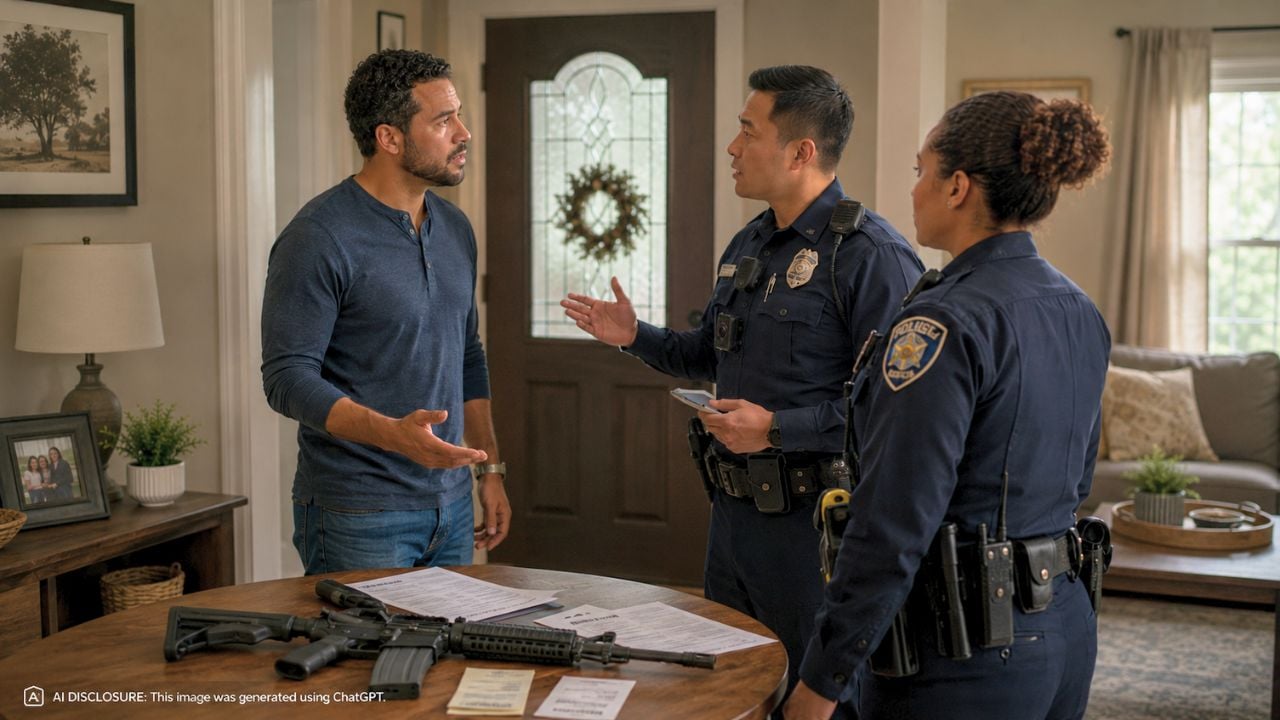
Photo credit: AI-generated image created using ChatGPT. Illustrative only.
Every gun owner knows the feeling: you finally get a new piece of gear home, you’re ready to put it to work, and something just isn’t right. In one recent legal question shared in the original post, a customer described buying an item from a store only to discover it was defective and unusable.
The buyer went back expecting the shop to make it right. Instead, they were told the store had a “no returns” policy and that the customer needed to contact the manufacturer. It’s the kind of hard stop that can catch folks off guard—especially when the purchase is something you’d normally want to inspect, test, and trust before you stake a range day or a hunt on it.
What the buyer says happened at the counter
Based on the buyer’s description, the key facts are simple: an item was purchased, it turned out to be defective, and it couldn’t be used as intended. When the customer approached the store about it, the store refused to accept a return.
That “no returns” line is common in a lot of industries, but it hits different when you’re talking about outdoors gear and firearms-related purchases—things that need to function safely and reliably. Whether it’s a rifle, an optic, or even a critical part, “defective and unusable” isn’t a minor inconvenience. It changes the whole value of what you bought.
Why “no returns” can turn into a real-world problem fast
In hunting and shooting circles, we tend to be practical: if something doesn’t work, we fix it, replace it, or we stop using it. But when the store won’t help, you’re suddenly stuck holding the bag—money out the door and an item you can’t use.
And there’s another layer here that gun owners will recognize. Shops often have stricter policies around firearm sales because of paperwork, transfers, and liability. That doesn’t automatically mean the buyer should be left with a lemon, but it does explain why some counters default to “call the manufacturer” even when the problem looks obvious.
Manufacturer warranty sounds good… until you need it right now
Being told to contact the manufacturer isn’t always wrong. Many companies will repair or replace defective products, and some are downright solid about it. The problem is that warranty support usually runs on their timeline, not yours.
If you bought the item for a class, a trip, a season opener, or just to protect your home, “ship it in and wait” can feel like no help at all. Add in shipping costs, delays, and the chance you’ll be without your gear for weeks, and you can see why a buyer would push back at the store level first.
What smart buyers do before leaving the shop
This situation is a reminder to slow down at the counter. If you can function-check something safely and legally before you walk out, do it. For firearms, that means following the shop’s rules and basic gun safety—muzzle discipline, verifying clear, and asking permission before handling anything beyond what’s normal in the store.
For optics and accessories, it can mean checking adjustments, buttons, illumination, turret clicks, mounting hardware, or basic fitment. It’s not about being picky. It’s about avoiding the moment when you’re standing in your garage later realizing the thing never had a chance of working in the first place.
Practical steps when a shop refuses a return on defective gear
When a store plants its flag on policy, your best move is to get organized and stay calm. Keep your receipt. Document what’s wrong in plain language. If it helps, take a short video showing the defect or failure—nothing fancy, just clear proof that it’s not user error.
Then go straight to the manufacturer with your serial number (if applicable), purchase date, and the store info. If the item is firearm-related, don’t try to “make it work” through home tinkering that could create a safety issue or void a warranty. There’s a difference between tightening a loose screw and doing something that changes how a product operates.
The bigger lesson for gun owners and outdoorsmen
Whether the item in question was a rifle, a part, or some other piece of gear, the real takeaway is about expectations and leverage. A store’s return policy is one thing. Consumer protections and warranties are another. But in the moment, what matters most is what you can prove and how quickly you can get a working tool back in your hands.
The outdoors doesn’t wait on customer service. If you’re gearing up for a hunt or setting up a rifle you rely on, buy from places that will stand behind what they sell—or at least be very clear about how defects are handled. Because finding out after the fact, when you’ve already taken it home, is when it gets expensive and frustrating in a hurry.