Photo credit: AI-generated image created using ChatGPT. Illustrative only
Most folks who throw a magnet in a river are hoping for old tools, maybe a pocketknife, maybe some mystery metal that makes for a good story. One magnet fisher finally got time to work a spot he’d been thinking about for two years, and on his very last toss before moving on, he pulled up something that changes the whole mood: the frame of a 9mm handgun.
A last cast turned into a serious find
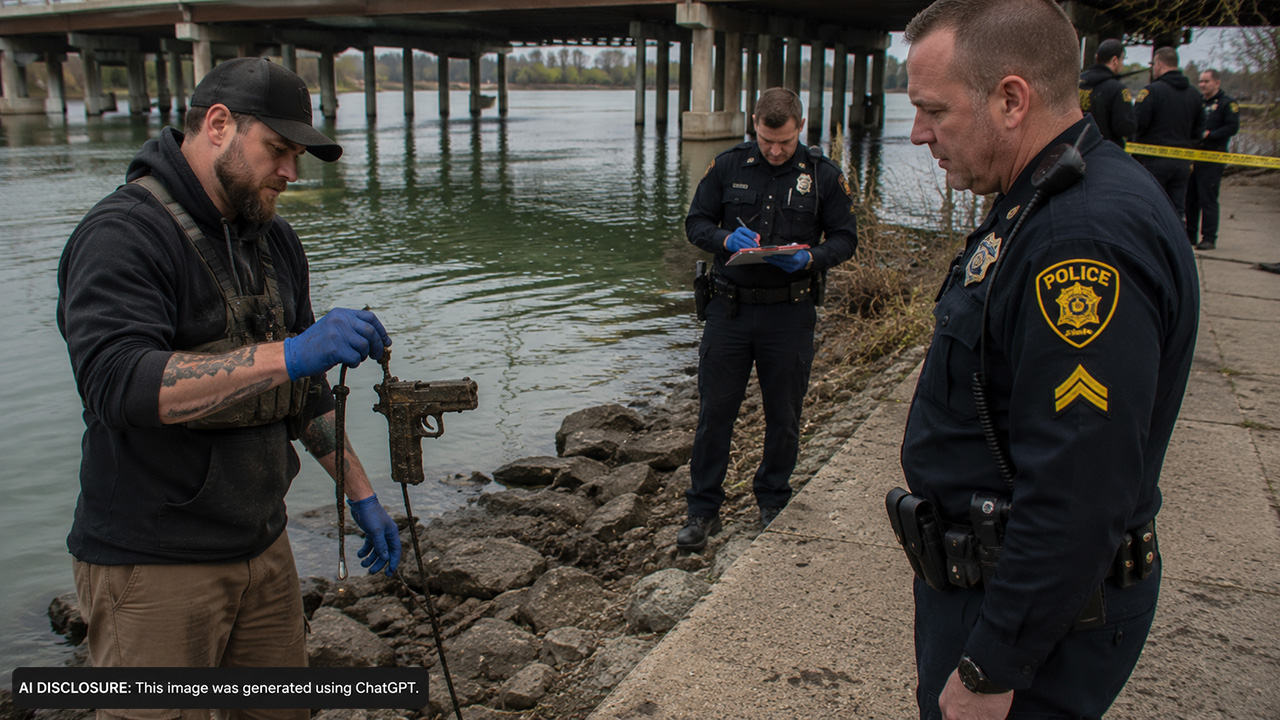
The outing happened the day before Christmas Eve, late enough that calling and getting immediate in-person help wasn’t really an option. The magnet fisher wrote that he’d been waiting a long time to check this stretch of river, and he was already wrapping it up when the magnet grabbed the handgun frame—identified as a Smith & Wesson M&P Shield 9mm.
Finding a gun in the water isn’t unheard of for folks who do this a lot. Still, it’s the kind of thing that makes you slow down, take a breath, and think about where your hands are and what you’re touching. Even without a full gun attached, a firearm part pulled from the river is a different category than scrap metal.
The serial numbers were scratched, and that’s a big red flag
When he went to read the serial number, he noticed the numbers were scratched. That detail matters. Scratched or defaced numbers can point to theft, an attempt to hide the gun’s history, or worse.
At that point, this wasn’t a “cool find” anymore—it was a potential piece of evidence. And the practical, outdoorsman move is the boring one: don’t pocket it, don’t try to “restore” anything, and don’t treat it like a souvenir. You call it in.
He called non-emergency and did the handoff the right way
Because it was midnight and the station wasn’t open, he called non-emergency. An officer collected the handgun frame, and the magnet fisher got an incident number. That’s about as clean as it gets: notify law enforcement, hand it over, and get a record that you did.
If you spend time on public banks or bridges, it’s worth remembering that this is exactly what keeps you out of trouble later. A found firearm—even a partial one—can pull you into questions you don’t want if it’s mishandled, transported unnecessarily, or posted online with too much detail before it’s reported.
Weeks later, the follow-up call changed everything
About three weeks after the handoff, the magnet fisher called unclaimed property looking for any update. He was told they didn’t have information on the firearm at that time. That’s not surprising—paperwork and processing move at their own pace, and a river gun isn’t usually a quick turnaround.
Then, roughly two weeks later, unclaimed property called him back with the kind of news that makes your stomach drop. They told him they had run the numbers and confirmed the firearm’s owner had committed a homicide. The 9mm he found was the only handgun that person owned, at least as far as authorities knew, and it was likely tied to the murder. From the way it was relayed to him, the suspect was already in custody. The magnet fisher shared the story in the original post.
Why this hits home for hunters, anglers, and anyone on the water
If you hunt, fish, or spend time checking fence lines and creek crossings, you already understand how quickly a normal day can turn serious. You might find a dumped deer carcass, a stolen trail camera, a drug stash, or a firearm. The river doesn’t care what it holds onto, and magnets don’t either.
The biggest takeaway here is that the “right thing” isn’t complicated, but you do have to do it promptly. If you recover a firearm, keep your fingerprints and curiosity off it as much as you can, don’t parade it around, and call the proper number for your area. The magnet fisher did exactly that, and it likely preserved whatever evidence could still be used.
It also underlines a safety point that doesn’t get said enough: a waterlogged gun or gun parts can still have sharp edges, and depending on what you pull up, there could be loaded magazines, loose ammunition, or other hazards nearby. Treat any firearm find like it could still be dangerous, even if it looks ruined.
This wasn’t his first run-in with a crime-linked gun
One more detail from his account adds perspective: he said this was the second gun he’d found that was involved in a crime or was stolen. That’s not meant to be dramatic—it’s just reality for people who do this regularly in certain areas.
Rivers, canals, and retention ponds are common dump spots. A magnet doesn’t just find what people lost by accident; it finds what people wanted gone. And when a gun shows up with scratched numbers, it’s a good bet you’re not dealing with an honest mistake.
There’s a temptation with any “river treasure” to focus on the excitement of the find. But this story is a good reminder that outdoor hobbies sometimes bump up against real-life law enforcement work. When that happens, the best thing you can do is keep it simple: stay safe, document what you need for your own records, and let the professionals take it from there.
Like The Avid Outdoorsman’s content? Subscribe to our newsletter so you never miss an article.
Here’s more from us: