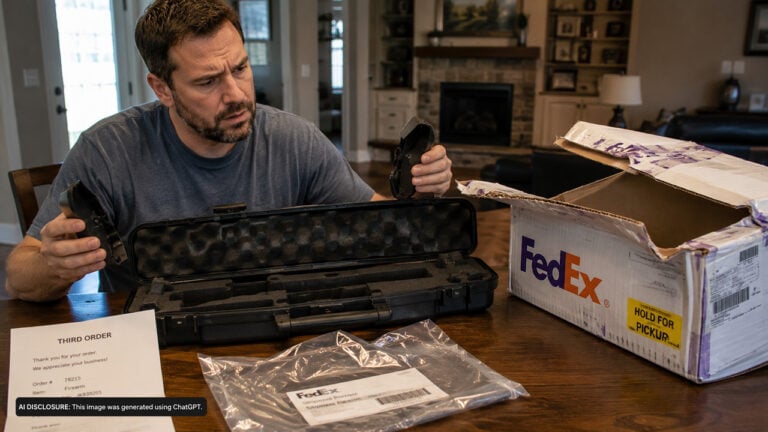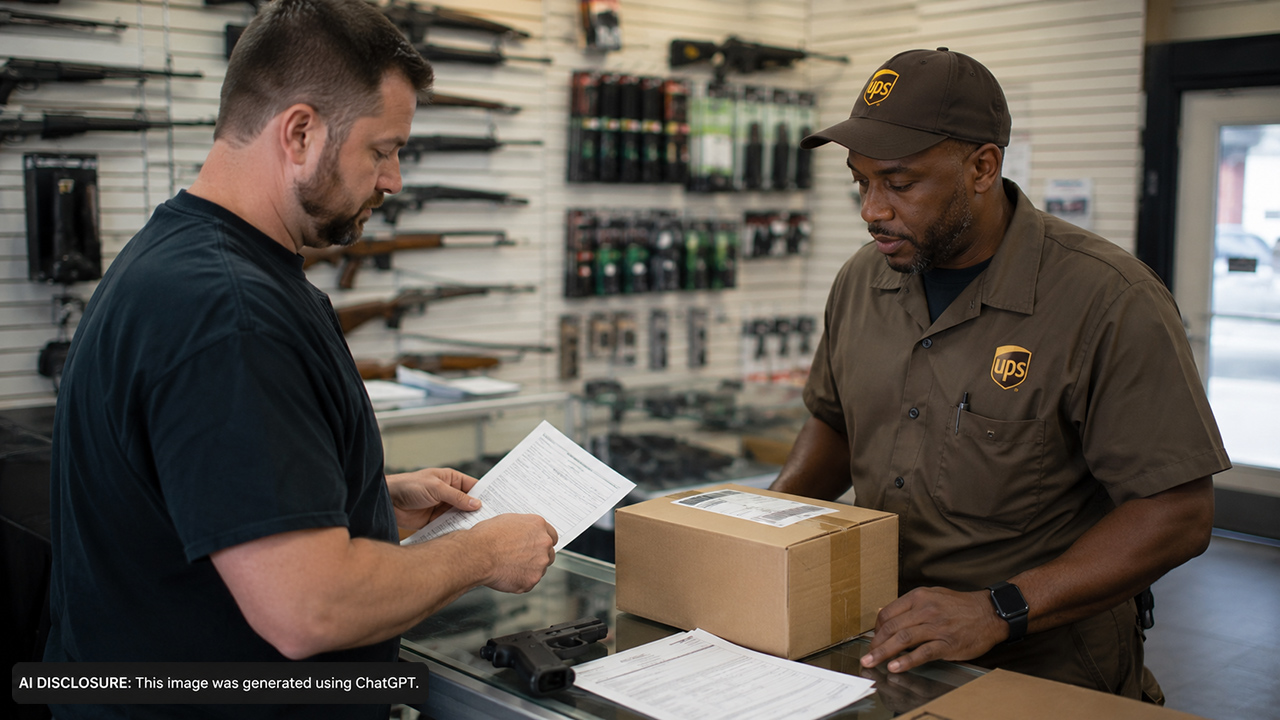
Photo credit: AI-generated image created using ChatGPT. Illustrative only
Ordering a handgun from out of state is pretty normal these days if you’re doing it the right way—licensed seller on one end, licensed dealer on the other, and paperwork handled like it’s supposed to be. That’s why it’s hard not to grit your teeth reading about a buyer who says their pistol shipment simply vanished in the UPS system after leaving North Carolina.
In the original post, the buyer describes a package that appears to have stopped existing after a “technical scan,” with UPS reportedly saying they can’t locate it and don’t have any additional scans tied to a physical handoff. When the missing package is a firearm, this isn’t just a late delivery—it’s a safety and accountability problem.
The package left North Carolina, then the trail went cold
The buyer says they purchased a firearm from North Carolina and it was shipped through UPS. At some point in the tracking timeline, they were told the “last scan was just a technical scan and not physical,” and that UPS has “no idea where my package is.” That detail matters, because it suggests the tracking data indicates a status change without anyone necessarily putting hands on the box at that moment.
From the buyer’s perspective, the practical reality is simple: they’re watching tracking that doesn’t move, customer service doesn’t have answers, and a controlled item is now somewhere unknown. That’s the kind of limbo that makes your stomach sink, whether you’re waiting on a new carry gun or a simple hunting rifle part.
UPS reportedly checked multiple facilities and still came up empty
According to the post, UPS said they checked their warehouses in North Carolina. They also asked about the package in Pennsylvania and checked Tennessee, but the buyer was told there were no scans after North Carolina. That’s a lot of geography for a box to potentially drift through, especially when the system is acting like it never hit the next confirmed checkpoint.
Anybody who’s shipped enough gear—bows, optics, ammo components, waders, you name it—knows that one missed scan doesn’t automatically mean theft or disaster. Packages can get shoved behind a pallet, labels can get mangled, and a box can wind up on the wrong belt. But firearms add a different level of urgency, and most folks expect a tighter chain of custody than “we looked around and didn’t see it.”
Why “technical scans” make gun owners nervous
Most hunters and gun owners don’t need an inside look at the logistics world to understand why a “technical scan” explanation feels like cold comfort. In plain terms, the buyer is saying the tracking record shows an event that wasn’t tied to a confirmed, physical scan of the parcel itself. That can happen when systems update based on trailer movement, manifest data, or batch processing—things that aren’t the same as a handheld scanner beeping on your specific box.
When the item is a firearm, that gap is more than a customer service annoyance. It’s the difference between “it’s somewhere in the network” and “we can’t prove where it last was.” And once a box can’t be tied to a specific facility or transfer point, it gets harder for everyone involved—shipper, receiving dealer, and carrier—to push the right buttons to actually locate it.
The buyer says federal authorities are about to get involved
The post notes, “The feds are getting ready to have fun with this now,” which is the buyer’s way of saying this is escalating past normal lost-package frustration. When a firearm goes missing in transit, there are real-world reporting expectations and serious downstream consequences, especially for the licensed parties who touched the transaction.
This is where the outdoorsman angle hits home: even when you do everything correctly, you can still wind up dealing with a mess that eats time, phone calls, and nerves. And if you’re the one waiting on the gun, you’re stuck in the middle—depending on the shipper and the receiving FFL to work their side of it while you’re left watching tracking screens and hoping the box turns up before it turns into a bigger problem.
One small packaging detail could matter more than people think
The buyer says the package “wasn’t in a box that was labeled firearms or anything like that,” and they’re hoping it simply “fell off a conveyor somewhere.” That’s a telling detail. Most experienced shippers avoid obvious markings that advertise what’s inside, because that can invite the wrong kind of attention.
At the same time, a plain-looking box isn’t a magic shield. A label can tear, a barcode can smear, or a corner can get crushed until the shipping info is unreadable. In those cases, the box can wind up in an “overgoods” area or a pile of problem shipments waiting for someone to manually identify it. If there’s any silver lining in the buyer’s description, it’s that a nondescript package may be more likely to be treated like any other lost parcel—something that needs to be rerouted—rather than something that catches the eye of a thief.
What this situation looks like on the ground for regular gun owners
If you’ve never bought a firearm that had to ship, it’s easy to assume the process is basically like ordering boots. It isn’t. Your gun is supposed to move between licensed entities with documentation handled properly, and when the shipping leg breaks down, you quickly learn how many steps are outside your control.
The buyer in this case is hoping the box simply got separated from the normal flow—an honest logistics error. That’s a reasonable hope. But the uncomfortable truth is that a missing firearm shipment is automatically more serious than a missing scope or a case tumbler, because it creates the possibility—however small at first—that a gun is now in the wild with no clear chain of custody.
The big takeaway for folks reading this isn’t panic—it’s a reminder to treat shipping like part of your overall firearms responsibility. Keep every email, tracking update, and receipt. Make sure you know which FFL is receiving it and that they’re aware it’s incoming. And if something feels off early—no movement, weird scan language, contradictory answers—push for clear documentation right away, because the paper trail is what helps the licensed parties get traction when a carrier starts shrugging.
For this buyer, the best outcome is simple: the package gets found in a corner of a facility, the label is still readable, and it gets delivered to the dealer like it should have in the first place. Until then, it’s a reminder that in the real world, “shipped correctly” doesn’t always mean “arrives safely”—and when the item is a pistol, nobody should be comfortable with vague answers.
Like The Avid Outdoorsman’s content? Subscribe to our newsletter so you never miss an article.
Here’s more from us: