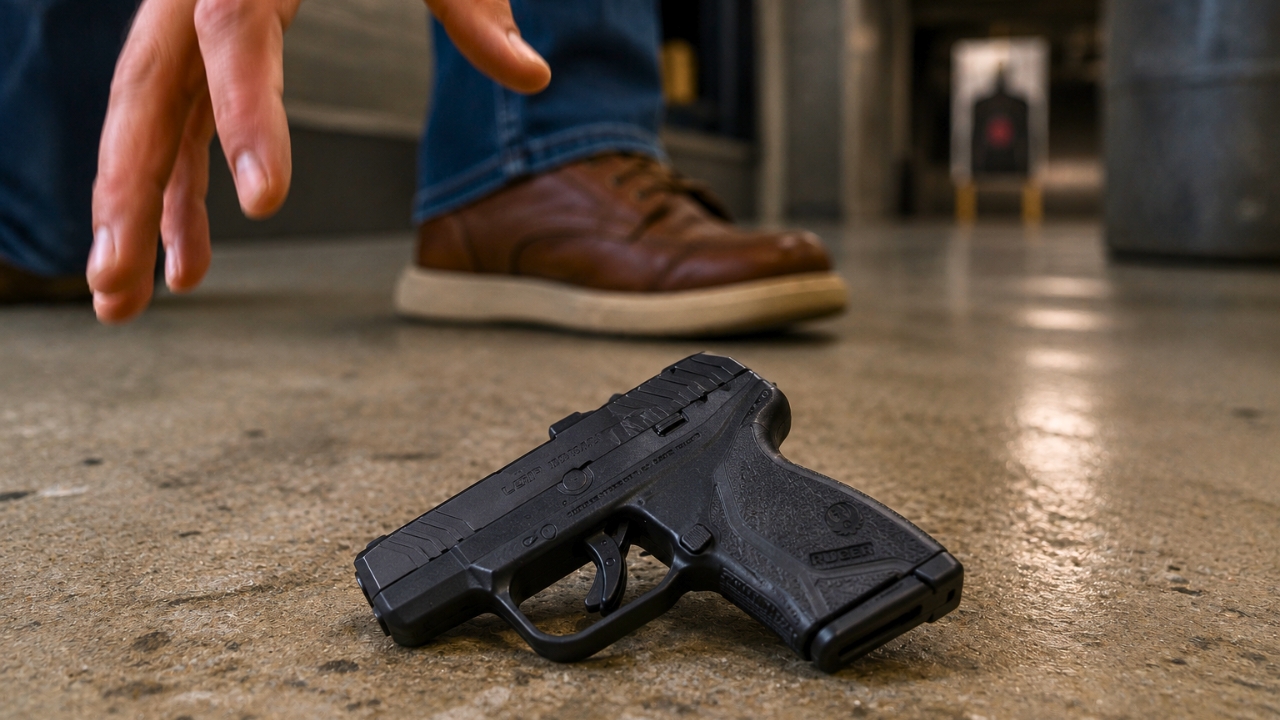
Photo credit: The Avid Outdoorsman
The gun owner had one of those moments where everything goes quiet in your head for half a second.
He dropped his pistol.
Not onto carpet. Not onto a padded bench at the range. Onto concrete.
In a Reddit post, the gun owner said he dropped his Ruger LCP Max and watched it hit concrete barrel-up. That little detail is what makes the whole thing feel worse. A dropped gun is scary either way, but when it lands in an awkward position and your brain starts running through every possible “what if,” it feels a lot less like a simple accident.
Most gun owners have heard the advice: don’t try to catch a falling gun. Let it fall. Modern carry pistols are generally designed not to fire from a drop, assuming they are in proper working condition and have not been modified in some unsafe way. That advice is sound, but it does not make the moment feel calm while the gun is falling.
Because for that one second, instinct wants to take over.
A person sees something valuable falling and reaches. That is normal with phones, keys, tools, pocket knives, or anything else. But with a gun, trying to grab it midair can be more dangerous than letting it hit the ground. A hand can catch the trigger. A finger can slip into the trigger guard. The gun can rotate unpredictably. A bad reflex can turn a drop into a discharge.
So the better answer is usually to let gravity do what it is already doing.
That sounds easy until it is your pistol bouncing off concrete.
The poster’s concern was not hard to understand. A carry gun is supposed to be safe, but safe does not mean a person enjoys watching it smack the floor. He was looking for feedback, likely trying to figure out whether the gun was still okay, whether the impact could have damaged anything, and whether a drop like that could cause a discharge.
That is where drop safety stops being some abstract internet argument.
People debate striker-fired guns, hammer-fired guns, pocket pistols, safeties, trigger designs, firing pin blocks, and whether certain models are trustworthy. Most of that talk happens in controlled settings. But a real drop happens in a messy little everyday moment. Maybe the gun slips during handling. Maybe it comes out of a pocket. Maybe a holster gets bumped. Maybe someone is loading, unloading, or moving gear around. The gun falls before the owner has time to feel smart about any of it.
And then it hits.
The LCP Max is a small pocket pistol, which makes the story feel even more practical. Tiny carry guns get carried in pockets, bags, waistband setups, and small holsters. They are popular because they are easy to carry, but that also means they get handled in normal daily places more than bigger guns might. More handling means more chances for fumbles if the owner is not careful.
That does not mean the gun is unsafe. It means the routine has to be solid.
A gun should not be loose in a pocket with other items. It should not be handled casually while standing over concrete. It should not be transferred between places without attention. The holster should cover the trigger and retain the gun well. And if the gun does hit the ground, the owner should not just pick it up and pretend nothing happened. It needs a quick inspection at minimum.
Check the sights. Check the slide. Check for cracks, chips, or anything out of place. Make sure the magazine seats correctly. Make sure the action works properly. If anything feels off, have it checked by someone qualified before trusting it again.
The poster’s bigger lesson was probably not that his pistol could not survive a drop. It was that a carry gun is real equipment, and real equipment gets tested when life gets clumsy. A drop onto concrete is a wake-up call about handling habits, gear, and trust in the mechanical safeties built into the gun.
It is also a reminder that confidence should come from understanding the firearm, not just hoping.
A person carrying a gun should know how that model is designed to prevent discharge if dropped. They should know whether the pistol has internal safeties, whether there have been recalls or known issues, and whether any aftermarket changes could affect safety. They should also know the boring stuff: keep fingers away from triggers, use a proper holster, and do not juggle a loaded gun like it is a set of keys.
The good news in this case was that the story did not become worse. The gun hit concrete, and the owner got a scare instead of a discharge. That is exactly the kind of near-miss people should learn from while the lesson is still cheap.
Because once a pistol hits concrete barrel-up, nobody needs an internet debate to understand why drop safety matters.
Commenters mostly gave the advice experienced gun owners repeat for a reason: do not try to catch a falling gun.
Several people said the safest move is to let it fall, even though every instinct tells you to grab it. A gun bouncing off the ground is scary, but a hand accidentally hitting the trigger while trying to save it can be worse. The gun may get scratched. A bad catch can send a round somewhere it should never go.
Others reassured the poster that modern pistols are generally designed with drop safety in mind, though that does not mean every gun should be trusted blindly after a hard impact. Several commenters told him to inspect it carefully and test function safely before carrying it again. If anything looked damaged or felt wrong, sending it to Ruger or having a gunsmith check it would be the smarter move.
A few people focused on how the drop happened. If it slipped out of a pocket, the carry setup needed a look. If it happened during administrative handling, the routine needed tightening. Either way, the drop was a sign that something could be improved before the next mistake happened in a worse place.
Some commenters shared their own dropped-gun stories, which is usually how these threads go. The tone was not “you’re an idiot.” It was more like, “It happens, but take the warning seriously.”
The strongest takeaway was simple: carry guns need good holsters, careful handling, and owners who understand their safety features. Drop safety is important, but it is not a substitute for keeping the gun secured in the first place.