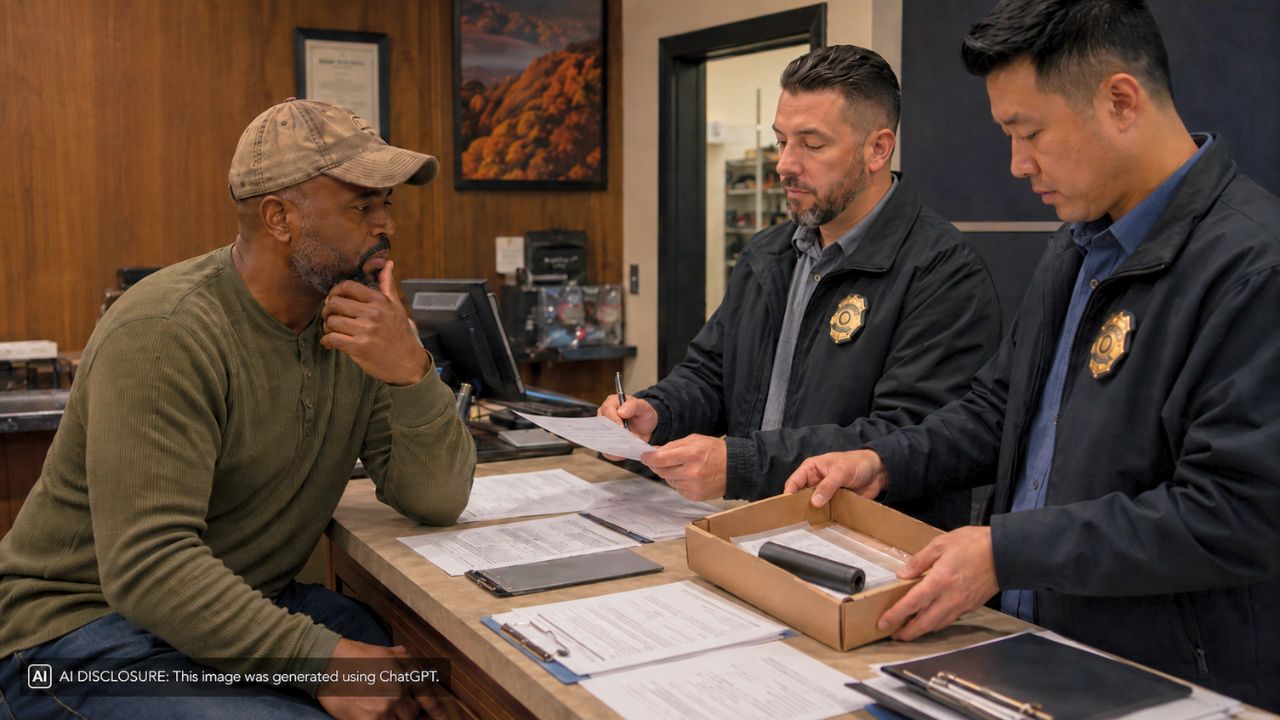
Photo credit: AI-generated image created using ChatGPT. Illustrative only
Buying a suppressor the right way is already a patience test. You pick the can, pay the money, file the paperwork, and then you wait—sometimes for most of a year—before you ever screw it onto a rifle. For one gun owner, the wait didn’t end with an approval email. It turned into a months-long limbo after federal agents took the suppressor during a compliance-related visit tied to the dealer.
In the original post, the owner laid out a timeline that’ll sound familiar to anyone who’s lived through the NFA process, right up until the part where it goes sideways.
A normal Form 4 timeline—until the handoff
According to the account, the suppressor was a TBAC (Thunder Beast Arms Corp.) purchased through Silencer Shop on December 1, 2022, on a Form 4. The approval came through on August 11, 2023—about eight months later, which is right in the range many folks have seen depending on the era and method of filing.
That approval is usually the finish line. In most cases, you head to your dealer, fill out the final transfer paperwork, and walk out with your suppressor the same day. But this story got stuck at the exact moment the buyer should’ve been scheduling pickup.
The dealer said he was closing the storefront and “waiting on ATF”
The buyer contacted the shop—identified as Spec Dive Tactical—and the owner reportedly said they were closing the brick-and-mortar location and moving operations to his house. The dealer’s message, as relayed by the buyer, was that they were “just waiting on ATF to sign the paperwork” and he’d be in touch.
What followed was a familiar kind of slow fade that makes any gun owner uneasy: check in, get the same answer, wait a while, check in again. After a few months of this, the buyer said the dealer eventually went quiet and stopped responding.
That’s the point where most of us would start worrying—not just about money, but about where the serialized item actually is and whether it’s still logged the way it’s supposed to be.
A call to ATF brought the real surprise: the suppressor had been seized
After repeated attempts to reach the dealer, the buyer said he called ATF directly. That’s when he was told the suppressor had been seized as part of an investigation into the dealer. He also said he was given no timeline for when he’d be able to pick up the can.
He added that this had already been dragging on for six months by the time he posted. That’s six months after learning it was seized—on top of the original approval wait—meaning this suppressor was paid for and approved, but still not in the owner’s possession.
For hunters and shooters who use suppressors for hearing protection, recoil reduction, and better communication in the field, that’s not just an inconvenience. It can mean missed seasons, canceled range plans, and a pile of gear sitting at home that the suppressor was intended to pair with.
Why this kind of situation hits gun owners hard
If you’ve ever bought NFA items, you know the whole system is built around controlled possession and paperwork trails. The buyer did what the law requires: file the Form 4, wait for approval, and plan to take delivery through the licensed dealer who had the item in inventory.
But when the dealer’s business changes—closing a storefront, moving locations, or otherwise disrupting normal operations—you can end up caught in a gap between what’s approved on paper and what’s physically sitting in a safe. And once an investigation enters the picture, normal timelines go out the window.
The frustrating part for gun owners is that none of this is tied to misuse of the suppressor. The suppressor wasn’t out being shot illegally, and the buyer wasn’t trying to cut corners. It was simply tied to a dealer who, for whatever reason, ended up under scrutiny.
The practical options most folks look at in limbo
The buyer’s post was essentially a request for “has anyone dealt with this, and what do I do next?” While the post itself doesn’t list a final outcome, it points toward the same real-world checklist most experienced NFA owners start running when a transfer goes off the rails.
First is documentation. Not in a dramatic way—just the basics you’d want in any regulated transfer: receipts, order confirmations, your approval details, serial number information if you have it, and any emails or messages with the dealer. When you’re dealing with government agencies or a business that’s gone dark, the guy with clean paperwork usually has the best chance of getting traction.
Second is contacting the right parties in the right order. The buyer already did the biggest step—calling ATF to confirm what happened. In situations like this, gun owners often also keep Silencer Shop (or whichever distributor facilitated the transaction) in the loop, because those companies have compliance departments and a strong interest in getting customers made whole or at least informed.
Third is patience paired with persistence. Nobody wants to hear “keep calling,” but in any slow-moving administrative situation, regular follow-ups—calm, professional, and consistent—are sometimes the only way to prevent your case from being treated like a dusty box on a shelf.
Finally, some owners will consult an attorney who understands firearms law. Not because they’re looking to pick a fight, but because a lawyer can often help identify which office has responsibility, what the likely process is, and how to communicate without getting jerked around. That’s especially true when a seized item is involved and the owner is simply trying to take lawful possession of his own property.
The biggest lesson: the dealer matters as much as the suppressor
This story is a good reminder that when you buy a suppressor, you’re not just choosing a brand and model—you’re choosing the shop that’ll hold that serialized item while the government takes its time. Most dealers do it right. They answer the phone, keep clean books, and treat NFA transfers like the serious thing they are.
But if a shop is unstable—moving locations, closing unexpectedly, or giving vague answers for months—it can put the customer in a bind even if the customer did everything correctly. Before you start a Form 4, it’s worth asking basic questions: Who’s the responsible person for NFA transfers? What happens if the store changes ownership or moves? How do they handle approvals that come in after a major business change?
The buyer in this case summed it up in plain terms: it was a rodeo. And for outdoorsmen who just want a quieter rifle and a legal setup for the range or the deer woods, that’s the last thing anyone expects after finally seeing “approved.”
Like The Avid Outdoorsman’s content? Be sure to follow us.
Here’s more from us: