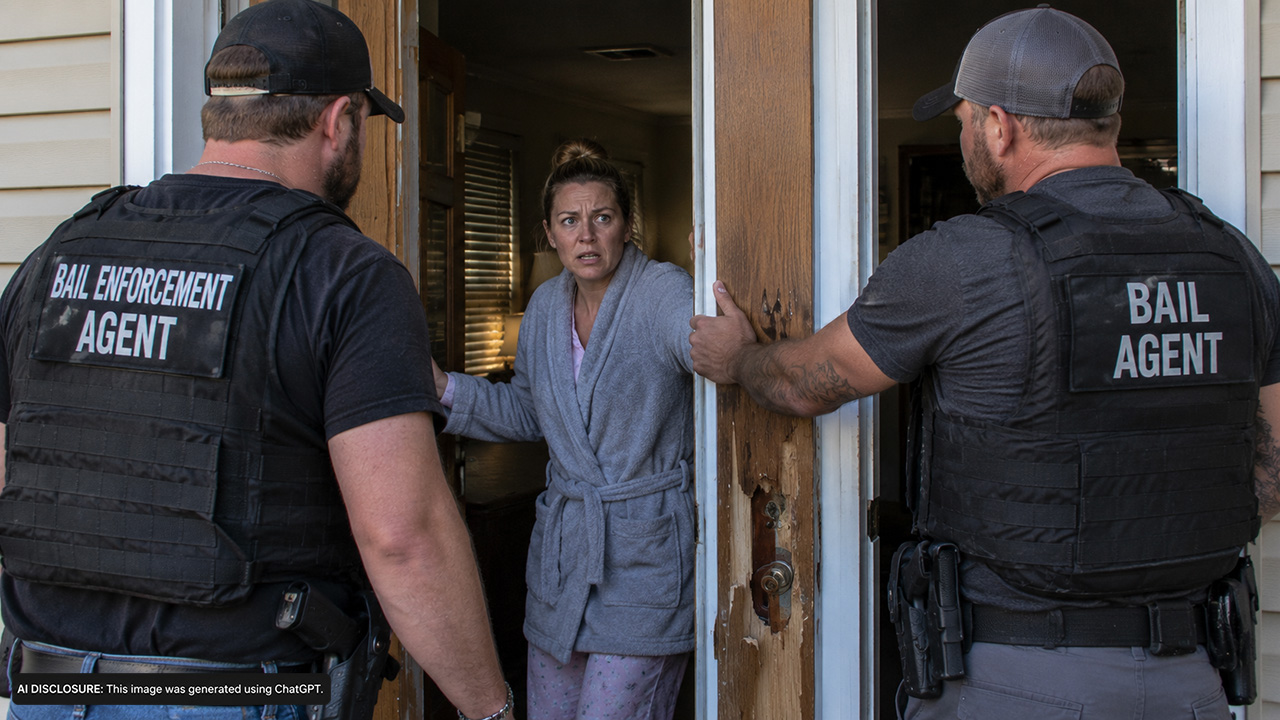
Photo credit: AI-generated image created using ChatGPT. Illustrative only
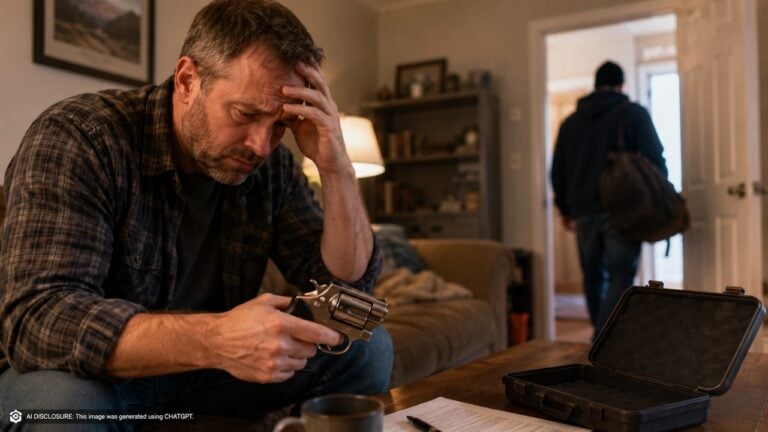
It’s one thing to get a late-night knock when a deputy is trying to sort something out. It’s another to have a private bail enforcement agent bust glass out of your back door at 11 p.m. and start sweeping your house like it’s his property.
That’s the situation one Michigan homeowner described in the original post: a bounty hunter searching for her 42-year-old son allegedly forced entry, claimed “probable cause” because he said he saw the man through a window, and then searched the home anyway—despite her saying her son wasn’t there and that she had nothing to do with his bond.
A decades-old address turned into a present-day target
According to the homeowner, the bail bonds company got her address off an old driver’s license tied to her son—an address where he lived 10 years ago. She says she didn’t even know he was in trouble until a bounty hunter showed up looking for him.
The scary part for a lot of rural folks is how familiar that sounds: an old record, an outdated address, and suddenly your place is treated like the obvious stop. If you’ve got family that’s been in and out, or buddies who used your address years back, you can see how quickly “old paperwork” becomes “current problem.”
The forced entry happened after she didn’t answer the door
In her account, this wasn’t the first visit. She says the agent had already come to the home multiple times and “bullied his way in” to search. This time, she didn’t answer the door—and the agent allegedly broke the glass in the back door to get inside without permission.
Once in, she says he searched through the home and even went into the attic, apparently looking for some hidden space. She describes the mess you’d expect from a broken door: glass pieces everywhere and tracked through the house.
Law enforcement’s response left her feeling boxed in
She called 911 and spoke with a deputy who responded. What she says she was told is where the tension really spikes: that police couldn’t come onto the property without a search warrant, but that bounty hunters “have different rules,” and that breaking a door down could be allowed if the agent had probable cause.
In plain language, she walked away feeling like the one person who’s supposed to be safest in this situation—the homeowner—had the least control. She didn’t sign the bond. She didn’t invite anybody in. Yet she’s the one left cleaning glass and wondering if the next knock turns into another forced entry.
“Probable cause” became a simple claim: “I saw him through the window”
The agent reportedly told her he saw the fugitive through a window and that this gave him the right to enter. She says her son wasn’t there, despite the agent insisting he was and even calling her a liar.
This is the kind of thing that makes homeowners uneasy, especially in the country where response times can be long and families handle a lot themselves. If “I saw him” is all it takes, and it’s one person’s word against yours, it creates a dangerous dynamic—one where a determined stranger can justify escalating right up to forced entry.
The homeowner’s real questions were about boundaries, not hiding anything
She wasn’t asking how to shield a criminal. Her questions were the kind most decent folks would ask: Can I refuse to answer the door? Do they have to leave? If he comes back, do I have to let him in again? Is this harassment?
She also said the agent claimed he’d “eat crow” because her son wasn’t there, and promised to replace the door. But she made it clear she doesn’t want the agent back on her property at all. The bigger issue wasn’t just the busted door—it was the repeated intrusion and the stress of waiting for the next visit.
Where this hits home for landowners: safety, documentation, and de-escalation
Even without getting into a legal weeds lecture, there are a few practical truths here that matter to anyone who owns a home, especially outside city limits. First, forced entry by anyone who isn’t clearly law enforcement can go sideways fast. People protect their homes. People wake up confused at 11 p.m. And misunderstandings in a doorway can turn into tragedy.
Second, if a bail enforcement agent is showing up repeatedly, you need a paper trail and a camera trail. From a boots-on-the-ground standpoint, outside cameras, a saved timeline of each visit, the bond company’s information, and the incident report from each 911 call all matter. If you ever have to prove a pattern—damage, intimidation, repeated searches—your word plus a notebook and video is a lot stronger than your word alone.
Third, avoiding a confrontation is the smartest move even when you’re in the right. This homeowner did what most people would do: she called 911. When emotions are high and someone’s forcing entry, nobody wins a shouting match in a hallway. Creating distance, getting law enforcement on the phone, and focusing on documenting what happened keeps things from spiraling.
What makes her story hard to read is the helplessness between visits. You can lock your doors, keep your place tidy, and still have a stranger show up saying he has authority over your threshold. For hunters and gun owners, it’s also a reminder that “home defense” isn’t just hardware—it’s planning, communication, and knowing who you’re dealing with before you make a move you can’t take back.
If this situation is as she described it, she’s not just dealing with a broken door. She’s dealing with repeated, late-night invasions of her privacy and the fear that the next “search” could get somebody hurt. No one should have to live in that kind of waiting game in their own home.
Like The Avid Outdoorsman’s content? Subscribe to our newsletter so you never miss an article.
Here’s more from us: