Photo credit: The Avid Outdoorsman
A North Carolina landowner said the problem started on a wooded back lot behind his home. He and his wife had bought the place two years earlier, and the property came with two lots. The front lot held the house and sat inside city limits. The back lot was about two acres of uncleared woods in the county, bordered by more woods, residential homes, and a horse farm.
The landowner said he cared about the property as more than unused brush. He described himself as a nature conservationist and had been working the land to help certain trees grow while feeding wildlife. He also had a trail camera mounted high in a tree so he could watch animals moving through the back of the lot.
Then the camera disappeared.
According to his Reddit post, he went out one night to change the camera batteries and noticed the camera was gone. He also saw signs that someone had used a climbing-style deer stand on the same tree where the camera had been mounted. Since the camera had been around 15 feet up, he wondered whether the stand had been used to reach it.
At first, he gave the situation some room for doubt. It was nighttime, and he thought maybe he was turned around or looking in the wrong place. So he went home and came back the next day to check again.
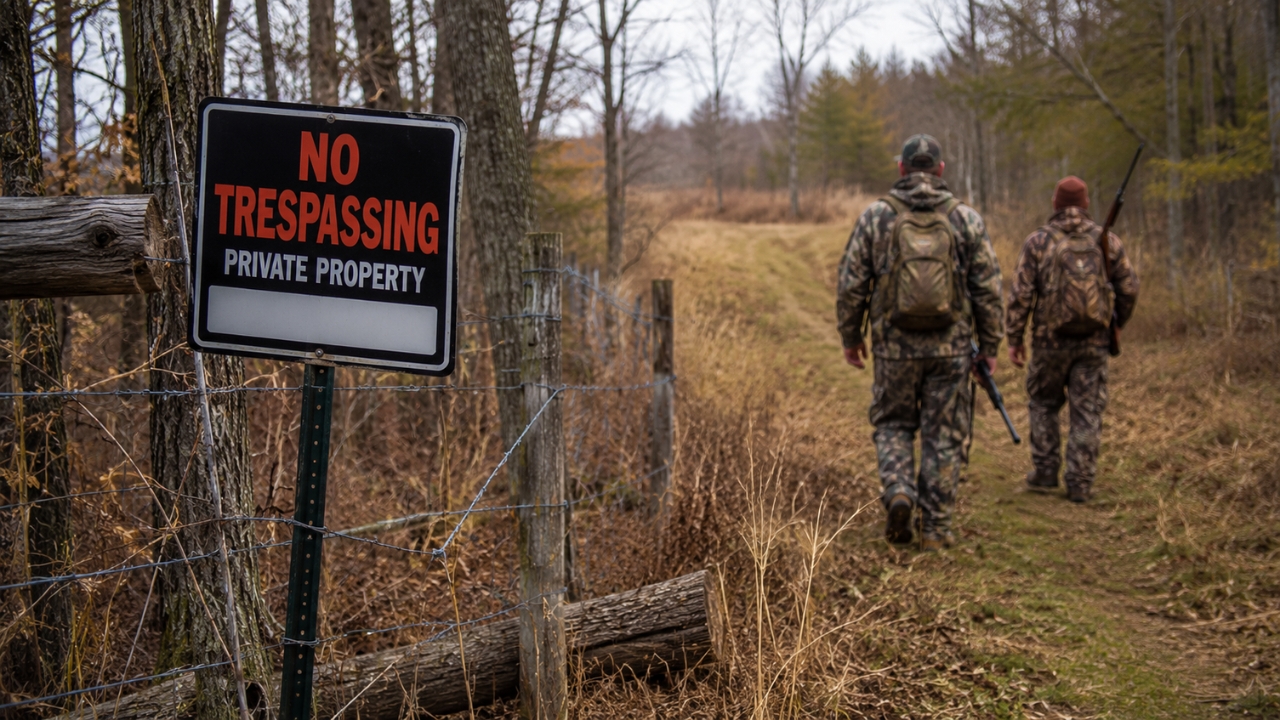
This time, he brought a rifle with him because he believed someone might be actively stealing from his property. When he got back to the camera spot, the camera still was not there. Instead, he found a man in full camouflage walking across the property. The landowner said the man was not wearing blaze orange.
The original Reddit post can be found here: https://www.reddit.com/r/legaladvice/comments/18fbsmw/neighbor_trespassing_and_hunting_on_my_property_nc/
The landowner recorded the interaction and asked the man what he was doing hunting on his land. The man said he had permission from the owner of the woods to the west. He also said he lived on the nearby horse farm.
To prove it, the hunter called the woman who owned the western woods. According to the landowner, she claimed she had given him permission to hunt “all the way to the creek.” The problem was that the creek was the landowner’s eastern property line, meaning the hunter had allegedly been given permission to use land she did not own.
The landowner handled it calmly. He said he showed the man the property line, walked it with him, and pointed out the corners. The hunter apologized and said he would not come back onto the property. He also denied taking the missing camera.
At that point, the landowner thought the whole mess might be over. The hunter had been shown where the line was. The western landowner had been corrected. The camera was still gone, but at least there seemed to be a clear conversation.
Then the next morning came.
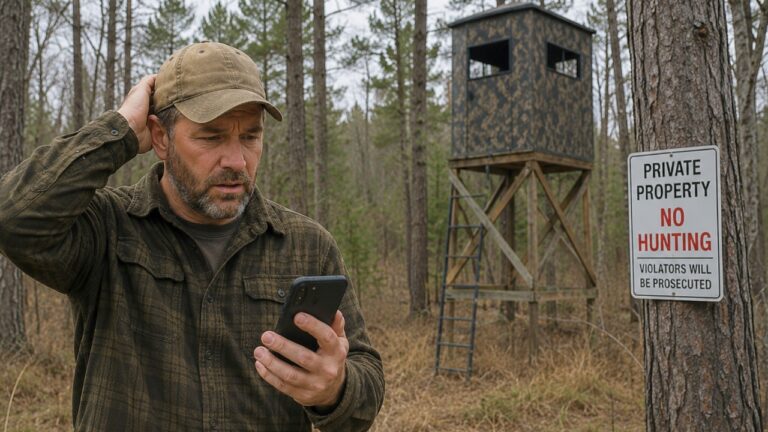
After spending the previous day cleaning up the back lot with heavy equipment, the landowner woke up to find “No Trespassing” and “No Hunting” signs nailed to trees along the wooded line in his backyard. He said the signs were placed along the dividing line between his front lot and back lot, and also along the west side of his front lot. Because of that, he believed the woman who owned the western woods had come onto his property and posted the signs herself.
That changed the situation again. This was no longer just a hunter who misunderstood where he was allowed to go. The landowner believed his neighbor was acting like his land belonged to her, even after he had a legal survey, marked corners, purple paint on trees, and his own no-trespassing signs.
He had already tried calling the game warden. According to the post, the game warden told him that because there was no active violation happening at that moment, he should call the sheriff. When he called the sheriff, he said he was told there was nothing they could do unless he caught someone actively trespassing with intent to harm or steal.
That left him stuck. He wanted to put up another camera, but he worried it would disappear like the first one. He wanted the neighbor and anyone she sent over to stay off his land. But he also felt like the usual channels were giving him nowhere to go unless he caught someone in the act.
Commenters focused heavily on documentation. Several told him to use a hidden camera pointed at a more obvious camera, so if someone stole or tampered with the visible one, the hidden one might catch it. Others suggested cellular trail cameras that upload photos immediately, so the evidence is saved even if the camera disappears.
A North Carolina lawyer in the comments pointed him toward the state’s landowner protection rules and purple paint markings. The advice was basically to make sure the property markings complied with the law and then make sure law enforcement understood that hunters on properly marked land without permission could be cited or arrested.
Other commenters suggested sending the neighbor a certified letter with the survey, property description, and possibly an aerial map or overlay showing the boundaries. That way, if the dispute ever went to court, the landowner would have proof that the neighbor had been clearly told where the property line was.
Some people also told him to remove the signs the neighbor allegedly placed on his land. Their view was simple: if they were on his property, they were not her signs to put there. A few suggested fencing, steel posts, more no-trespassing signs, and anything else that would make the boundary harder to ignore.
The landowner added in the comments that talking to the neighbor had not helped in the past. He said previous attempts to communicate had been met with hostility or rumors around town. When he tried explaining the property line during the hunter incident, he said the woman responded that she did not really know or care where the lines were and told them to work it out among themselves.
By the end, the landowner was not just dealing with one missing camera or one hunter crossing a line. He was dealing with a neighbor who, according to him, had been giving people permission to use land she did not own, posting signs on property that was not hers, and refusing to take the boundary seriously even after a survey.
Like The Avid Outdoorsman’s content? Subscribe to our newsletter so you never miss an article.
Here’s more from us: