Photo credit: Theavidoutdoorsman.com
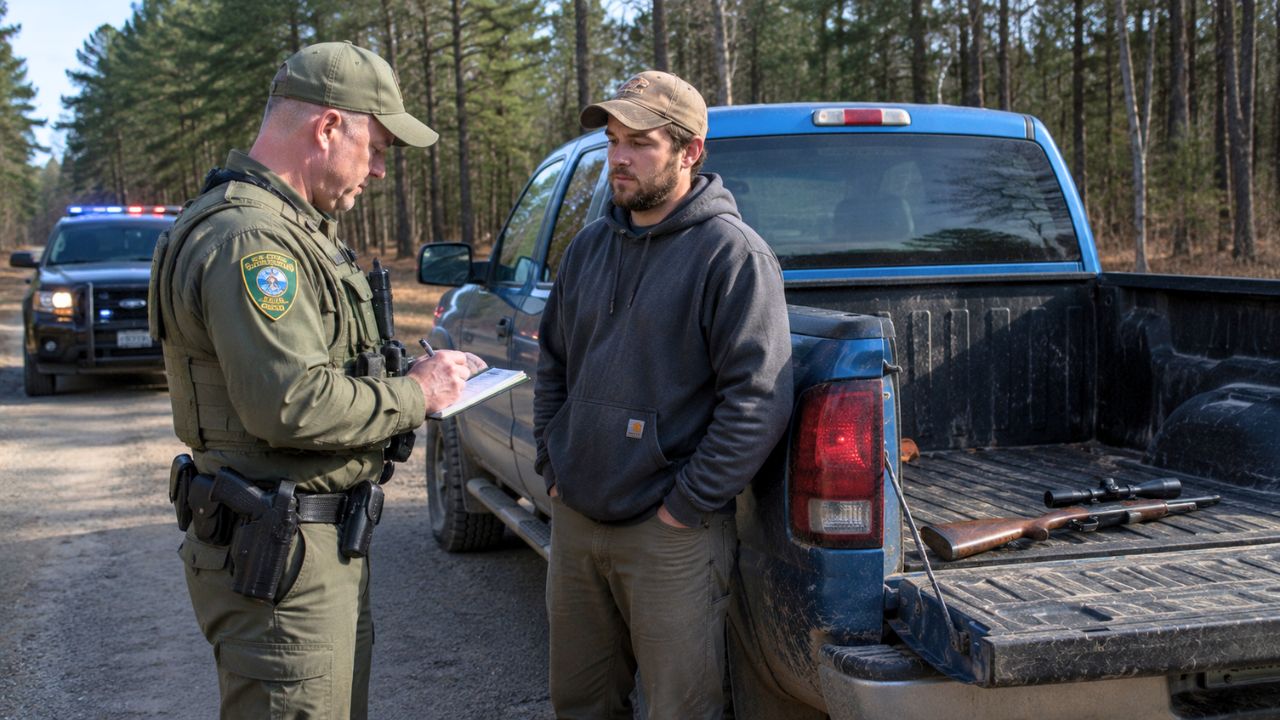
It started like a lot of roadside contacts do in hunting country: a dusty pickup eased onto the shoulder near a two-track, a hunter inside checking a map app and glassing a distant cutline. He wasn’t shooting. He wasn’t spotlighting. He was just sitting there with an unloaded rifle in the cab, headed for a buddy’s place to help drag a deer if the call came.
A game warden rolled up, the kind of quiet approach that makes you notice the badge after you notice the tires on gravel. The warden asked the usual questions—where he was headed, what he was doing, if he’d been hunting. Then the rifle came up.
The first contact was a “heads up” about transport laws
The hunter said the rifle was unloaded and pointed out there wasn’t a magazine seated. The warden still didn’t like seeing it within reach and treated it as a transport issue, not a poaching one. The warning was simple: move it to a case, put it behind the seat, or lock it up—get it out of the “ready position.”
That’s the part a lot of folks don’t appreciate until they’ve been stopped. “Unloaded” doesn’t always end the discussion. Many states—and plenty of local rules layered on top—care about whether a firearm is readily accessible in a vehicle, whether it’s cased, whether ammunition is attached, and whether you’re on a public road, a right-of-way, or private property.
The hunter thought “unloaded” was the whole ballgame
Like most regular outdoorsmen, he was operating on the rule of thumb he’d heard his whole life: if it’s unloaded, you’re fine. He wasn’t trying to be slick. He wasn’t trying to argue. He just believed he was already in compliance because he could show an empty chamber and no rounds in the gun.
The warden disagreed—politely at first. He reportedly explained that an unloaded rifle still can’t be carried in certain ways inside a vehicle, especially if it can be grabbed quickly from the driver’s seat. It’s not the kind of thing that gets taught at deer camp, but it’s the kind of detail that can make a normal day go sideways.
An hour later, the same truck got a very different response
About an hour after the warning, the warden returned and found the same pickup in the same general area. That alone changes the tone. Wardens see plenty of folks “just checking a spot” who end up being the same folks “just checking a spot” again and again, right where complaints come from.
When the warden looked inside again, the rifle was still accessible. Whether the hunter didn’t take the warning seriously, didn’t have a case, or simply didn’t understand what the warden meant by “secure it,” the result was the same. This time it wasn’t a warning. It turned into a weapons-related charge tied to how the rifle was being transported in the vehicle.
In the outdoors world, that’s the hard lesson: the first contact is often education. The second contact—especially on the same day, same stretch of road—often becomes enforcement.
Why “unloaded” doesn’t always protect you from a ticket
Hunters get tripped up here because different states define “loaded” differently. Some treat a firearm as loaded if there’s a round in the chamber. Others treat it as loaded if there’s a magazine inserted, even if the chamber is empty. Some go further and consider a firearm “loaded” if ammunition is in a fixed magazine or attached carrier, or if it’s immediately available in a way the law spells out.
Then there’s the separate issue of vehicle carry. Even with an empty rifle, some places require it to be cased or in a closed compartment while on a roadway. Some restrict having long guns in the passenger area at all. And some add hunting-specific rules about guns in vehicles during certain seasons to prevent road hunting and “drive-and-shoot” behavior.
That’s why you’ll hear old-timers say, “Case it and you won’t have problems.” It’s not because a case is magic. It’s because a case usually satisfies the “not readily accessible” standard and removes any doubt from an officer’s perspective.
What other outdoorsmen focused on: access, attitude, and “truck gun” habits
Any time a story like this makes the rounds at the feed store or online, the same arguments pop up. One group says the warden was being too aggressive over a rifle that wasn’t loaded. The other group says the warden gave a clear instruction, and the hunter ignored it.
A lot of the discussion ends up circling around “truck gun” culture—folks keeping a rifle in the cab because they’re on a ranch, they deal with coyotes, or they’re driving between properties. In real life, plenty of people do it. Legally, it’s not always simple, especially when you transition from private land to public road, or from your own place to someone else’s.
Commenters also tend to focus on how the hunter handled the interaction. Wardens are law enforcement with a conservation mission, but they’re still law enforcement. If a warden gives a warning and a specific corrective action, the best move is to comply immediately and document that you did—put the rifle in a case, move it to the bed, lock it, whatever is lawful where you are. Debating it on the shoulder rarely improves your day.
The practical takeaways if you keep a rifle in your vehicle
This is one of those situations where being “safe” and being “legal” overlap, but they aren’t identical. Safe is keeping the chamber empty and the muzzle controlled. Legal might require a case, a locked container, separation from ammo, or placement where it can’t be reached from the driver’s seat.
If you want to avoid this headache, there are a few common-sense habits that work almost everywhere: keep the rifle cased when traveling, keep it out of the passenger area if you can, and don’t leave it visible in the cab at a roadside stop. If you need a working rifle for predator control on your own land, consider a dedicated hard case and a consistent storage spot so you’re not improvising based on convenience.
And if you get a warning, treat it like it matters—because it does. A warning is often the warden telling you, “Fix this before it becomes a charge.” When the same officer circles back and sees the same problem, it’s hard to argue you didn’t have a chance.
Most hunters aren’t out there trying to skirt the rules. They’re trying to get to the woods, handle business, and get home. But transport laws are one of those areas where assumptions cost money, time, and sometimes your ability to hunt while the paperwork gets sorted out. In truck-and-gun country, it pays to be boring: case it, stow it, and keep the roadside contacts short.