Photo credit: dotshock/Shutterstock.com
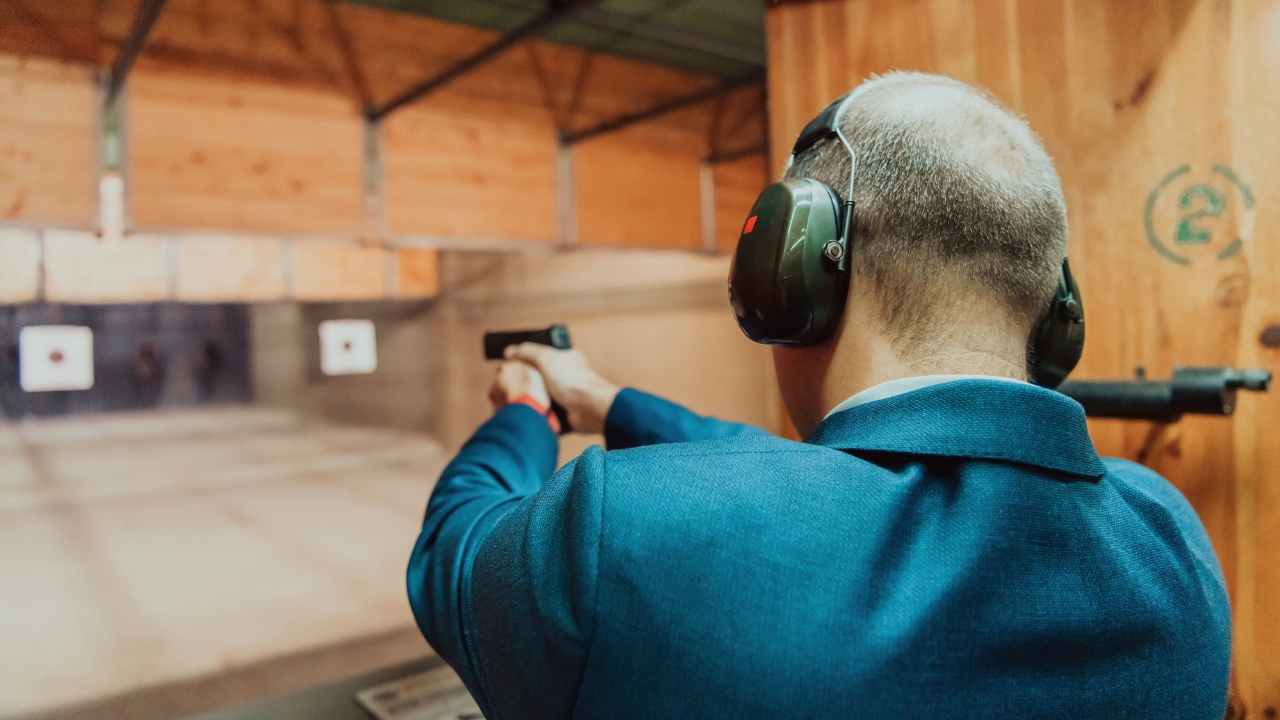
Every live‑fire session gives you a choice: burn ammo on autopilot or use targeted drills that stress your gear and your decision‑making until the weak points show. When you deliberately push your magazines, springs, and technique to the edge of failure, you find problems on the clock instead of in a crisis. The right gun range drills turn “practice” into a structured audit of your equipment and your habits.
To do that, you need more than static bullseye work. You need exercises that force rapid transitions, hard reloads, and honest diagnostics so you can see where weak springs, weak mags, and weak habits are hiding. The following sections walk through specific drills and routines that expose those flaws and give you a plan to fix them.
Why diagnostic drills matter more than round counts
Simply firing a high round count does not guarantee progress if you never test yourself under pressure or track what breaks down. Purpose‑built shooting drills are designed to Enhance Your Shooting Skills by combining accuracy, speed, and decision‑making so you can see exactly where performance falls apart. When you run structured Shooting Drills that demand accurate, rapid shots under stress, weak fundamentals and unreliable equipment stop being theoretical and start showing up as misses and malfunctions.
Good diagnostic work also means slowing down enough to understand why a shot missed or a gun choked. Video analysis like the session titled Why Did I Miss uses a Deep Diagnostic of a Rapid Shot Drill to show how Many classic errors only become obvious when you study them frame by frame at about 240 frames per second. You may not film every range trip, but you can borrow the same mindset: treat each drill as data, not just noise, and look for patterns in where your shots land and when your gun fails to run.
Dot‑size accuracy drills that punish sloppy habits
Small‑target accuracy work is brutal on bad habits because there is no room for error. The Dot Torture Drill is often presented as a simple sheet of circles, yet it is a comprehensive exercise that forces you to manage sight alignment, trigger control, and transitions at close range. One range guide notes that the Dot Torture Drill may appear simple, but it challenges even experienced shooters because it demands discipline through every shot string instead of letting you hide in a big group.
Precision work does not have to be complicated to be effective. A classic example is the Brass on The Front Sight drill, where you balance a casing on the front sight and press the trigger without letting it fall. One training resource describes how One popular drill called Brass on The Front Sight, After you completely unload your weapon, forces you to refine trigger control so your sight picture stays steady like it will need to be in real life. When you combine that kind of dry‑fire precision with live‑fire dot work, any flinch, anticipation, or grip inconsistency becomes obvious long before you start shooting fast.
Speed and transition drills that stress magazines and reloads
Once your accuracy holds up on small targets, you need drills that add speed, transitions, and reloads so your magazines and springs are tested under realistic pressure. The El Presidente Drill is a classic example: you face away from three targets, turn, draw, and engage each one with multiple rounds before performing a reload and repeating the sequence. Training material explains that The El Presidente Drill helps improve your shooting under pressure, accuracy, and reloading speed, which means it is ideal for exposing magazines that do not feed cleanly when you are moving fast.
Short, focused reload drills are equally revealing. One experienced‑shooter program recommends a 1‑Reload‑1 format where you Set up your target at five to ten yards, Load your magazine with one round, and have a full magazine ready. The standard is to complete the Reload Drill within three to five seconds, which forces you to seat the mag firmly and get back on target without fumbling. When you run this repeatedly with every magazine you own, any unit with weak springs or damaged feed lips will start to show failures that you can track and address.
Deliberate malfunction testing to catch weak springs early
Waiting for a failure to appear in a match or defensive encounter is a poor way to discover that a magazine spring has given up. You are better off building specific tests into your range routine that stress the feeding cycle and the slide lock. One detailed account of pistol malfunctions notes that The weak magazine springs could not push the cartridge up into the correct position for chambering before the slide moved forward, which led to repeated stoppages. That kind of failure often appears only when the gun is cycling quickly, so you need drills that keep the pace brisk while you watch for inconsistent feeding.
A simple but effective protocol is to Load all magazines with two rounds, Lock the slide open, Seat the mag, and Fire the gun until it locks back again. One reliability routine explains that when you Load, Lock, Seat, Fire the sequence across every magazine, you quickly see which ones fail to lock the slide or feed both rounds. If a mag will not reliably cycle two rounds and lock back, it is a strong indicator that the spring is tired or the body is damaged, and you can mark it for repair or retirement before it costs you a critical string.
Maintenance checks that keep springs and mags honest
Even the best drills cannot compensate for neglected hardware, so you need a maintenance routine that treats magazines as consumable, trackable parts. Detailed guidance on magazine care shows how the AR‑15 magazine is disassembled by depressing the retaining pin and sliding off the base plate so you can inspect the interior and the spring. That same source warns that one of the most common issues is a weakened magazine spring, which you can catch only if you periodically clean and examine your gear using a method similar to the Dec magazine maintenance process.
Tracking individual magazines is just as important as cleaning them. One practical tip is to Number your magazines so you can spot patterns in failures and retire problem units. A training resource suggests that Number is easily handled with pre‑cut grip tape, and that One simple label from Dawson Precision and similar suppliers lets you know which mags you carry (and match day) so you can log any issues. When you follow that Number your magazines approach and combine it with your drills, you are no longer guessing which spring is weak or which body is out of spec.
Dry‑fire structure that exposes trigger and draw problems
Dry‑fire is where you can safely push repetition and diagnostics without burning ammunition, as long as you treat it with the same structure as live‑fire. One video on Best Dry Fire Drills To Increase Your Accuracy walks through how you can run many of the same sequences loaded or unloaded, emphasizing that you should handle the weapon and any shield or gear exactly as you would on the range. In that demonstration, the instructor notes that you could do it loaded as well, so you have a weapon and a shield plus realistic handling, which shows how Nov dry‑fire work can mirror live‑fire demands when you are disciplined about safety.
Structured programs help you avoid aimless clicking. One defensive‑shooting manual highlights how DETAILED DESCRIPTIONS allow you to easily replicate drills and how CLEAR EXPLANATIONS of the purpose of each drill help keep your skills sharp. When you follow a plan like the one in DETAILED DESCRIPTIONS, you can build dry‑fire sessions around specific goals such as smoothing your draw, refining your trigger press, or practicing reloads with dummy rounds so that weak habits are corrected before they ever show up in live‑fire.
Timed performance drills that reveal recoil and grip flaws
Once you add a timer, your grip and recoil control are either solid or exposed. A structured Recoil Management Test focuses on fundamentals instead of raw speed, emphasizing what one instructor calls performance shooting. In that context, the goal is to maintain a firm handshake‑style grip so the gun tracks predictably, and the Recoil Management Test becomes a way to see whether your sights return to the same point after each shot or wander because your hands are inconsistent.
Comprehensive drills like the Bill Drill take that idea further by combining speed, recoil control, and accuracy on a single target. One training academy notes that What makes the Bill Drill valuable is that it reveals weaknesses instantly: if your grip is inconsistent, your shots will drift, and if your trigger control is sloppy, your group will spread. When you run the What Bill Drill on the clock, you quickly see whether your fundamentals hold up under pressure or whether you need to revisit slower dot‑size work and dry‑fire before pushing the pace again.
Range‑safe malfunction and restriction drills
Not every facility allows rapid fire or movement, but you can still build drills that stress your technique and your magazines within those limits. One community discussion on restrictive ranges suggests that you Load a magazine with a dummy or an empty case and a live round, Then load a spare magazine with other rounds so you can induce surprise malfunctions while staying within the rules. That approach, described by the user gunmedic, lets you Aug Load Then practice immediate action and reloads without spraying brass or hitting the roof and walls in a way that would upset staff.
Slow‑fire accuracy drills can also be structured to give you clear feedback. One training forum notes that if you are struggling with trigger control or your groups are loose, a particular drill will help you hone those groupings until you are punching a little hole in the paper. When you adopt that Sep training mindset, even a conservative indoor lane becomes a laboratory for diagnosing flinch, anticipation, and sight alignment errors, instead of just a place to make noise.
Data‑driven evaluation tools and magazine reliability checks
Modern training tools can turn your drills into hard data so you are not guessing about what went wrong. One pistol program emphasizes that Instead of guessing where you need work, the War HOGG Self Eval shooting drill uses two different sized targets, a shot timer, and specific standards to measure target transitions, split times, and speed reloads. When you incorporate the Instead of War HOGG Self Eval into your practice, you can track whether changes to your grip, stance, or gear actually improve your times and hit rates or simply feel better without measurable benefit.
Electronic sensors can add another layer of insight. A training device like the Mantis X10 Elite includes a mode that breaks down your draw into key phases, measuring the time it takes to grip the firearm, bring it to a horizontal position, and present it on target. That system highlights if any part of your draw is inconsistent or slow, and the description of how This mode breaks down your draw shows how technology can flag weak habits that are hard to feel in real time.
You can pair that with simple mechanical checks, such as recognizing that consistent failures to lock back after the last round, even in brand new guns and guns with 10,000 rounds through them, often point to spring issues as discussed in a 10,000 round reliability thread.
Rifle and detachable box magazine drills that mirror real use
Handguns are only part of the story, especially if you rely on rifles with detachable box magazines. One reminder for rifle shooters stresses that Magazine vary a LOT in terms of feed angles and lip friction, and that Your weapon is only as reliable as its magazine. The same discussion offers a simple test: Here is a method where you load the mag, insert it on a closed bolt, and send the bolt home to see whether it feeds smoothly, which you can adapt into a Jan Magazine LOT Your Here drill that you run with every detachable box magazine before trusting it in a match or defensive role.
Dynamic rifle drills can then layer on speed and target transitions. A comprehensive drill list notes that You will need three man‑sized targets set 1 meter apart, with the targets staged 10 meters from you, for an El Presidente Start that forces you to manage a high volume of rounds on multiple targets.
When you run that style sequence with your rifle, you are not only testing your shooting under pressure but also confirming that your magazines feed reliably when the gun heats up and your heart rate climbs. Combined with the earlier maintenance and numbering practices, these drills give you a complete system for exposing weak springs, weak mags, and weak habits long before they can hurt you when it counts.
Like The Avid Outdoorsman’s content? Be sure to follow us.
Here’s more from us: