Photo credit: PeopleImages/Shutterstock.com
A gun owner in Reddit’s r/guns described the kind of private-sale conversation that feels normal right up until one small suggestion changes the whole mood. He said he was trying to sell a firearm through a private transfer and had reached the point where a meeting should have been easy to arrange. Then he brought up meeting at a police station. According to his post, one buyer went silent after that, and the whole thing left him wondering whether getting ghosted the second you suggest a safer meetup spot is just part of the game now. The original Reddit thread is here: https://www.reddit.com/r/guns/comments/1sclxmz/private_saletransfer_ghosted_normal/. (reddit.com)
What makes a story like that hit is how ordinary the beginning sounds. Private gun sales tend to start with the usual back-and-forth about price, location, timing, and whether both people are serious. Nothing dramatic has happened yet. Nobody has shown up late. Nobody has done anything openly shady. But then one person introduces a simple safety measure, like meeting in front of a police station, and suddenly the other side vanishes. That moment changes everything, because it makes the seller start reading the silence backward. A buyer who seemed interested a minute ago now looks like someone who may have wanted a very different kind of meetup than the seller had in mind.
That is the uncomfortable part of these private-sale stories. Suggesting a police-station meetup is not some strange or aggressive move. For a lot of people, it is the cleanest possible way to keep a face-to-face transfer from feeling sketchy. It puts cameras around the transaction. It puts the exchange in a public place. It makes robbery, intimidation, and weird last-second behavior much less attractive. So when a buyer disappears the moment that location gets suggested, the silence starts to feel like its own answer. The seller may not know exactly what the buyer’s problem was, but he no longer has to wonder whether the police-station idea filtered out something he was better off avoiding anyway.
The thread turned on that exact question. Was the buyer just flaky, as plenty of online buyers are? Was he someone who hated the idea of being seen on camera near a gun sale? Was he nervous about police in general, even if he had no criminal reason to be? Or was the police station suggestion simply the point where a buyer with bad intentions realized the deal was not going to happen on terms he liked? The original post seemed to come from that unsettled middle ground where the seller could not prove anything, but also did not need much help seeing why the sudden silence felt suspicious.
That kind of uncertainty is part of what makes private-sale threads so messy. A seller rarely gets the satisfaction of knowing exactly why someone ghosts. All he gets is a pattern. A buyer is enthusiastic until the conversation turns toward a safe, visible, controlled exchange. Then nothing. No argument. No protest. No alternate suggestion. Just silence. It is exactly the sort of thing that makes someone feel like the deal did not fail because of logistics. It failed because one side was comfortable only as long as the transaction stayed more vulnerable than the other side wanted.
The comments around posts like this usually reflect that split between cynicism and practicality. Some people tend to shrug and say buyers ghost all the time for no reason worth overthinking. Others go harder and say that getting quiet once a police station enters the conversation is a giant red flag, especially when the product involved is a firearm. That second group usually sees the ghosting itself as useful information. You may not know what the buyer had in mind, but you know enough to stop missing him. If a public, camera-covered location is enough to kill the deal, then the seller probably just avoided a meeting that had a higher chance of going wrong.
There is also the broader carry-and-gun-culture reality hanging behind a story like this: a lot of people who are perfectly comfortable talking big through messages get much less enthusiastic once they realize the transaction is going to happen under bright lights instead of in a random parking lot. Some are probably harmless and just hate the optics. Some may not want any interaction that feels too close to law enforcement. Some may simply be unserious time-wasters. But the seller does not have to sort every one of those categories perfectly. Once a buyer disappears over the safest part of the plan, the seller is left with a simpler conclusion: this person was no longer worth meeting.
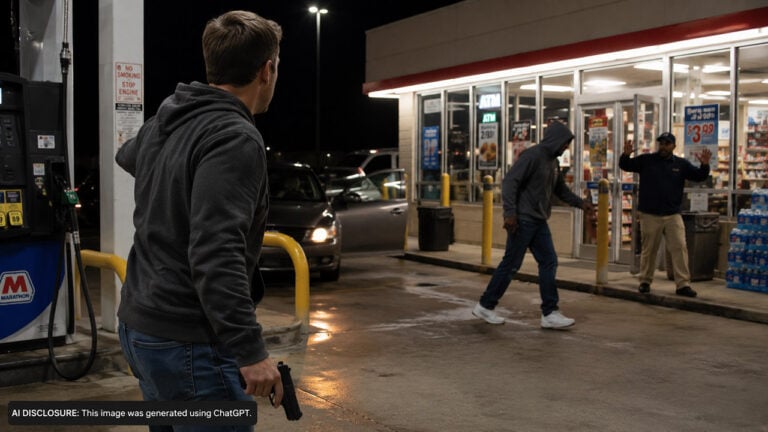
That is especially true with firearms because the downside of being wrong is not small. A bad meetup over some ordinary secondhand item can still be ugly. A bad meetup involving a gun introduces different stakes immediately. A seller is standing there with a valuable item, probably cash about to change hands, and a buyer whose real identity, intentions, or legal comfort with the transaction may still be murky. That is why so many experienced gun owners treat the meetup location as part of the screening process. The police-station suggestion is not only about safety on the day of the exchange. It is also a way of finding out how the other person reacts when the deal is pushed into the open.
The original post seems to live right inside that realization. The seller was not coming in with a dramatic robbery story or some wild scam attempt. He was describing a much quieter warning sign: the buyer who is all business until you mention the one location that should make a straightforward sale easier for honest people and harder for dishonest ones. Then the conversation dies. In some ways, that kind of ghosting is more unsettling than an outright argument because it leaves the seller doing the mental math on his own. Was the buyer offended? Spooked? Or caught?
Commenters on threads like this often end up treating police-station meetups as a baseline rule, not an overreaction. The logic is simple. If a buyer is legitimate and serious, he may not love the setting, but he can either agree or propose another equally public, camera-heavy option. If he simply vanishes, that tells you something too. A person does not have to confess bad intentions for the seller to decide the whole thing smells wrong. Sometimes the safest buyer-screening tool is just watching who loses interest when the transaction stops looking easy to exploit.
And that is where the story lands. A seller suggested a police station for a private firearm transfer, and one buyer stopped talking. There may never be a neat answer for exactly why. But for the seller, the silence probably did enough. In a private gun sale, the fastest way to find out who hates accountability is often to suggest the one meeting place where there is the most of it.