Photo credit: Sophon Nawit/Shutterstock.com
If you keep seeing your shots drift high and left, you’re not alone—and your gun probably isn’t broken. This is one of the most common impact patterns shooters run into, especially right-handed shooters with pistols. It’s easy to assume the sights are off or the barrel’s bad, but more often than not, it’s about how you’re handling the trigger and grip. Before you start swapping out parts or blaming the ammo, it’s worth understanding what your target’s actually trying to tell you.
Let’s break down what’s really going on when your gun hits high and left—and how to fix it.
You’re Slapping the Trigger Instead of Pressing
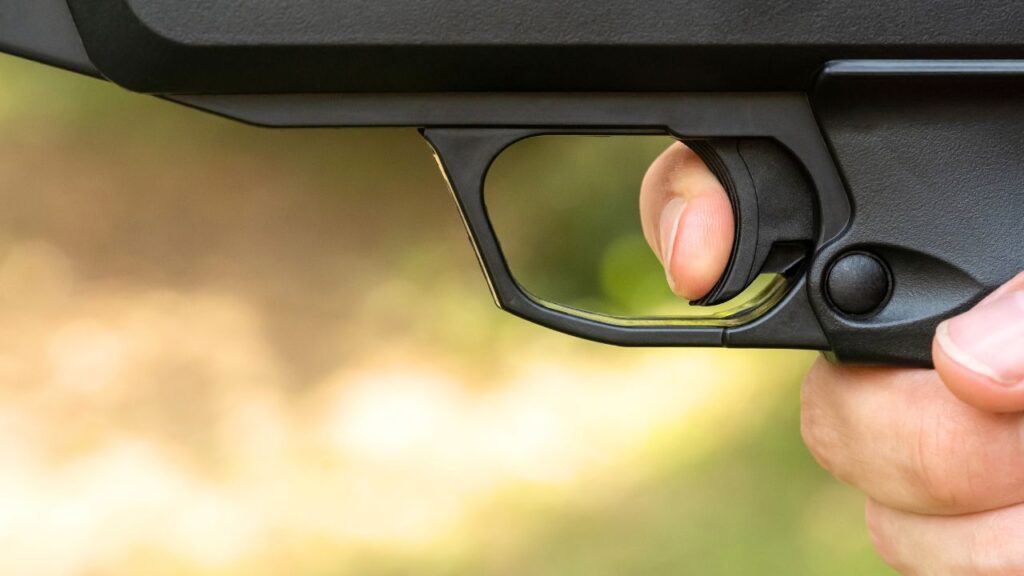
That quick, jerky pull can throw your shot off without you realizing it. Slapping the trigger usually causes the muzzle to shift, especially for right-handed shooters. That movement often pushes rounds high and left.
A smoother trigger press, where you add steady, even pressure straight back, keeps things more controlled. It doesn’t take much to throw your group off-center, especially with lighter pistols or snappier calibers. If you’re seeing a consistent pattern, check your trigger finger before anything else.
Your Trigger Finger Placement Is Off

If your finger’s too far in or not far enough, you’ll pull the gun without meaning to. Too much finger usually yanks the shot left. Too little might push it off to the right. The sweet spot is that middle pad of your finger—not the joint, not the tip.
It’s a subtle adjustment, but it makes a big difference in shot placement. Try dry firing a few times and watch for any movement in the front sight. If it jumps even slightly when the trigger breaks, that’s your cue.
You’re Over-Gripping With Your Dominant Hand

A tight grip isn’t always a good grip. When your dominant hand does all the work, it can torque the gun during the shot. That pressure—especially around the palm and thumb—can twist your aim and throw things left.
Try easing up just a bit and letting your support hand carry more of the work. It should be firm, but not tense. If your hand’s sore after a few rounds, that’s a good sign you’re muscling the gun too much.
Your Support Hand Isn’t Doing Enough

When your off-hand isn’t pulling its weight, your dominant hand can start to overcompensate—and that can lead to those high-left impacts. The support hand should wrap tight around the grip, with your thumb pointing forward.
This creates more stability and gives you better control of the recoil. The more balanced your grip, the less likely you are to twist the gun during the shot. Weak support grip is one of the most overlooked causes of inconsistent groups.
Your Sights Might Actually Be Off—But Check Last
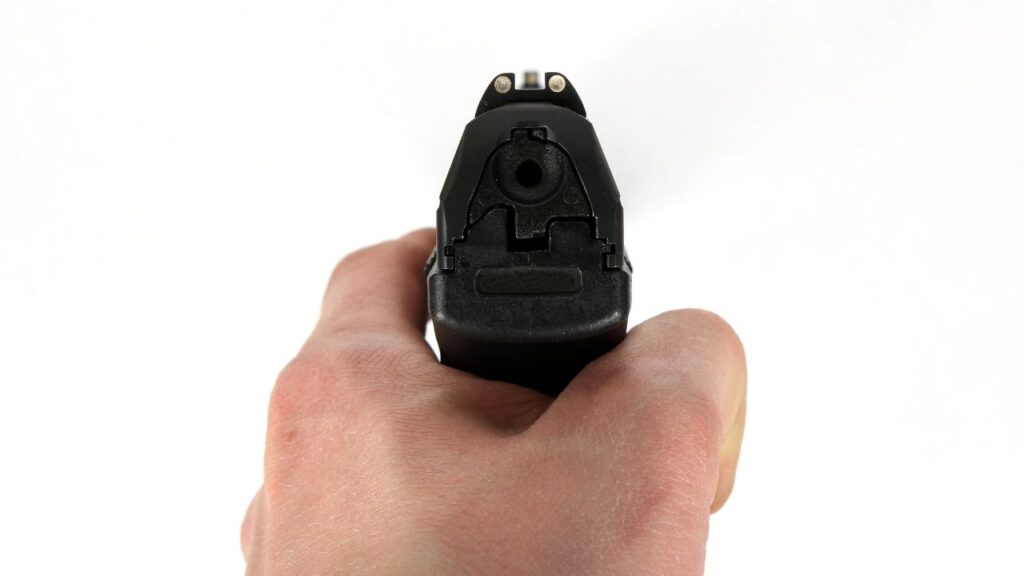
It’s easy to blame the sights, but unless you’re using iron sights that have taken a hit, it’s probably not the first place to look. Still, if you’ve ruled everything else out, sight alignment could be part of the problem.
Shoot from a rest if you’re unsure. That takes most of the human error out of the equation. If the gun still hits high and left with no movement on your end, then it’s worth adjusting the sights or getting them checked.
You’re Anticipating the Recoil
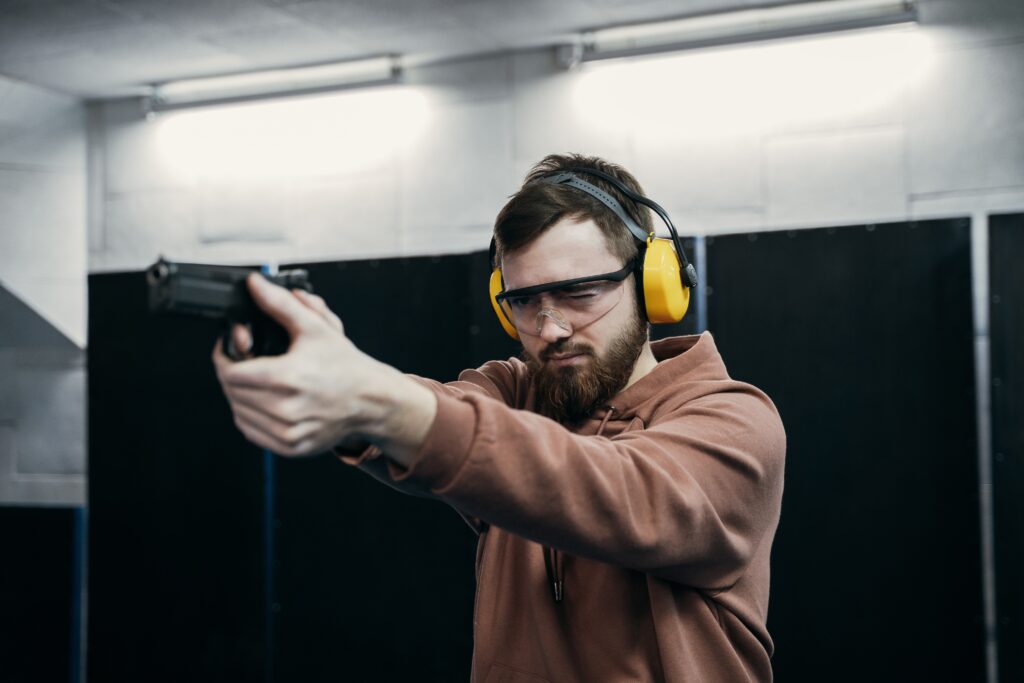
This one’s common, especially if you flinch a little before each shot. When you expect the bang, your body tenses and moves in reaction—usually before the round even leaves the barrel. That movement often pushes the muzzle upward and left.
A good way to test this is with dummy rounds mixed in your mag. When you hit one, you’ll see if your body’s reacting. It’s a humbling trick, but it shows you exactly what’s going wrong in real time.
You’ve Got an Inconsistent Trigger Pull
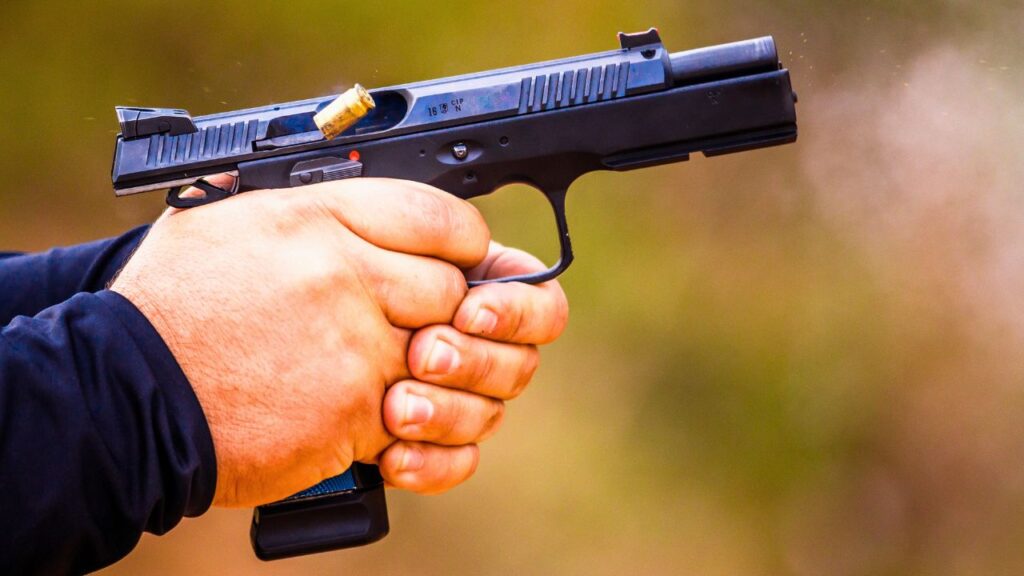
If your trigger pull changes from shot to shot, so will your groups. Some days you might be smooth, and others you might rush or hesitate. That lack of consistency shows up quickly on paper—usually in patterns like high and left.
Get in the habit of dry firing regularly. Build that muscle memory so every trigger press feels the same. A good pull isn’t just about pressure—it’s also about timing, direction, and repeatability.
You’re Using the Wrong Grip Angle for Your Hand
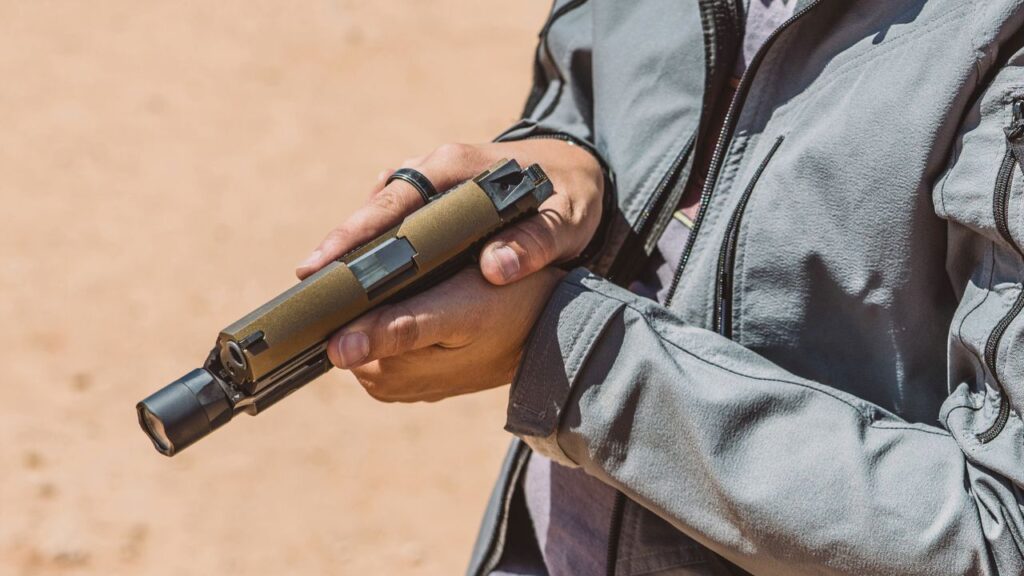
Not every gun fits every hand. Some grips force your wrist into awkward angles that change how you naturally pull the trigger. That weird angle can shift your aim slightly without you noticing, and over time, that pattern shows up on target.
Try adjusting your grip angle with aftermarket backstraps if your gun offers them. Or, switch to a gun with a grip that naturally points straight when you raise it. It’s not always about your technique—it could be a fit issue.
You’re Shooting Too Fast for Your Current Skill Level
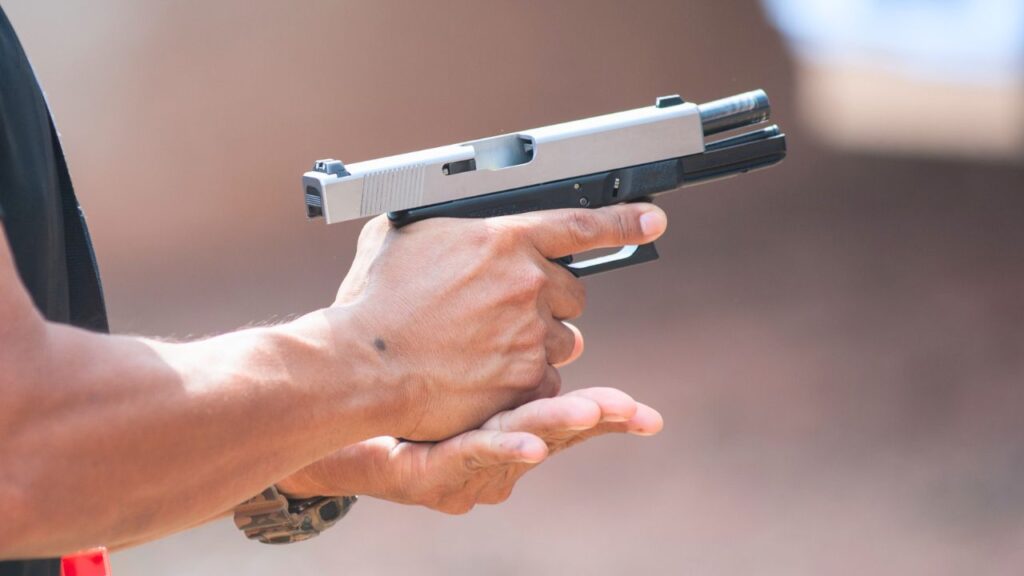
Trying to speed up before you’ve locked in good fundamentals can throw everything off. If you’re trying to keep up with a timer or match pace, you may start short-cutting your grip, trigger, or stance. That’s when rounds start landing off-center.
Slow it down. Focus on clean shots first. Once you can consistently hit your mark at a comfortable pace, then start pushing speed. Accuracy always comes before speed—otherwise, you’re training in bad habits.
Your Gun Might Be Too Light for the Caliber
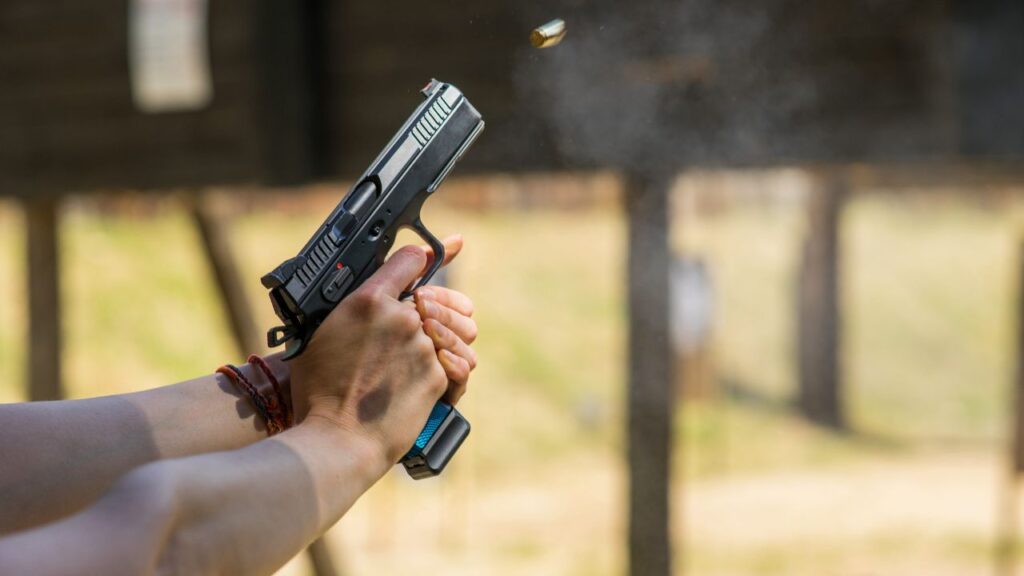
Some lightweight guns chambered in snappy calibers have more muzzle flip than you’d think. If the recoil impulse is too sharp for the frame, your shots may naturally drift high and left unless your grip and stance are locked in.
That doesn’t mean the gun’s bad—it means it demands more control. Try a heavier gun in the same caliber and see if your group tightens up. If it does, the problem might be the weight-to-recoil ratio more than your technique.
*This article was developed with AI-powered tools and has been carefully reviewed by our editors.