Photo credit: Boomstick Tactical/YouTube
The 1911 has been around for over a century, and it still shows up in nightstands across the country. Some folks swear by it for home defense, while others think it’s past its prime. If you’re thinking about relying on one to protect your home, it’s worth understanding both the upsides and the trade-offs before making that call.
Proven Track Record

The 1911 has been around since, well, 1911. It’s seen action in two world wars and countless hands since. That kind of staying power says something about how reliable and capable it can be when it matters.
For home defense, there’s a certain confidence that comes with using a firearm that’s been trusted for over a hundred years. You’re not taking a gamble on some untested platform—it’s already earned its stripes.
Crisp Trigger for Accurate Shots

One thing the 1911 does really well is its trigger. That short, clean break helps with shot placement, especially in high-stress situations where flinching and jerking can mess you up.
In a home defense scenario, being able to get accurate hits quickly matters. A smooth trigger like the one on most 1911s makes it easier to stay on target when adrenaline’s pumping.
Single-Stack Comfort

The 1911’s single-stack design makes it slim and easy to grip. For folks with medium to smaller hands, it’s more manageable than some of the double-stack options on the market.
That can make a big difference if you’re sharing the gun with a spouse or older family member. Being able to hold and control the gun properly is just as important as caliber or capacity.
Soft Shooting .45 ACP

Despite its caliber, the 1911 can be surprisingly easy to shoot. The weight of the steel frame helps soak up recoil, making the .45 ACP more manageable than folks expect.
That means faster follow-up shots and less fatigue if you’re training regularly. And let’s be honest—having a soft shooter that hits hard isn’t a bad combo for home defense.
Tons of Aftermarket Support

If you want to upgrade your 1911 for home use—night sights, better grips, a light rail—you’ve got options. It’s one of the most supported platforms out there.
That kind of flexibility lets you tailor the gun to your home defense needs. Whether it’s adding a weapon light or customizing the safety, you’re not locked into one setup.
Low Capacity Compared to Modern Pistols
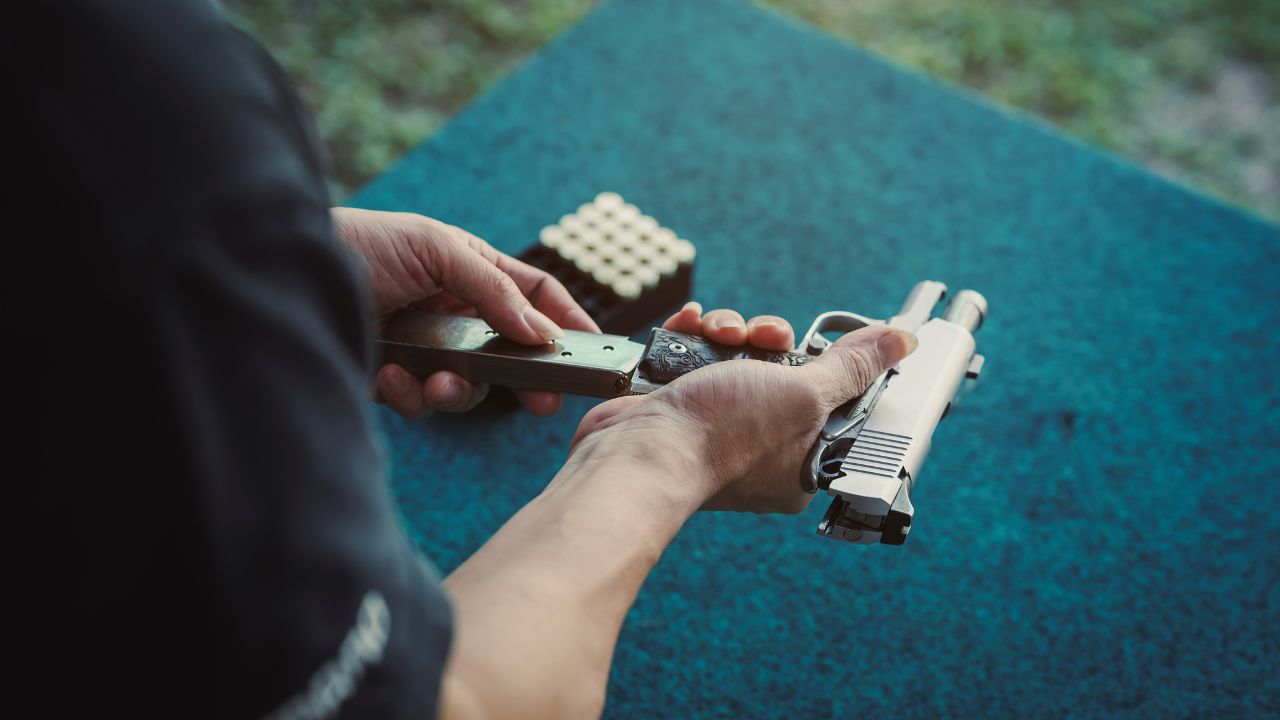
One of the biggest drawbacks of the 1911 is the magazine capacity. Most standard models carry 7 or 8 rounds. That’s not a lot compared to today’s double-stack 9mm pistols.
In a worst-case scenario where multiple threats are involved, that limited capacity could put you at a disadvantage. It’s something worth thinking about when weighing your options.
Heavier Than Most Handguns
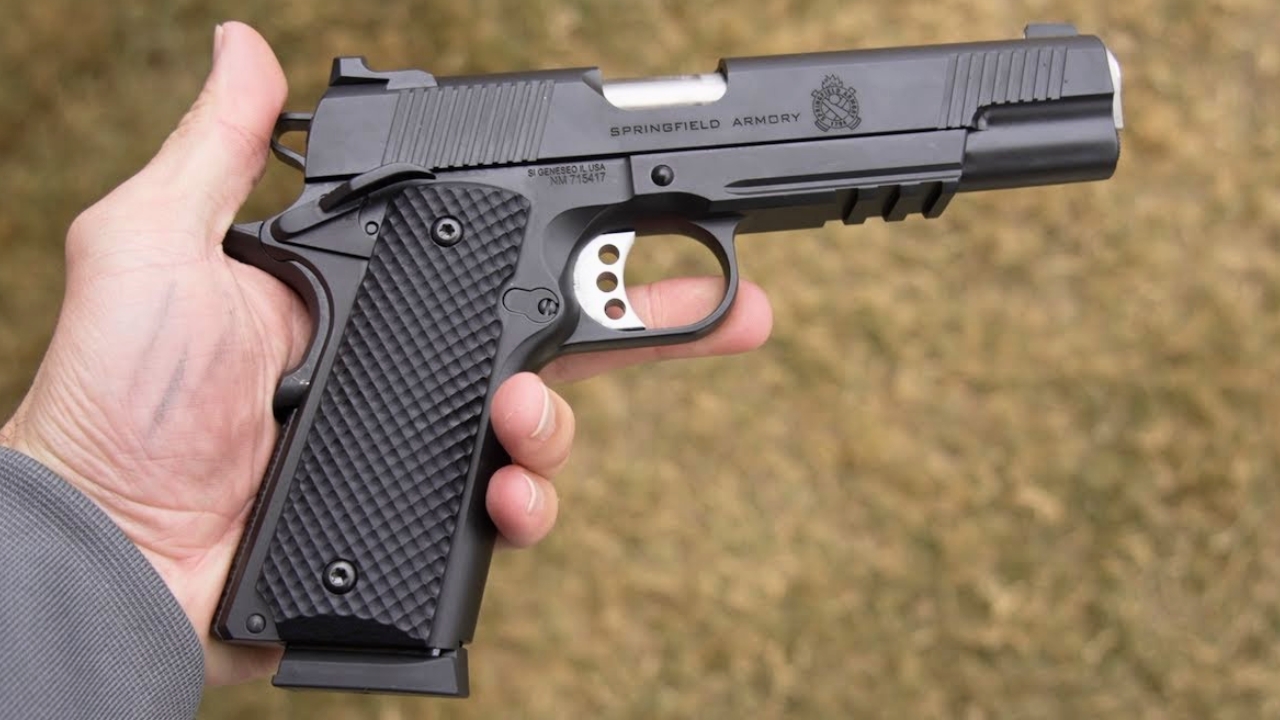
The all-steel frame feels solid—but it also makes the 1911 one of the heavier handguns out there. For some people, that weight is a plus. For others, it’s a pain.
If you’re keeping it in a drawer or mounted safely at home, it might not be a huge issue. But if you plan to carry it around the house or stage it in different areas, the weight can be noticeable.
Manual Safety Takes Practice
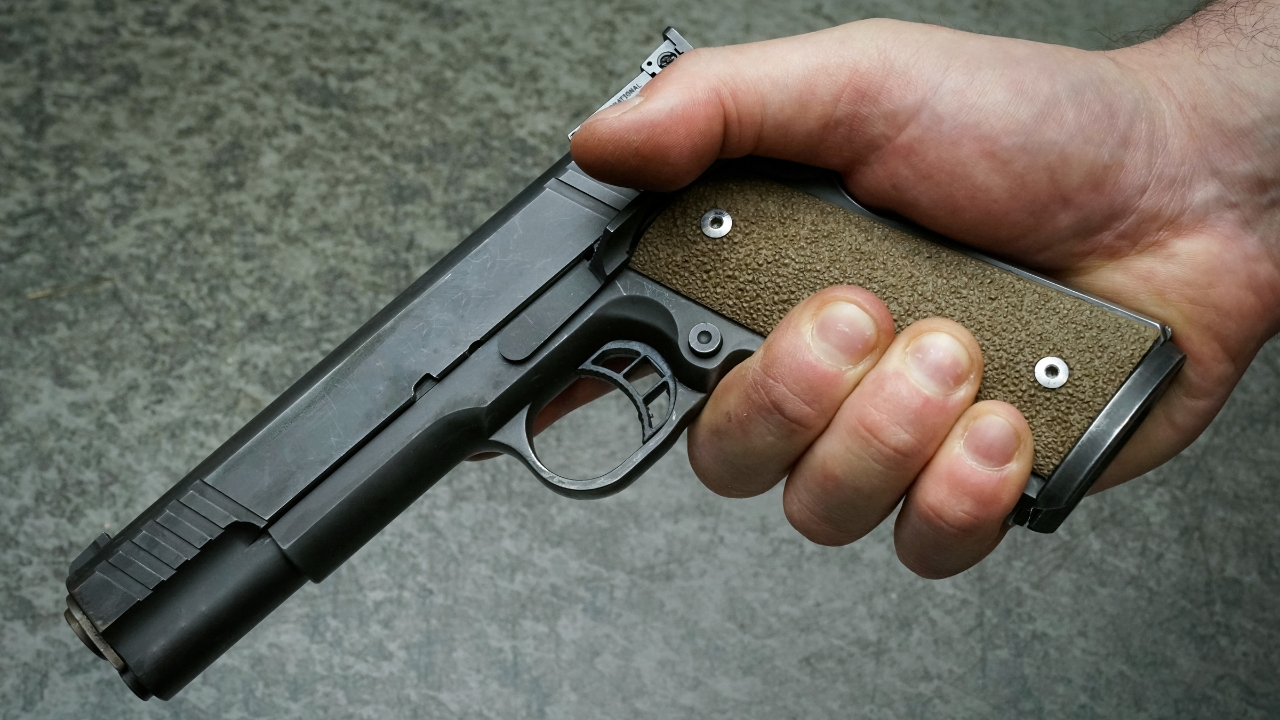
The 1911 has a thumb safety and a grip safety. Some shooters like the added layer of control, but it’s not beginner-friendly. If you don’t practice with it, that thumb safety can trip you up.
In a high-stress situation, forgetting to flip the safety off—or not gripping the gun properly—can slow you down. It’s not a huge deal if you train regularly, but it’s something new shooters should consider.
Maintenance Can Be More Demanding

A 1911 isn’t quite as simple as a modern striker-fired pistol. It has tighter tolerances and more parts, which means more cleaning and a little more care.
If you’re the kind of person who likes tinkering and keeping things pristine, it’s not a problem. But if you just want a pistol you can clean every now and then and trust to run, a 1911 might feel like a chore.
Not Always Reliable With Cheap Ammo

Some 1911s—especially the lower-end models—can be picky about ammo. They might run fine with quality FMJs but choke on hollow points or cheap steel-case stuff.
In a home defense gun, reliability is non-negotiable. If you go the 1911 route, you’ll want to test your ammo thoroughly and possibly spend a bit more to feed it properly.
*This article was developed with AI-powered tools and has been carefully reviewed by our editors.