
Photo credit: thithermuffin/GunBroker
Every once in a while, a gun company puts something out that feels like it showed up a decade too late. Instead of breaking ground, these guns ended up dragging their heels. Hunters, shooters, and even collectors could tell right away—they weren’t keeping pace with what the rest of the industry was already doing. Whether it was outdated design, weak features, or a lack of foresight, some of these firearms felt tired the moment they hit the shelf. If you’ve ever wondered which guns fell flat on arrival, here are the ones that come to mind.
Colt All American 2000

Colt wanted a piece of the polymer-framed pistol market in the 1990s, but their All American 2000 felt ancient even before it got started. By the time it launched, Glock had already secured a massive lead with pistols that were lighter, more reliable, and far more user-friendly. Colt’s design was heavy, clunky, and brought nothing new to the table.
The trigger was mushy, the ergonomics were awkward, and the accuracy was lackluster compared to competitors. On paper, it looked like Colt was trying to innovate, but in practice it was more like they dusted off an old design and shoved it into a market that had already moved on. Shooters quickly noticed, and the All American became one of those pistols people mention when talking about missed opportunities. It wasn’t just behind the curve—it never even got close to it.
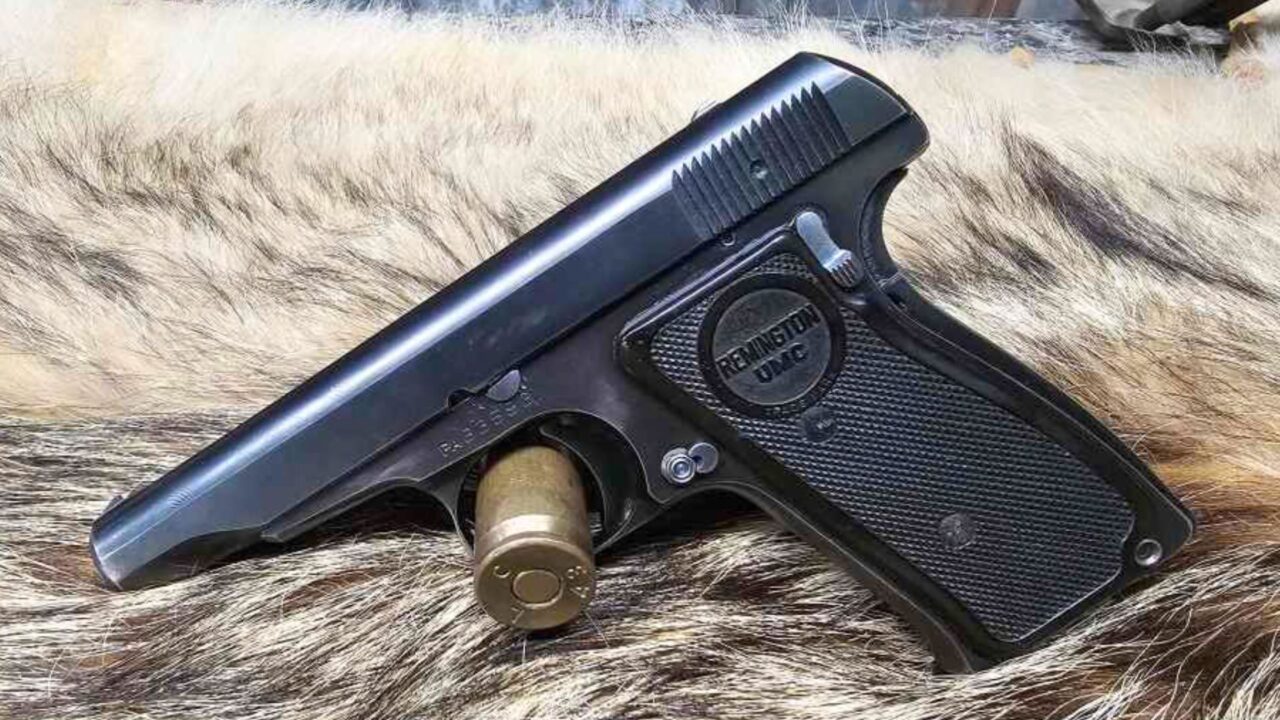
Remington R51 (2014 Relaunch)

The Remington R51 originally debuted back in 1918, and when Remington relaunched it in 2014, it was billed as a modern concealed-carry option. The problem? It still felt like a gun from the early 20th century. While other companies were producing reliable, striker-fired pistols with proven track records, Remington rolled out a pistol based on century-old mechanics.
Not only was it mechanically outdated, but it also had serious reliability issues. Reports flooded in about feeding problems, rough triggers, and even dangerous malfunctions. The pistol’s design was complex compared to its competition, making it harder to maintain and less appealing for everyday carry. While shooters wanted something trustworthy for self-defense, the R51 instead delivered headaches. Even the updated versions never quite overcame the initial disaster, leaving the R51 as an example of how a “new” gun can already be outdated on arrival.
Winchester Model 1911 SL “Widowmaker”

The Winchester 1911 SL, sometimes called the “widowmaker,” is a gun that was behind its time from day one. It entered a shotgun market dominated by John Browning’s Auto-5, which had already proven itself as the standard for semi-automatic shotguns. Winchester wanted their own version, but since Browning held the patents, they had to work around them. The result was a clumsy design that never matched the competition.
Instead of a safe charging handle, users were expected to push down on the barrel to chamber a round—an awkward and dangerous process. This led to countless accidents and a reputation that stuck to the gun forever. Meanwhile, Browning’s Auto-5 kept dominating with a smoother, safer, and more modern design. By the time the 1911 SL arrived, shooters already knew there were better options. It wasn’t just outdated—it was outclassed from the moment it was introduced.
Smith & Wesson Sigma

When Smith & Wesson introduced the Sigma in the mid-1990s, they aimed to compete with Glock in the polymer handgun market. Unfortunately, the Sigma didn’t bring anything new. In fact, it was so close to Glock’s design that it sparked lawsuits, which didn’t help its reputation. The pistol ended up being seen as a knockoff rather than a forward-thinking option.
Beyond the legal troubles, the Sigma was plagued with an extremely heavy trigger pull and lackluster ergonomics. By then, shooters had plenty of reliable striker-fired choices, and the Sigma didn’t convince anyone to switch. Its clunky feel and uninspired design kept it from being taken seriously. While Smith & Wesson eventually learned from those mistakes with later models like the M&P series, the Sigma will always stand as a gun that was already behind the times when it arrived.
Armalite AR-18

The Armalite AR-18 had potential, but when it was released in the 1960s, it was already overshadowed by the AR-15 and M16. The timing couldn’t have been worse. Militaries and civilian shooters alike were moving toward the AR-15 platform, which was lighter, more accurate, and backed by stronger manufacturing. The AR-18 struggled to find a reason for anyone to choose it over the rifle that had already become the standard.
The design wasn’t terrible—it even influenced future rifles like the G36 and SCAR—but at the time, it didn’t give shooters a reason to abandon what was already working. Armalite’s inability to mass-produce the gun efficiently sealed its fate. The AR-18 is remembered today more for its role in inspiring future rifles than for its own success, but when it hit the market, it felt like a redundant option already living in the AR-15’s shadow.
Ruger Hawkeye Pistol

The Ruger Hawkeye single-shot pistol, introduced in the 1960s, seemed outdated the day it appeared. At a time when shooters had access to revolvers with multiple rounds and semi-automatic pistols gaining traction, Ruger thought a single-shot .256 Winchester pistol would attract hunters and experimenters. Instead, it confused buyers who couldn’t figure out where it fit in.
It was bulky, awkward to use, and didn’t offer much advantage over the revolvers and rifles already available. The .256 cartridge never took off, leaving the Hawkeye without meaningful support. While Ruger has produced plenty of iconic firearms, the Hawkeye pistol wasn’t one of them. It looked dated in design and concept, and the market agreed. Very few were made, and it quietly disappeared without ever leaving a mark. It’s a textbook example of a gun out of step with its time.
Chauchat Light Machine Gun

The Chauchat, a French light machine gun from World War I, was considered a failure from the start. Even back then, it lagged behind what a modern military firearm should have been. Its design was crude, reliability was poor, and the open-sided magazine let dirt and debris ruin function almost instantly. Soldiers quickly grew to hate it, and for good reason.
Compared to the Lewis Gun and later designs, the Chauchat was years behind the curve. While other nations fielded sturdier and more practical weapons, French troops were saddled with something prone to jamming in the very conditions it was meant for. Even at the time, it was recognized as an underwhelming weapon. History hasn’t been kind to the Chauchat, and for many, it remains the classic example of a firearm that was obsolete before it ever saw widespread use.
Nambu Type 94

Japan’s Nambu Type 94 pistol, introduced in the 1930s, was already out of step with its contemporaries. Pistols like the Colt 1911 and Browning Hi-Power were setting the standard for military sidearms, while the Nambu felt weak, fragile, and dangerous. It had an awkward design with poor ergonomics, and worst of all, an exposed sear bar that could fire the gun if pressed externally.
Even during its service life, it was criticized by soldiers who wanted something more reliable and powerful. Its underpowered cartridge and questionable safety features gave it a bad reputation. Instead of representing a step forward for Japan’s armed forces, the Type 94 became a symbol of how far behind they were in sidearm design. While it saw combat, it was already an outdated pistol when it entered the field, and time has only made its shortcomings more obvious.
Remington Model 8 Autoloading Rifle

When the Remington Model 8 was introduced in the early 1900s, semi-automatic rifles were still novel. But as the decades rolled on, the Model 8 clung to an old long-recoil system that quickly became outdated. By the time competitors were designing lighter, faster-cycling rifles, the Model 8 felt sluggish and outdated in the hands of hunters.
The rifle was heavy, had limited magazine capacity, and was harder to maintain than newer options. Although it had its niche fans, most shooters were moving toward designs that balanced power with ease of use. By the time later semi-automatic hunting rifles entered the market, the Model 8 was an antique living on borrowed time. It hung around for years, but when compared to what else was available, it was clearly behind even while still being produced.
Hotchkiss Revolving Cannon

The Hotchkiss revolving cannon was a throwback design that looked more like a hand-cranked Gatling gun than the future of military artillery. When it debuted in the late 19th century, newer technologies were already making manually operated weapons obsolete. Repeating rifles and early automatic designs were proving that hand-cranks were a thing of the past.
Despite its firepower, the cannon felt stuck in an earlier era. Military planners recognized that newer, fully automatic designs were the future, and the revolving cannon was quickly left behind. While it did see some limited use, it was never the kind of advancement that could compete with modern machine guns. By the time it entered service, its design philosophy was already yesterday’s news, leaving it to be remembered as more curiosity than progress.
Enfield Revolver (Post-WWII Production)

The Enfield revolvers served Britain well during World War II, but when production continued into the post-war years, they were already behind. Other nations were moving to semi-automatic pistols like the Browning Hi-Power, which offered higher capacity and faster reloads. Britain, on the other hand, stuck with heavy double-action revolvers that felt old-fashioned to anyone who had seen what was possible elsewhere.
By the late 1940s and 1950s, revolvers as military sidearms were being phased out in favor of more modern designs. The Enfield hung on because of tradition and existing stock, not because it was the right tool for the future. Soldiers recognized that carrying a revolver in an era of semi-autos was a disadvantage, and history quickly left the Enfield behind. It’s a classic case of a gun that was outdated the moment it hit production lines after the war.
Steyr M1912 Pistol

The Steyr M1912 pistol looked futuristic in its early years, but by the time it saw wider use in World War I, it was already lagging. It used a fixed magazine loaded with stripper clips instead of a detachable box magazine, which was quickly becoming the standard. This made it slower to reload and less practical compared to sidearms like the Colt 1911.
Its rotating barrel system was interesting, but it didn’t offer clear advantages over more straightforward designs. Soldiers wanted reliability and speed, and the M1912 couldn’t compete. By the time semi-automatics with detachable magazines became common, the Steyr design felt cumbersome. It’s remembered as a unique piece of engineering, but in real use, it was already outclassed. Its outdated loading system alone kept it from being a sidearm that could stand up to the competition of its own time.
*This article was developed with AI-powered tools and has been carefully reviewed by our editors.


