Photo credit: Mehaniq/ShutterStock.com
Accuracy is the one thing you expect from a handgun, but some models make you work way too hard for it. A decent pistol should hold groups within reason if you’re doing your part, yet there are designs that consistently send rounds all over the target no matter how steady you are. Loose tolerances, poor barrel fit, heavy triggers, and short sight radiuses all play a part. You don’t need a match-grade gun to shoot well, but you do need one that won’t fight you every time you pull the trigger. If you’ve spent any time at the range with the pistols below, you know how quickly frustration builds when accuracy just isn’t there. These aren’t the models you want if you plan on hitting consistently at 15 or 25 yards.
Hi-Point C9
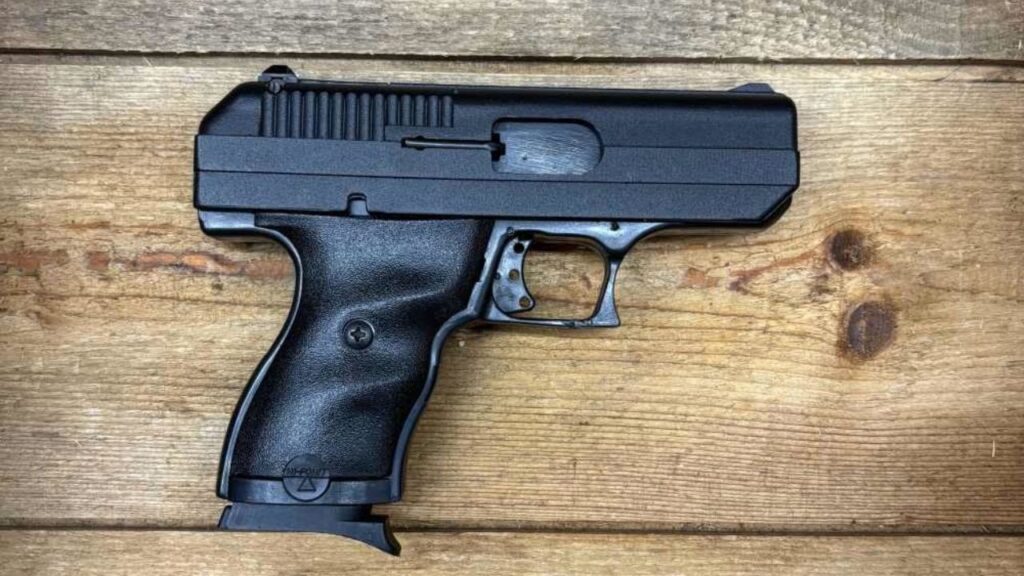
The Hi-Point C9 has its defenders for being affordable and reliable enough at close distances, but accuracy isn’t its strong suit. The heavy blowback slide and clunky trigger make it tough to hold steady, and groups open up fast once you push past seven yards. It’s not unusual for shooters to find their shots scattered across a target at 15 yards, even when they know their fundamentals are solid. The combination of a gritty break and long reset works against clean shooting.
The barrel and slide fit don’t do much to tighten things up either. While the C9 can keep all rounds on paper, that’s about all you can expect in terms of precision. For defensive drills at very short distances it may do the job, but don’t count on it to consistently print respectable groups downrange.
Jimenez JA-22

The Jimenez JA-22, like many inexpensive .22 pocket pistols, isn’t built with accuracy in mind. The short barrel, tiny sights, and loose construction mean that even good shooters struggle to get consistent groups. At close range you might keep things on target, but the spread grows quickly once you move back. The barrel lockup lacks the kind of stability you’d find in a better rimfire design, and that shows every time you try to tighten up your shots.
Another factor is the small grip and lightweight frame, which make the gun harder to control. A .22 shouldn’t be difficult to shoot accurately, but when the platform itself doesn’t provide a stable foundation, your shots suffer. If you want a .22 that rewards good fundamentals, look to proven names like Ruger or Browning. The JA-22 simply won’t hold the kind of accuracy you need for training or even dependable plinking.
Phoenix Arms HP22A

The Phoenix HP22A is another .22 pistol with a reputation for wide groups. While it’s inexpensive and easy to find, the short sight radius and inconsistent barrel fit make accuracy frustrating. Even when shooters slow down and focus on their technique, it’s common to see erratic placement. Springs and pins also wear quickly, which only makes things worse as the round count increases.
The sights are basic and don’t inspire confidence for precision work. Combined with a heavy trigger pull for such a small gun, you’ll end up pulling shots rather than stacking them. For casual backyard plinking, it may provide entertainment, but if your goal is drilling accurate strings on paper, you’ll soon feel limited. The HP22A simply doesn’t reward practice the way a better rimfire handgun does.
Kel-Tec P3AT

The Kel-Tec P3AT is a pistol praised for its small size, but accuracy is not where it shines. With a very short barrel and minuscule sights, you’re working against the design every time you fire. The trigger is long and heavy for such a small pistol, which makes holding tight groups at even moderate distances a serious challenge. At 15 yards, many shooters struggle to keep rounds in the center mass of a silhouette.
Because of its light weight, recoil feels snappy, further disrupting accuracy. This isn’t a training pistol or a gun you’ll use to shoot tight groups at the range. It was designed for deep concealment and close-range encounters. If you try to stretch it further, you’ll find your groups scatter quickly. For a backup gun it’s workable, but don’t expect consistent performance on paper targets past close quarters.
Kel-Tec P-11

The Kel-Tec P-11 has a similar problem: while it’s compact and chambered in 9mm, the heavy double-action trigger works directly against accuracy. Pulling through that long trigger stroke introduces inconsistency, even for experienced shooters. You might get one decent group, but the next string spreads wider across the paper. The short sight radius adds to the problem, making small aiming corrections difficult.
Shooters often describe the P-11 as serviceable at very short distances, but once you step back to 25 yards, the flaws show. The pistol wasn’t built for precision work, and accuracy suffers as a result. While it’s capable of firing reliably, don’t expect to shoot tight groups without a lot of practice and patience. For consistent training results, there are better compact 9mms on the market.
Taurus Spectrum

The Taurus Spectrum was designed for concealment and affordability, but accuracy wasn’t a priority. Its ergonomics and very basic sights make consistent groups a tall order. Add in a trigger that feels mushy and unpredictable, and you’ve got a recipe for scattered shots. Shooters often report struggling to keep decent patterns even at close distances, especially when using defensive ammunition.
Another issue is the lightweight frame, which exaggerates recoil. That snappiness makes follow-up shots less controlled, and your groups spread out quickly. While the Spectrum might be adequate for close-range defense, it’s far from enjoyable or confidence-inspiring on the range. For anyone who wants to train regularly and actually see progress in accuracy, this pistol is more likely to frustrate than reward.
SCCY CPX-1

The SCCY CPX-1 offers budget-friendly carry, but accuracy is where it falters. The double-action trigger is heavy and gritty, which almost guarantees pulled shots. Shooters often find their groups widening even when they slow down and focus on fundamentals. Combine that with a short sight radius and you’re fighting an uphill battle.
Durability issues with early models didn’t help accuracy either, as worn parts lead to inconsistent cycling and shot placement. Later models improved, but the design still makes accuracy difficult. While it can function as a close-range defensive pistol, using it for training or longer strings of fire often results in frustration. If you want to build consistent skills on paper targets, there are far better choices in the same price bracket.
Jimenez J.A. Nine

The Jimenez J.A. Nine is one of those pistols that looks like it should perform better than it does. In reality, it’s heavy, awkward, and difficult to shoot accurately. The trigger is inconsistent, with a break that varies enough to throw off timing. As you put rounds through it, tolerances don’t tighten—they loosen, and accuracy suffers even more.
Shooters often notice their groups spreading wider over time, even with steady fundamentals. Part of this is the design, part of it is the materials, and part of it is the poor ergonomics that make consistent grip harder to maintain. If your goal is reliable training, this is a pistol that makes progress difficult. It may fire, but it won’t reward careful shooting.
Bryco Model 38

The Bryco Model 38 is a throwback to an era of cheap handguns that prioritized cost over performance. Accuracy was never a strong point, and decades later that reputation still holds. The heavy trigger, crude sights, and questionable barrel lockup all contribute to shots wandering across the target. Even experienced shooters find it hard to get anything resembling a tight group.
Wear only makes things worse. Many examples on the market are older, and time hasn’t been kind to the materials. Springs wear out, frames loosen, and accuracy drops even further. For a collector of odd pistols it might hold some appeal, but if you’re after real accuracy, this is a handgun that will disappoint.
Raven MP-25

The Raven MP-25 is another small, inexpensive pistol that shows its flaws quickly on paper. Chambered in .25 ACP, it isn’t powerful to begin with, and accuracy isn’t doing it any favors. The tiny barrel, crude sights, and loose tolerances make it hard to shoot well beyond arm’s length. At even moderate range, your shots will scatter across the target, often in unpredictable patterns.
This handgun was built for deep concealment decades ago, not for precise shooting. Most surviving examples today are well-used, which only adds to the challenge. While it may have a place in firearms history, it’s not one to count on if you value accuracy. Shooting it is more of a novelty than a training tool.
Lorcin L380

The Lorcin L380 is one of the more notorious pistols when it comes to poor accuracy. Its construction quality is questionable from the start, and it doesn’t take long before wear begins to impact shot placement. The trigger is heavy, the barrel fit is loose, and the recoil impulse is sharp for a pistol of its size. All of these factors add up to groups that scatter all over the target.
Shooters often describe frustration with the L380, as it doesn’t reward careful fundamentals. Even when you line up sights and squeeze deliberately, the groups don’t tighten. For training or consistent performance, it falls short. If you’re serious about your shooting, this is a pistol better left behind.
*This article was developed with AI-powered tools and has been carefully reviewed by our editors.