Photo credit: Nomad_Soul/ShutterStock.com
Some rifles look great sitting on a rack, shining under good lighting, but that’s about where their strengths end. You’ve probably handled one before—beautiful wood, fine engraving, maybe even a classic brand name—but once you take it into the woods, everything falls apart. Weight, finicky triggers, awkward safeties, or unreliable actions turn what should be a dependable tool into an expensive burden. These are the rifles hunters talk about later with a sigh, the ones that taught hard lessons about trusting looks over performance.
The truth is, not every rifle that sells well deserves to be carried in the field. Some are built for show, not work. They might shoot fine on a bench, but they rattle, jam, or fail in the mud and cold where real hunts happen. If you’ve ever hiked back to camp wishing you’d brought your “ugly” backup gun, you know the feeling. These rifles belong behind glass, not across your shoulder when the weather turns.
Remington 742 Woodsmaster

The Remington 742 Woodsmaster looks like a classic, but it’s earned a reputation for being unreliable after a few seasons. Its semi-auto action fouls easily, and once the chamber starts to wear, extraction issues become almost guaranteed. Hunters often complain about stuck casings or failure to cycle after just a few boxes of ammo.
Cleaning doesn’t fix it—once the bolt rails wear down, the rifle starts eating itself from the inside. Even gunsmiths hate working on them because parts are scarce and repairs rarely hold. For all its good looks, the 742 is one of those rifles that’s better as a keepsake than a hunting companion. Plenty of hunters retired theirs to the gun cabinet after realizing it couldn’t be trusted in cold or dirty conditions. It’s part of Remington’s history, but if you want something dependable, leave the 742 on the rack where it belongs.
Winchester Model 100

The Winchester Model 100 promised smooth semi-auto performance, but time has proven it’s more headache than help. Its gas system and bolt design were prone to cracking, and a major recall decades ago didn’t save its reputation. Even in well-maintained examples, the firing pin issue can make it unsafe to fire without extensive repair.
In the field, the rifle’s weight and sluggish cycling make it a poor match for quick follow-ups. Hunters loved the walnut and steel look, but performance-wise, it never lived up to Winchester’s bolt guns. Many who tried to keep theirs running found reliability issues once temperatures dropped or grime set in. Today, it’s more collectible than functional—a great piece for the rack, but one you don’t trust with a once-in-a-lifetime shot. If you’ve ever carried one into the woods, you probably only did it once.
Ruger Mini-30

The Ruger Mini-30 is one of those rifles that looks ready for anything but disappoints when accuracy counts. Chambered for 7.62×39, it was meant to be a rugged brush gun with semi-auto speed, but the accuracy and consistency never matched the promise. Even with good ammo, groups often drift past three inches at 100 yards.
Its reliability can also dip when using imported steel-cased rounds, which is ironic considering that’s the most affordable option for the caliber. Light firing pin strikes and inconsistent feeding are common problems, especially in cold conditions. The Mini-30’s design is charmingly nostalgic, but it’s not a rifle that inspires confidence beyond close range. It belongs in a collection or on a range for casual shooting—not as your primary deer or hog rifle. If you’ve ever hauled one into the woods expecting “Mini-14” reliability, you likely came back shaking your head.
Browning BAR Mark II Safari

The Browning BAR Mark II Safari is undeniably beautiful—gloss walnut stock, deep blued finish, and tight machining—but it’s a heavy, high-maintenance rifle that demands more pampering than most hunters can give it. The gas system fouls quickly, and once it does, you’ll notice cycling slows or stops altogether. Cleaning requires partial disassembly, which isn’t something you want to deal with in a cabin or tent.
In wet or freezing weather, the trigger group can gum up, and you’ll see failures to fire when you least expect it. It’s a fine rifle for the range or stand hunts, but lugging it through rugged country is punishing. For all its class, it’s too temperamental for serious use. Most hunters who own one keep it polished and displayed—it’s earned its place as a showpiece, not a go-to hunting rifle. It’s a looker, but not a fighter.
Remington Model 597

The Remington 597 was marketed as a reliable semi-auto rimfire, but it quickly developed a reputation for feeding and extraction problems. The magazine design was the main culprit—plastic, inconsistent, and prone to causing jams every few rounds. Even after Remington updated it, issues persisted.
The rifle’s accuracy can be decent with the right ammo, but the frustration of constant stoppages ruins the experience. In the field, you don’t want to be clearing a jammed rimfire every few minutes. It’s light and handy, but reliability matters more than portability. For plinking or target shooting, it’s fine; for hunting, it’s more aggravation than it’s worth. Many hunters moved on to Ruger or Savage rimfires after giving up on the 597’s inconsistent performance. It’s another one of those rifles that looks sharp on the rack—but doesn’t belong anywhere near a squirrel hunt.
Savage Model 99C (Detachable Magazine Version)

The original Savage 99 is a legend, but the detachable magazine “C” version never lived up to the name. The modification introduced feeding issues and reliability problems that plagued what was once an iconic lever-action. The removable mag rattled, loosened, and often misfed under recoil.
Hunters who owned both versions noticed the difference immediately—the original rotary magazine 99 was smooth, dependable, and perfectly balanced, while the 99C felt cheap by comparison. In the field, those malfunctions turned what should’ve been a great rifle into a frustrating one. It still carries the 99’s heritage, but functionally, it’s a step backward. The detachable mag made it more convenient on paper, but it robbed the rifle of its greatest strength—reliability. Today, the 99C looks nice on display but rarely earns a spot in the truck for hunting season.
Weatherby Mark V Deluxe

The Weatherby Mark V Deluxe screams class, but it’s a rifle better suited for the rack than rough country. The high-gloss finish and fancy checkering look incredible—until you take it into rain or snow. Every scratch shows, and the slick surface makes it hard to handle with gloves. Its long, heavy barrel and thick stock make it a burden to carry up mountains or through brush.
The rifle’s accuracy is great, but the design is more showpiece than workhorse. The Mark V shines on a shooting bench or in the hands of collectors who appreciate craftsmanship. But as a hunting companion, it’s too heavy, too pretty, and too easy to damage. Few hunters risk dragging one through the elements when a lightweight synthetic rifle can do the same job. It’s a status symbol—a gun to admire, not to abuse.
Winchester Model 88

The Winchester Model 88 was ahead of its time in concept—a lever-action chambered for modern cartridges—but in practice, it’s finicky. The bolt design and linkage system wear down quickly, leading to rough cycling and reliability issues. Accuracy starts strong but declines as headspace grows from repeated use.
The trigger is heavy and spongy, which doesn’t help when you’re trying to make a careful shot. It looks sleek and points beautifully, but in the field, the mechanical complexity turns into a liability. Many hunters who loved the idea ended up frustrated with its inconsistent performance and costly repairs. It’s a great piece of firearm history, but most who still own one have retired it to the display rack. It’s a rifle you admire for what it tried to be—not one you rely on when it’s 20 degrees and you’re staring down a trophy buck.
Marlin Model 444 (Early Production)

Early Marlin 444s, especially pre-1970 versions, were known for their punishing recoil and poor bullet stability. The early barrels had a slow twist rate that couldn’t stabilize heavier bullets, leading to erratic accuracy past 100 yards. Combine that with heavy recoil and a poor recoil pad, and it wasn’t exactly a rifle you wanted to spend the day shooting.
In the field, those accuracy issues became even more apparent. Hunters who tried to use it for elk or bear found their shots wandering despite careful aim. Later versions fixed the twist rate, but the damage to its reputation was done. Today, early 444s are collector pieces—a nostalgic reminder of Marlin’s growing pains. They look fantastic, with deep blue steel and handsome walnut, but unless you’re into punishing your shoulder for nostalgia’s sake, they belong on a rack, not in a scabbard.
Remington Model 700 CDL SF
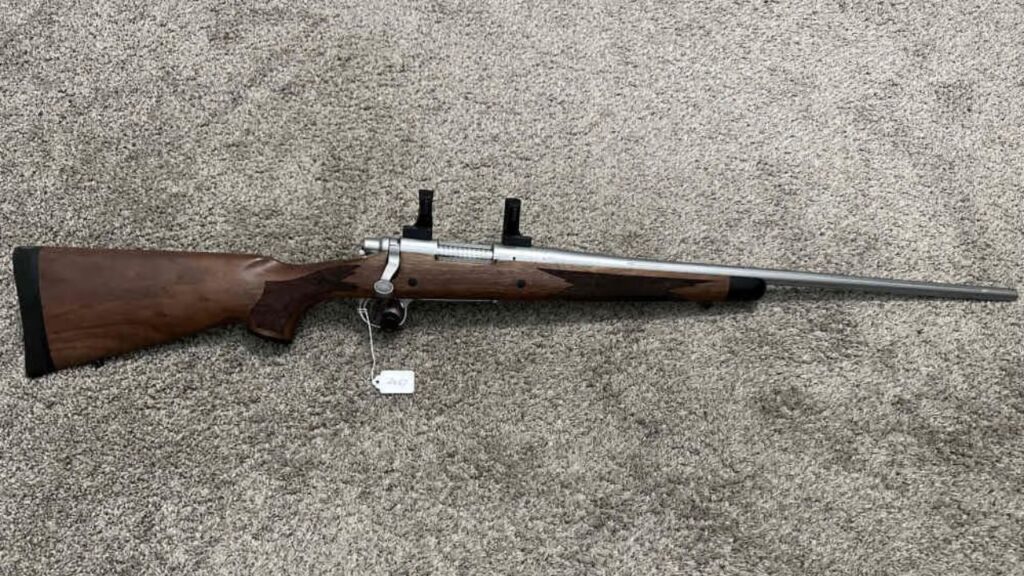
The Remington 700 CDL SF has all the looks of a premium rifle—stainless barrel, walnut stock, and crisp lines—but its performance doesn’t always match the price tag. The stock design is more about aesthetics than comfort, and it tends to swell or shrink with humidity, throwing off your zero. That’s a nightmare for hunters who travel between dry and wet climates.
The trigger, while adjustable, often needs fine-tuning to perform smoothly. Combined with a heavier-than-ideal barrel, it makes the rifle less practical for long hunts where every ounce counts. It’s a gorgeous rifle to own, but not one you’ll love carrying through rugged country. It’s better suited to the rack or range, where it can be admired and shot occasionally without risk of dings, swelling, or disappointment. It’s proof that a rifle can look perfect and still not belong in the field.
Thompson/Center Encore

The Thompson/Center Encore’s modular, single-shot design was an interesting idea that worked better in theory than in practice. While it’s fun for switching calibers and configurations, the reality is it’s too slow and awkward for hunting anything that might require a quick second shot. The break-action design also loosens over time, affecting accuracy and lockup.
For target shooting or handgun conversions, it’s fine—but as a hunting rifle, it falls short. The trigger varies from good to mushy, and recoil on heavier calibers feels worse due to the light frame. Add in the hassle of disassembly for cleaning and you’ve got a rifle that’s better off displayed than dragged through the woods. It’s unique, and collectors appreciate that. But for practical, dependable use, it belongs behind glass or on the range, not out where every shot and second counts.
*This article was developed with AI-powered tools and has been carefully reviewed by our editors.