

Photo credit: Pew Pew Tactical/YouTube
When Smith & Wesson dropped the Shield Plus, a lot of folks leaned in thinking something big had changed. But if you’ve spent any time behind the original M&P Shield, it might’ve felt like you were handling the same gun with a fresh spec sheet. Sure, you’re getting more capacity, and yeah, the flat-faced trigger looks better. But functionally? It’s familiar in all the ways that’ll either comfort you—or leave you wondering why you didn’t just keep what you already had.
If you’ve run both, you know. If you haven’t, I’ll walk you through what makes the Shield Plus feel like a rerun instead of a reboot.
The frame barely changed
Pick up the Shield Plus and it feels nearly identical to the old Shield. That’s because it practically is. Same profile, same ergonomics, same grip angle. If you were hoping for a full redesign, you’re not getting one.
The backstrap texture is a little different, and the undercut is mildly improved—but we’re talking small tweaks, not major upgrades. That means if you had issues with the original’s slim feel or grip comfort, don’t expect those to magically disappear. It’s still narrow and snappy in the hand, especially with hotter 9mm loads.
The flat-faced trigger doesn’t transform it
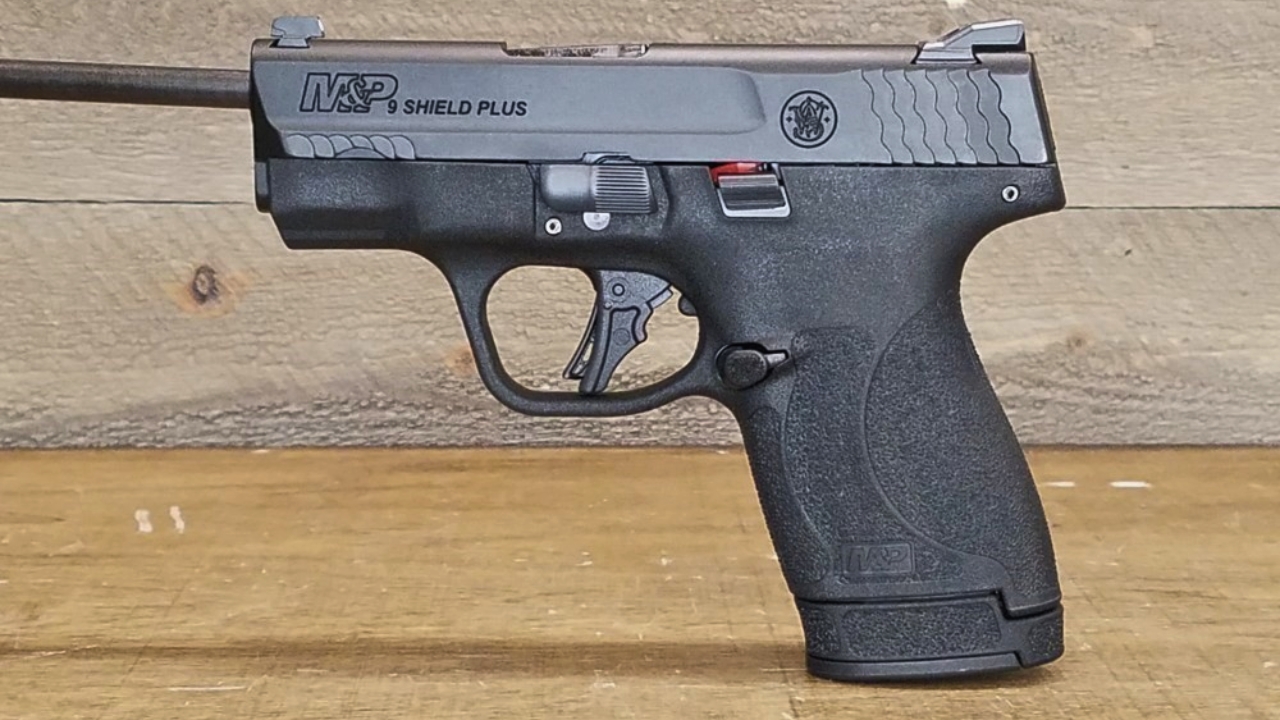
Everyone wants to talk about the flat trigger. And yeah, it looks better than the original hinged setup. But once you start running it, you’ll realize it’s not a dramatic improvement.
Take-up is still gritty out of the box, the break is serviceable but not great, and reset isn’t anything to brag about. Compared to aftermarket options or even newer striker-fired designs, it still feels a little dated. It’s not that it’s bad—it’s just not the leap forward folks were hoping for when they saw “Plus” in the name.
Magazines are the main selling point
This is the real reason the Shield Plus exists: capacity. The older Shield ran 7+1 or 8+1 depending on the mag. Now you’re looking at 10+1 and 13+1 with a slightly thicker mag body. That’s a solid bump.
But here’s the thing—other micro-compacts were already offering that before the Plus hit the scene. By the time Smith caught up, guys were already carrying a P365 or Hellcat. So while the extra rounds are welcome, it feels like Smith is chasing the trend instead of setting it.
Same recoil, same snap

With more capacity comes a little more weight, but don’t kid yourself into thinking it tames recoil. The Shield Plus still snaps in the hand like the original.
If you’ve got strong fundamentals, you’ll be fine. But it’s not a soft shooter by any means. Fast follow-ups take work, and that slim grip gives you less to hold onto under pressure. It’s still a handful in a lightweight package, and nothing about the “Plus” label changes that.
Holster fit isn’t as universal as they say
Smith says the Shield Plus fits most original Shield holsters—and it does in many cases. But if your rig has tight tolerances or a rigid kydex mold, don’t be surprised if it’s a no-go.
That slightly wider frame for the double-stack mag can throw off retention or create tight draw issues. If you carry daily, that’s not a small thing. You may end up having to buy new gear even though the gun looks nearly identical on paper.
Optics-ready models feel half-baked

Yeah, there’s an optics-ready version now, and it sounds good on the box. But when you actually look at the cut and mounting options, it’s underwhelming.
Limited plate compatibility and shallow milling mean you’re locked into certain micro red dots. Plus, co-witnessing isn’t ideal unless you swap sights. Compared to the optics-ready setups from other brands, this one feels like it was added to check a box rather than build a better shooter.
Feels more like a remix than a reboot
If you’ve shot the original Shield, the Shield Plus doesn’t exactly surprise you. It’s got a better trigger, sure, and more capacity is welcome—but the overall feel? Still slim, still snappy, still very much a Shield. You’d think with “Plus” in the name, it’d feel like a next-generation step. Instead, it feels like a polished rerun.
Smith & Wesson didn’t fix everything folks griped about. The grip texture still isn’t everyone’s favorite, and while the flat-faced trigger is nicer, it doesn’t change the overall shooting experience much. It’s like they stuck to a formula that worked and barely pushed it forward.
That slide still wears the same face

Visually, it’s nearly identical to the older models unless you’re looking at the Performance Center variants. The front cocking serrations are welcome, but everything else screams familiarity. That’s not always a bad thing, but when you’re dropping cash on a “new” pistol, you’d like to see something that sets it apart more clearly.
Pop it in a holster made for the old Shield and odds are it’ll fit. And if you’ve already got the muscle memory for the original, this’ll feel like second nature. Again—familiar isn’t bad. But it does make the “Plus” part feel like a marketing nod more than a mechanical leap.
Capacity bump doesn’t rewrite the story
Yes, the jump to 13+1 rounds in a micro-compact is appreciated. It brings the Shield Plus into direct competition with the P365, Hellcat, and GX4. But while they were rewriting their platforms to accommodate the shift, S&W barely adjusted the original frame.
It’s still a Shield at heart with a few internal tweaks to fit the staggered mag. You’ll notice the width difference if you’re sensitive to that sort of thing, but it’s minimal. Functionally, it’s more ammo in the gun—but not more gun in your hand.
Trigger got cleaned up, not overhauled

Gone is the hinged trigger, replaced by a flatter face and a crisper break. That’s a step in the right direction. It feels cleaner out of the box, with less mush and less stacking. But it’s not a world-class trigger, and it still feels serviceable more than standout.
If you’re used to aftermarket Apex kits in your Shield, this won’t wow you. For most folks, though, it’s enough of an upgrade to shoot better without having to mod anything. Still, it’s not the kind of improvement that makes you forget you’re shooting a familiar platform.
Ergonomics are still very much Shield DNA
The grip angle, texturing, and size haven’t changed much, and that’s by design. If you liked the feel of the original, you’ll settle into this one right away. But if the slim grip ever felt too narrow or blocky to you, this won’t change your mind.
There’s a faint difference in girth due to the wider magwell, but it’s not enough to reshape the way the pistol fits in your hand. In a market where competitors are adjusting frame contours and backstraps to suit different hands, the Shield Plus feels like it’s standing still.
Still snappy, still jumpy in 9mm

Physics doesn’t change just because you call something “Plus.” It’s a light, thin pistol chambered in 9mm, and it behaves like one. Muzzle flip is manageable, but there’s a noticeable pop when you’re shooting quickly.
You don’t get much help from the grip or the frame under recoil. It’s not punishing, but it also doesn’t feel like a gun you’ll want to run a 500-round course with in a single day. For concealed carry, that’s fine. But it reinforces the feeling that the Shield Plus isn’t a ground-up evolution.
Feels like a safe bet more than an upgrade
If you’re choosing a first concealed carry pistol, the Shield Plus makes a lot of sense. It’s proven, well-supported, and straightforward to shoot. But if you’re looking for something that feels like the future, this won’t hit that mark.
It’s more like an updated rerun than a bold new season. Familiar, effective, and easy to live with—but if you already have the older Shield, you may end up asking yourself whether anything really changed.
Like The Avid Outdoorsman’s content? Be sure to follow us.
Here’s more from us:
The worst deer rifles money can buy
Sidearms That Belong in the Safe — Not Your Belt
*This article was developed with AI-powered tools and has been carefully reviewed by our editors.


