Photo credit: Ruger
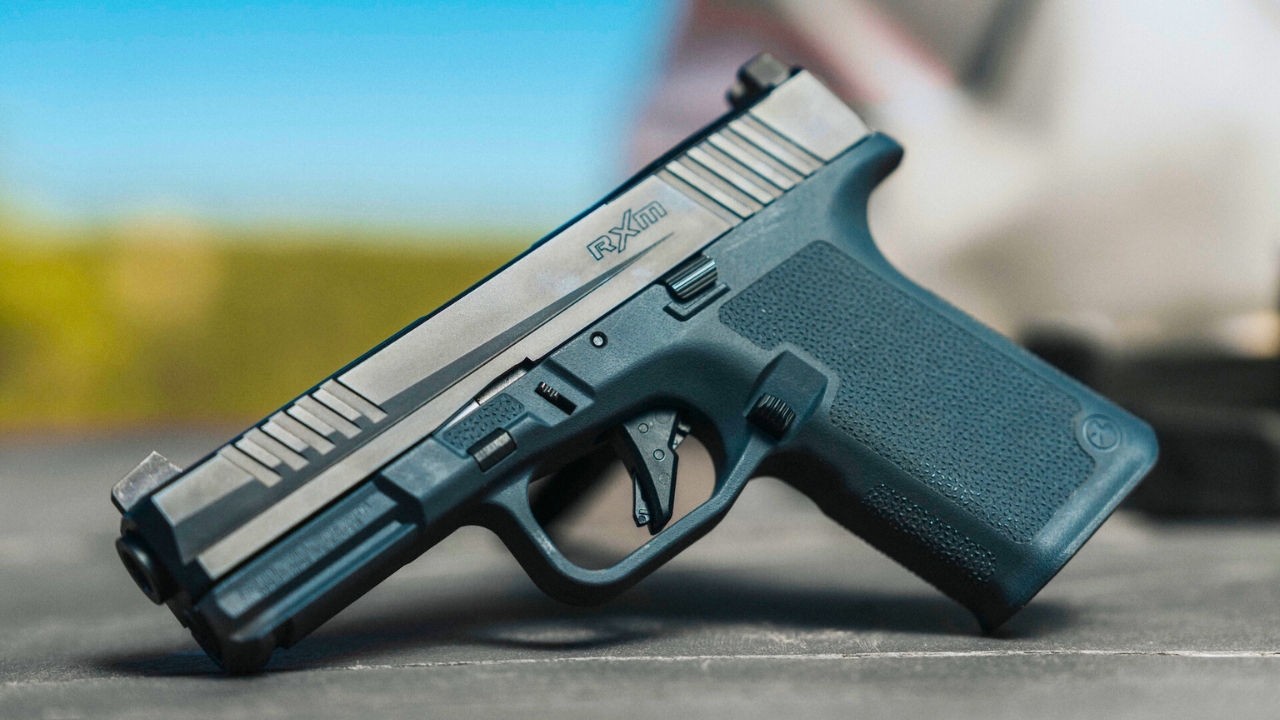
Ruger didn’t build the RXM as “just another striker-fired 9mm.” They built it to be a platform. The RXM is a full-size, polymer-frame, striker-fired pistol developed with Magpul, built around a stainless-steel fire-control chassis that drops into Magpul’s Enhanced Handgun Grip (EHG) shells. It ships optic-ready, runs 15+1 capacity, and is intentionally compatible with a pile of Glock Gen 3 parts and magazines. The message is pretty simple: Ruger sees where the handgun market is going—toward modularity and cross-compatibility—and the RXM is their bid to give shooters a Glock-sized pistol that can be tailored, rebuilt, and upgraded without starting over every time.
A chassis pistol built from the start to be a system, not a one-off
The backbone of the RXM is a removable stainless-steel Fire Control Insert (FCI) that holds the serialized bits—trigger group, sear, and rails—and drops into interchangeable Magpul EHG grip frames. Instead of the frame being the gun, the chassis is the gun. That lets Ruger and Magpul build multiple grip sizes, colors, and future variants without redoing the whole firearm. If you crack a frame or want a different fit, you move the FCI instead of buying an entirely new pistol. It also makes deep cleaning and maintenance easier, since you can pull the chassis as a unit. That’s the same design philosophy that made pistols like the P320 and Echelon take off, and Ruger is clearly aiming to play in that space with something that still feels familiar in the hand.
Glock compatibility isn’t an accident—it’s the hook
Ruger could have built a closed ecosystem, but they didn’t. The RXM is intentionally “Glock-adjacent,” with dimensions and internal layout designed to be compatible with a wide range of Gen 3 Glock 19 magazines and many aftermarket parts. That means the mags you already own, the holsters you already have, and the triggers and small parts you like can often pull double duty. For a shooter who’s been living in the Glock world for years, that lowers the barrier to trying the RXM. Ruger gets to offer its own take on a duty-sized, striker-fired pistol without asking you to throw away a decade’s worth of gear. It’s a smart move in a market where most people don’t want another orphan system that requires all-new everything.
Slide, optics, and controls set up for modern carry and duty use
Ruger didn’t cheap out on the top half. The RXM ships with a black-nitrided slide that has front and rear cocking serrations and high-profile tritium night sights that co-witness with popular dots like the RMR, DeltaPoint Pro, and RMSc footprint optics. The optics mount directly to the slide—no adapter plates—so you’re not stacking tolerances or chasing tiny screws. Controls include ambidextrous slide stops and a reversible mag catch, which matters for left-handed shooters and anyone training off-hand manipulations. Inside, you get a striker-fired trigger that reviewers have called surprisingly good for a duty-priced gun, breaking around that mid-5-pound range with a clean wall and short reset. It’s not a race trigger, but it’s clearly tuned for people who actually shoot, not just carry.
Modularity changes what this pistol can be over time
The modular FCI-and-grip setup isn’t just a gimmick; it’s Ruger building room for the line to grow. Because the serialized chassis is the core, Ruger and Magpul can roll out different grip lengths, frame textures, and even different slide and barrel combos while keeping the same “gun” as far as paperwork is concerned. That opens up the possibility of compact or long-slide RXM variants, different capacity frames, and agency- or distributor-specific configurations without fragmenting the platform. For individual shooters, it means you can tune grip size to your hands, swap frames if you wear one out, or even maintain a dedicated training frame and a carry frame without buying two serialized pistols. In a world where everyone expects some level of customization, that flexibility is the real selling point.
Who the RXM actually makes sense for
The RXM’s sweet spot is the shooter who wants Glock-sized capability but is tired of the same old options, and the agencies or departments that like Glock mags but want more flexibility from the gun itself. With MSRPs hovering around $539 for 4″ models and about $599 for the 4.5″ variants, it comes in at a very competitive price for a full-featured, optics-ready pistol with night sights and a modern chassis system. It’s new enough that it doesn’t have decades of track record, and there’s already some political noise around the RXM because regulators don’t love how easy it is to plug into existing Glock ecosystems. But for the average shooter, the core question is simpler: do you want a duty-sized 9mm that can share gear with your G19, mount a dot and light without drama, and grow with you as your needs change? If the answer is yes, Ruger’s newest handgun was built with that in mind on purpose, not by accident.
Like The Avid Outdoorsman’s content? Subscribe to our newsletter so you never miss an article.
Here’s more from us: