Photo credit: The Avid Outdoorsman
In a lot of rural neighborhoods, you learn the normal sounds. Coyotes yipping on the ridge. A truck downshifting on the county road. A buddy sighting in before deer season. What you don’t get used to is the crack of a gunshot after dark that doesn’t have any business being there—especially when it’s close enough to rattle your nerves and make you wonder where the bullet ended up.
That’s where one homeowner found themselves after a stretch of late-night reports about a neighbor sending rounds into the darkness. At first it sounded like the usual “somebody’s shooting” complaint you hear every now and then in the country. But the pattern kept repeating, and the direction of the shots—toward the homeowner’s yard—made it something you can’t shrug off.
The first calls were about noise, but the real issue was the backstop
From the homeowner’s side of the fence, the concern wasn’t just the sound. It was the angle. Shots were coming at night, when visibility is low and judgment gets worse, and the homeowner said it felt like the line of fire was pointed toward their property instead of into a safe hill or a proper berm.
Anyone who’s spent time around firearms knows the rule that matters most isn’t the caliber or the brand—it’s where that projectile stops. A “safe direction” is only safe if you’ve got a real backstop and you can positively identify what you’re shooting at. After dark, that margin for error gets thin in a hurry.
A rural neighbor dispute turned into a documentation game
The homeowner reportedly did what a lot of folks try first: call it in, keep it calm, and hope it gets corrected without a blow-up. That’s usually the smartest play. Confrontations over gunfire can go sideways fast, and no one wants to be the guy stomping up the driveway in the dark to argue with somebody holding a firearm.
But repeated reports have a way of making people feel ignored. When the shots kept happening, the homeowner started treating it like a pattern instead of a one-off. Notes on dates and times. Where the sound came from. Whether vehicles were in the driveway. Whether it sounded like a handgun or a rifle. In rural problem-solving, the boring stuff—documentation—often matters more than the heated story you can tell later.
The night shooting kept happening, and the stakes got real
There’s a big difference between lawful target practice on your own land and firing rounds into an area where people live, especially at night. Even in places with looser ordinances, reckless discharge is still reckless discharge, and most deputies and wardens will tell you the same thing: you’re responsible for every round that leaves that muzzle.
What rattled the homeowner most wasn’t just a single incident. It was the repeat behavior. That’s the part that makes folks change how they let kids play in the yard, where they park vehicles, and whether they sit on the porch after supper. One neighbor’s “I’m just messing around” becomes everyone else’s safety plan.
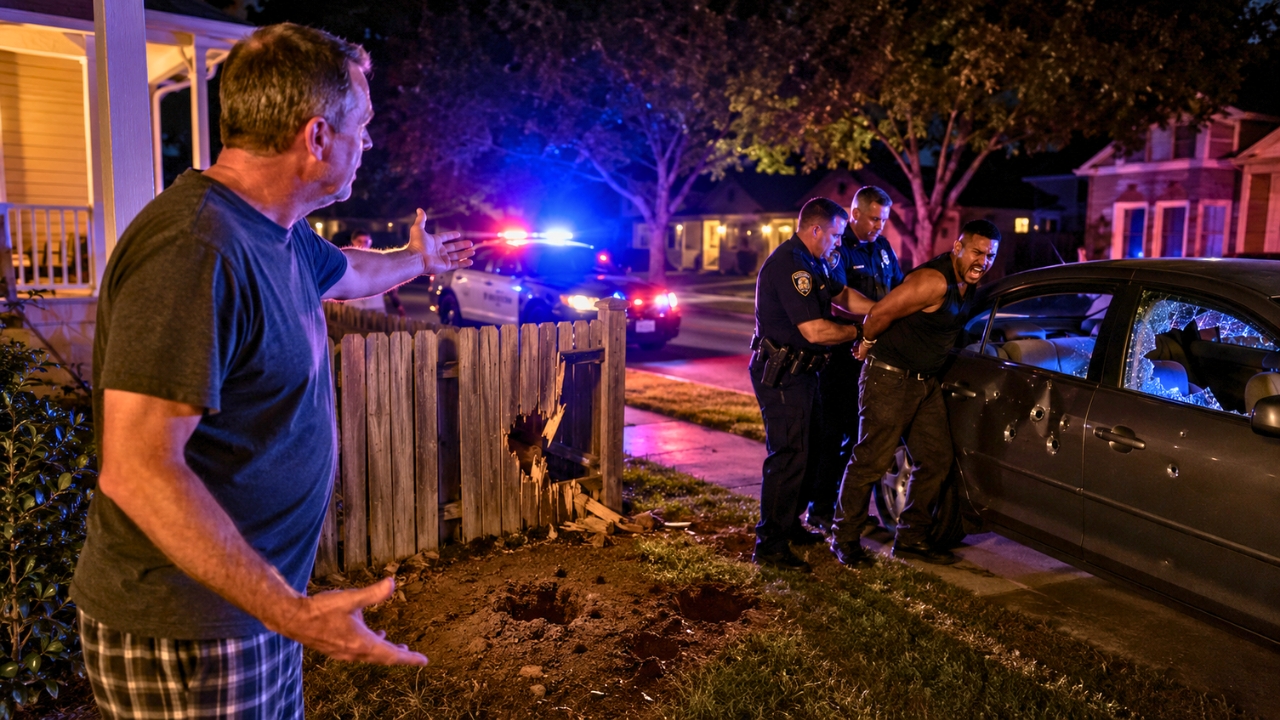
Then the same neighbor ended up in cuffs after rounds went into a vehicle
Not long after the ongoing complaints, the neighbor at the center of the calls was arrested in a separate incident involving shots that struck a car. That’s the moment when the situation stops being a “neighborhood annoyance” and becomes a clear public safety threat.
Shooting into a vehicle isn’t a misunderstanding about property lines or a ricochet off a rock pile. It’s the kind of act that forces law enforcement to treat the shooter as dangerous, because it puts human lives on the line instantly. Whether the car was occupied or parked, rounds in sheet metal can turn deadly fast, and it shows a level of disregard that most responsible gun owners can’t relate to.
Commenters zeroed in on cameras, safe-range setups, and “don’t go over there yourself”
When stories like this circulate, the conversation usually splits into two camps. One side focuses on “why didn’t somebody stop it sooner?” and the other side points out the reality: you can’t police your neighbor, and you shouldn’t try to handle gunfire complaints face-to-face when emotions are already hot.
A lot of outdoorsmen brought up the practical tools that help in these situations. Trail cameras aimed at your own property line. Exterior cameras that capture the sound and timestamp. Motion lights that make it harder for somebody to pretend they “didn’t know” where they were aiming. And, just as important, a reminder to keep your own firearms secured and your head clear, because a bad neighbor can bait good people into bad decisions.
Some folks also focused on the legitimate side of shooting at home. If you’re going to run a backyard range, you need daylight, a real berm, and a clear understanding of what’s beyond it. That means no shooting toward homes, no shooting across a road, and no shooting into “open space” where you’re hoping the bullet will just disappear. Hope is not a backstop.
What landowners can do when a neighbor won’t act right
One of the hardest parts in a situation like this is feeling boxed in. You don’t want trouble, but you also don’t want rounds landing where your family lives. There are a few moves that tend to help without escalating things.
First, treat it like a safety problem, not a personal feud. Report each incident. Keep records. If local rules allow, collect video from your own property. Second, don’t trespass to “get proof” and don’t go confront someone in the moment—especially at night. That’s when people are more likely to be drinking, more likely to be jumpy, and less likely to think straight.
Third, harden your own routine. If you’ve got a driveway gate, use it. If you’ve got a safe room plan for the family, review it. Park vehicles where they’re less exposed. Keep the porch lights working. Those things don’t solve the root issue, but they buy you safety until the problem gets handled the right way.
Finally, if you’re the shooter reading this, take it as a gut check. Shooting is a privilege and a responsibility, and the “I’ve always done it this way” excuse doesn’t hold water when rounds are going where they shouldn’t. Daylight, safe backstop, known target, known beyond—every time.
In the end, this situation played out the way too many of them do: a string of warning signs followed by one incident that was serious enough to force a hard stop. The outdoors community doesn’t need fewer gun owners—it needs fewer reckless ones. And in rural neighborhoods, being a good neighbor starts with keeping every round on your own side of safety.